
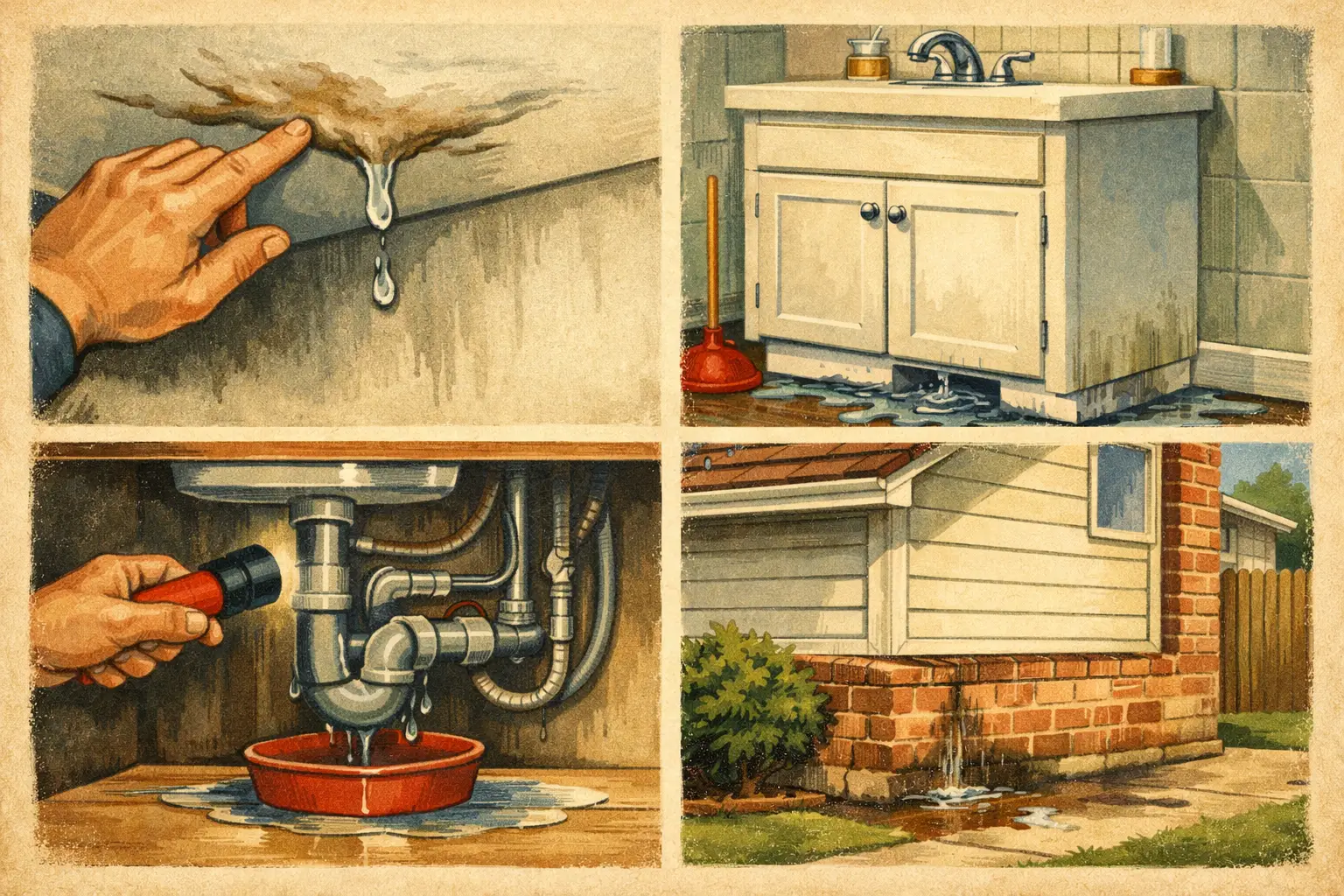
A leak behind a wall or beneath a slab rarely announces itself with a dramatic flood. More often, it starts as a slightly higher water bill, a soft spot in flooring, or a faint musty smell that keeps returning after you clean. Knowing the best signs of hidden plumbing leaks can help you address a problem while the repair is still contained instead of waiting for visible water damage.
For homeowners, property managers, and small-business owners in North Texas, early action matters. A small supply-line leak can run continuously, and a drain-line leak may only show itself when a fixture is in use. Neither should be ignored.
Best Signs of Hidden Plumbing Leaks Inside Your Property
Your water bill rises without a clear reason
A noticeable increase in water use is often one of the first clues. Compare a recent bill with the same period last year, if possible, since seasonal lawn watering can affect totals. But if usage rises when your household routine has not changed, a hidden leak is worth investigating.
A slow toilet leak can also increase water use, but leaks in walls, ceilings, under floors, or underground lines may be responsible. The key issue is a persistent change, not one unusually high bill after guests visit or irrigation runs more often.
Your water meter moves when everything is off
If you can safely turn off faucets, appliances that use water, and irrigation, check the water meter. Movement on the meter while no water should be running can point to a leak somewhere on the property.
This is a useful screening step, not a diagnosis. Some plumbing fixtures and systems may cycle automatically, and the meter cannot tell you where the problem is. A professional leak assessment can help narrow down the source without opening walls unnecessarily.
Wall, ceiling, or cabinet stains keep getting larger
Yellowish or brownish discoloration on drywall is a common warning sign. A fresh stain beneath a bathroom, kitchen, laundry area, or upstairs plumbing fixture deserves prompt attention, especially if it expands, feels damp, or returns after being painted.
Check under sink cabinets, around the base of toilets, and on the ceiling below bathrooms. Water can travel along framing or pipes before it appears, so the visible stain may not sit directly below the actual leak.
Paint bubbles, drywall softens, or flooring changes shape
Moisture trapped behind finished surfaces can change the way materials look and feel. You may notice peeling paint, bubbling texture, swollen baseboards, warped wood, loose vinyl, or tile that no longer feels firmly bonded. Drywall may feel soft or crumbly when gently pressed.
These changes do not always mean an active plumbing leak. A roof issue, window intrusion, or condensation can create similar symptoms. Still, if the damage is near plumbing or worsens after showers, laundry cycles, or dishwasher use, plumbing should be checked quickly.
A musty odor appears in one area
A persistent damp or musty smell in a bathroom, kitchen, laundry room, hallway, or closet can signal moisture hidden from view. Cleaning may temporarily cover the odor, but it will return if water is continuing to collect behind a wall, below flooring, or inside cabinetry.
Odor alone is not enough to locate a leak. It becomes more meaningful when paired with staining, damp materials, higher water use, or changes in flooring. Rather than covering the smell, identify the moisture source.
Floors feel unusually warm or damp
Warm areas on a slab floor can sometimes indicate a leak in a hot-water line below the surface. Damp carpet, unexplained wet spots, or flooring that feels different underfoot can also point to moisture coming from below.
In North Texas homes built on slab foundations, these symptoms should be taken seriously. The issue may not always be plumbing, but waiting for a warm spot or damp area to grow can allow more damage to occur. A plumber can evaluate the plumbing system and recommend the appropriate next step.
You hear water when no fixture is running
Listen for a quiet hissing, dripping, or water-moving sound in walls, ceilings, or floors when the house is otherwise quiet. A constant sound can indicate water escaping from a pressurized supply line.
Keep in mind that some normal plumbing sounds are brief. Pipes may expand after hot water use, and certain appliances may refill on their own schedule. What deserves attention is a sound that is steady, new, or paired with a rising water bill or visible moisture.
Water pressure drops or changes unexpectedly
A sudden or gradual decrease in water pressure can have several causes, including fixture-specific buildup or a plumbing issue elsewhere in the system. If pressure is lower at multiple faucets and showers, particularly alongside other warning signs, an active leak is one possibility.
Do not assume pressure changes are harmless just because water still flows. A professional evaluation can determine whether the concern is related to a supply line, a fixture, or another plumbing component.
Drain problems show up with water damage
Not every hidden leak comes from a pressurized water line. A damaged or loose drain connection may leak only while a sink, shower, tub, dishwasher, or washing machine is draining. That can make the evidence intermittent.
Watch for water under a cabinet after using a sink, ceiling staining beneath a shower or tub, or moisture near a laundry wall after a wash cycle. Because these leaks can be use-dependent, noting when the symptom appears helps a plumber identify the source more efficiently.
When a Hidden Leak Needs Immediate Attention
Some symptoms call for faster action than others. Contact a plumbing professional promptly if you see active water, a growing ceiling bulge, water near electrical components, a rapid loss of water pressure, or a meter that indicates continuous usage. If water is actively flowing from a fixture or accessible pipe, turn off the fixture stop valve when possible. If you cannot stop the flow safely, use the main water shutoff and request service.
Avoid cutting into walls, pulling up flooring, or guessing at pipe locations. Hidden plumbing systems can include water lines, drain lines, electrical wiring, and structural components. The fastest path is usually a careful inspection that identifies the source before repairs begin.
What a Professional Leak Evaluation Can Clarify
A proper plumbing inspection does more than confirm that moisture exists. It helps separate an active plumbing leak from condensation, exterior water intrusion, fixture overflow, or a prior issue that has already dried. It also helps determine whether the problem is tied to a supply line, drain line, fixture connection, or plumbing beneath the slab.
The right repair depends on the location, pipe material, accessibility, and condition of the affected plumbing. In some cases, a targeted repair is appropriate. In others, the plumber may recommend further testing or a broader repair strategy based on what the system shows. Clear findings matter because repairing the visible stain without correcting the water source only delays the problem.
MasterTex Plumbing and Drain helps property owners across the Plano, McKinney, Allen, Richardson, Rockwall, Royse City, and surrounding North Texas areas investigate plumbing concerns with practical, professional service. If something in your home or property looks, sounds, or smells different, it is usually better to have it checked while the signs are still small.