
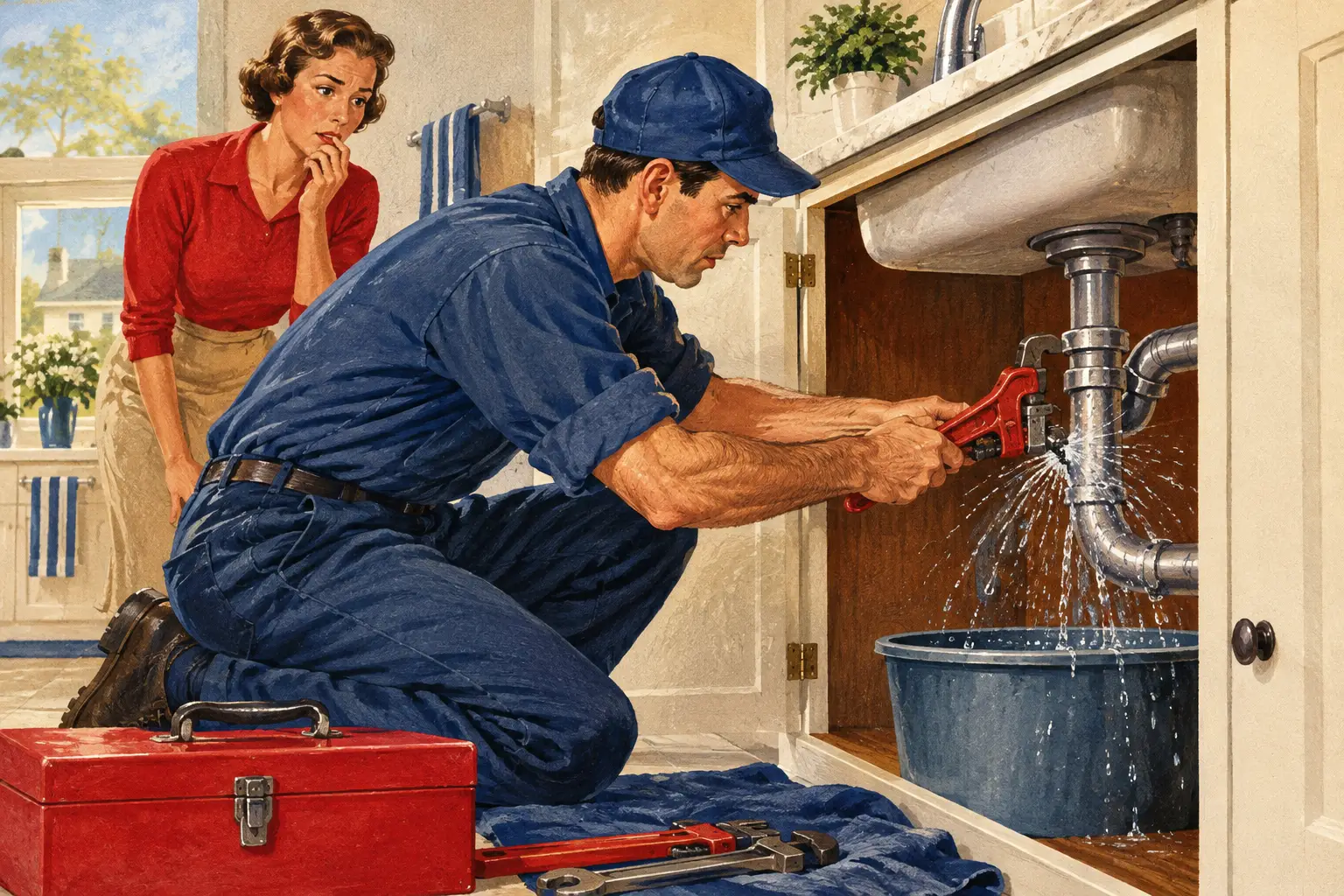
Water spreading across a floor, dripping through a ceiling, or spraying from a wall is a burst pipe emergency. The first few minutes matter most. A fast, calm response can limit water exposure, protect belongings, and give a plumbing professional a clearer path to finding and repairing the problem.
For homeowners, property managers, and business owners, the goal is not to diagnose every detail while water is moving through the property. The goal is to stop the flow safely, contain what you can, and get qualified help on the way.
What to Do During a Burst Pipe Emergency
Start by shutting off the water supply. If the leak is coming from a sink, toilet, washing machine connection, or another visible fixture, there may be a nearby shutoff valve that stops water to that specific area. Turn it clockwise if it moves easily. If the source is unclear, the leak is substantial, or a ceiling is actively dripping, use the main water shutoff valve for the property.
Most homes have a main shutoff near the water meter, along an exterior wall, in a utility area, garage, or mechanical closet. Its location varies by property, which is why it is worth finding before an emergency occurs. In a commercial space or multifamily property, the applicable shutoff may be in a utility room or another restricted area. Property managers should make sure staff know who has access.
Once the water is off, open a cold-water faucet at a lower level of the building if it is safe to do so. This can help relieve pressure and allow remaining water in the lines to drain. Do not force valves or disconnect pipes. A damaged fitting can shift, and a small leak can become harder to contain.
If water is near outlets, appliances, electrical panels, or extension cords, stay out of the affected area and avoid touching electrical equipment. Do not step into standing water where electrical hazards may be present. Safety comes before cleanup.
Next, move furniture, electronics, rugs, documents, and other items away from the water if you can do so safely. Use towels, buckets, and a wet vacuum if available to control spreading water. For a ceiling leak, place a container beneath the drip and move items out of the room. Do not puncture a sagging ceiling or climb into an area that feels unsafe.
Then call a professional plumber. A pipe may burst because of a freeze, corrosion, elevated pressure, a failed connection, a damaged supply line, or movement inside the wall or foundation. Stopping the water is essential, but the underlying cause still needs to be identified and repaired correctly.
When the Leak Is Hidden
Not every burst pipe sends water into the room in a dramatic spray. Some leaks begin behind drywall, beneath flooring, in a crawlspace, or above a ceiling. In those cases, the warning signs can be subtle at first: an unexpected drop in water pressure, a sound of running water when fixtures are off, discolored drywall, damp flooring, or a ceiling stain that grows quickly.
Treat these signs seriously, especially if they appear after freezing weather. North Texas homes can be vulnerable when temperatures drop quickly, particularly where pipes run along exterior walls, through attics, or in unconditioned spaces. A pipe may crack during a freeze but begin leaking only after it thaws and water pressure returns.
If you suspect a hidden pipe break, shut off the main water if water is actively appearing or the sound of flowing water is persistent. If there is no immediate visible flooding, contact a plumber promptly for an assessment. Waiting can allow water to travel farther through building materials and create a more involved repair.
A Ceiling Leak Needs Extra Caution
Water coming from a ceiling does not always mean the damaged pipe is directly above the drip. Water can follow framing, wiring paths, and other hidden routes before it becomes visible. It may also come from plumbing on an upper floor, a supply line in an attic, or a drain line that is leaking only when a fixture is used.
Keep people out from beneath a bulging or heavily saturated ceiling. Turn off water to the property if a plumbing source is suspected, and avoid operating fixtures near the affected area. A plumber can help isolate whether the issue involves a pressurized water line, a drain connection, or another plumbing component.
What Not to Do While You Wait for Help
A temporary clamp, tape, or patch may seem like a quick answer, but it can create false confidence when a pipe or fitting has already failed. Avoid taking apart valves, cutting into walls, or trying to tighten connections under pressure. The visible break may not be the only damaged section.
Do not turn the water back on repeatedly to “check” whether the leak has stopped. If a repair has not been completed, restoring pressure can restart water flow into a concealed area. Keep the water off until a professional confirms the plumbing is ready to return to service.
It is also wise to avoid using toilets, showers, dishwashers, or washing machines when the main supply is shut off or when the source has not been identified. Using fixtures can complicate diagnosis and may introduce more water into an affected area.
What a Plumber Will Check
A professional response is about more than replacing the piece of pipe you can see. The plumber will locate the source, assess the condition of the surrounding plumbing, stop the active leak, and determine what repair is appropriate for the pipe material and location.
That may involve accessing a wall, ceiling, cabinet, attic, or crawlspace. The least disruptive repair is usually preferred, but the best approach depends on whether the damaged section is easy to reach, whether the pipe has broader corrosion or freeze damage, and whether nearby connections show signs of wear.
For property managers and small businesses, the response may also include isolating the affected area to reduce disruption to tenants, customers, or operations. Clear information helps: note when the leak was first noticed, whether temperatures recently dropped, which fixtures were in use, and whether water has been shut off. Those details can speed up troubleshooting.
Preventing Another Pipe Break
After the immediate repair, prevention should focus on the conditions that led to the failure. If freezing temperatures contributed, exposed pipes in vulnerable areas may need better protection and preparation before the next cold snap. If a corroded section failed, the plumber may recommend evaluating nearby piping rather than waiting for another weak point to leak.
Pay attention to recurring warning signs such as fluctuating water pressure, moisture under sinks, unexplained staining, or repeated leaks at the same fixture. These do not always mean a major pipe failure is coming, but they are worth addressing early.
It also helps to test that main shutoff valve periodically and make sure household members, onsite managers, or trusted staff know where it is. In an emergency, knowing how to stop the water can make a meaningful difference before the plumber arrives.
MasterTex Plumbing and Drain serves homeowners and businesses across North Texas communities, including Plano, McKinney, Allen, Richardson, Garland, Rockwall, Royse City, and surrounding areas. When water is where it should not be, act quickly, stay safe, shut off the supply, and contact a plumbing professional who can identify the problem and make the repair with care.