
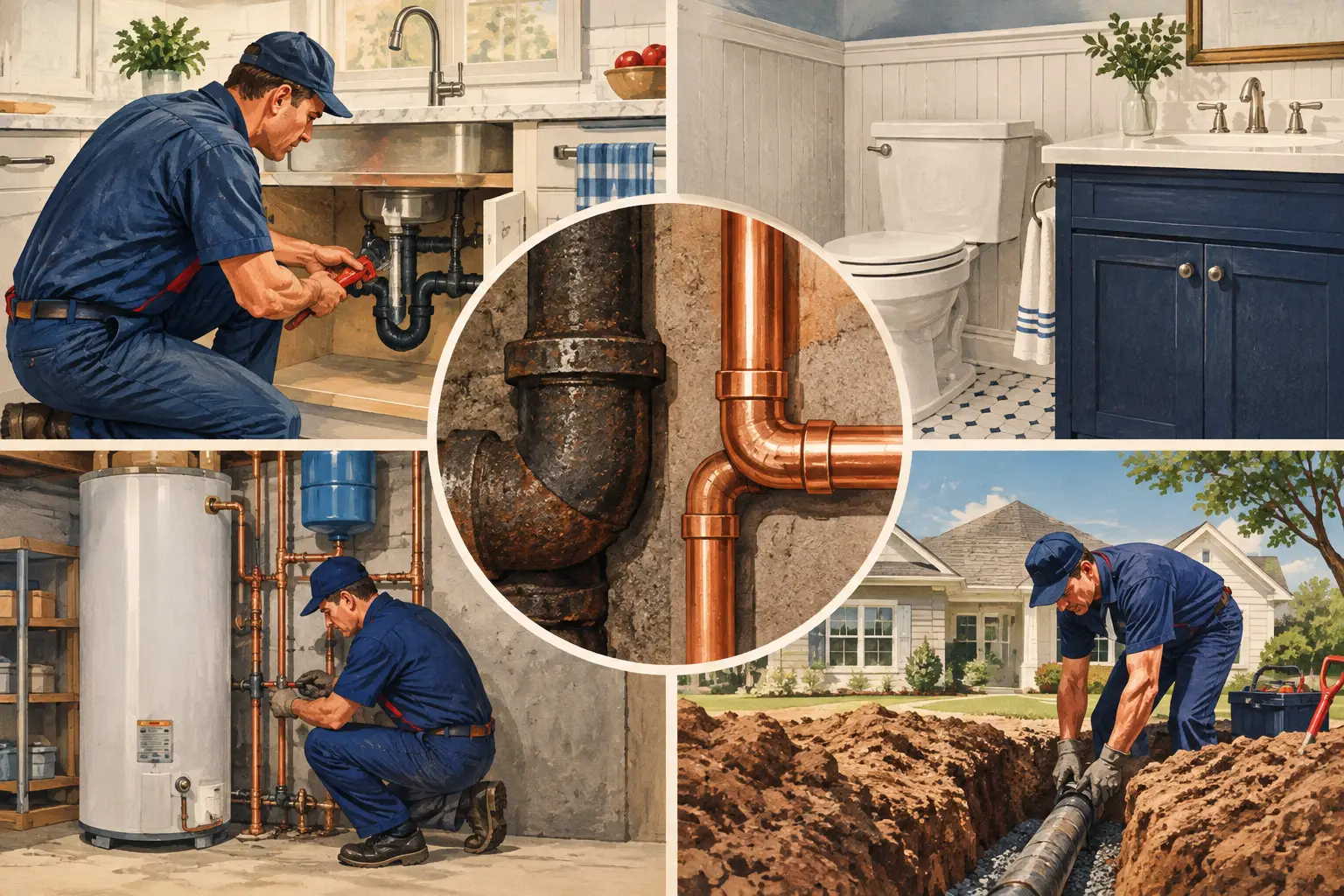
A drain line can look fine from above while the pipe below the slab, yard, or crawl space is steadily losing its ability to carry wastewater. These cast iron replacement project examples show the kinds of problems homeowners and property managers may face in older North Texas properties, along with the practical scope of work that may follow a professional inspection.
Cast iron drain piping was widely used for decades because it was strong and quiet. Over time, however, the inside of the pipe can corrode, scale can build up, joints can weaken, and sections can crack or shift. The result is often recurring drain trouble that basic cleaning alone cannot permanently resolve.
Why Cast Iron Drain Lines Fail
Cast iron does not always fail all at once. Interior corrosion can narrow the pipe gradually, catching paper, waste, and debris more easily. A line that once drained normally may begin to clog more often, gurgle after fixtures are used, or back up at the lowest drain in the home.
Soil movement can add another issue. North Texas clay soils expand and contract with changing moisture conditions, which can put stress on underground piping. That does not mean every older cast iron line needs replacement, but it is one reason a careful camera inspection matters before deciding on repairs.
The best solution depends on the pipe’s condition, location, and remaining serviceable material. A localized damaged section may call for a targeted repair. Widespread deterioration, repeated backups, or multiple failing branches can make a larger replacement more practical.
5 Cast Iron Replacement Project Examples
The situations below are representative project types, not promises of what any individual property will need. A professional evaluation should determine the actual condition and scope of a drain line.
1. A Slab Home With Repeated Bathroom Backups
A homeowner may notice that the hall bathroom toilet bubbles when the washing machine drains, followed by slow tub drainage or a backup at the shower. Drain cleaning may restore flow temporarily, but a camera inspection can reveal heavy internal scaling, cracks, or a compromised cast iron branch line beneath the slab.
In this type of project, the plumber identifies which section serves the affected bathroom group and determines whether access can be limited to a small area. Replacement may involve carefully opening the slab where necessary, removing the failed cast iron section, installing approved modern piping, testing the new connection, and restoring the work area for the next phase of repair.
The trade-off is clear: accessing a below-slab line is disruptive, but leaving a badly deteriorated section in place can lead to more frequent and less predictable backups. The goal is not to replace pipe unnecessarily. It is to correct the portion that has lost reliable drainage capacity.
2. A Kitchen Line With Chronic Clogs and Corrosion
Kitchen drains handle grease residue, food particles, and detergent buildup, so they often expose a declining cast iron line early. In an older home, a kitchen sink that clogs every few months may have more going on than a routine obstruction. Camera footage may show a rough, scaled interior that has become too narrow for dependable flow.
A replacement project might focus on the kitchen branch from the sink connection to a larger drain line. If the line runs through a crawl space or accessible basement area, the work can sometimes be more direct than a below-slab replacement. If it is buried, access planning becomes a larger part of the project.
This example also shows why drain cleaning and replacement are not competing services. Cleaning can remove an active blockage and help diagnose the line. Replacement becomes the better long-term option when the pipe itself is cracked, deeply corroded, or repeatedly collecting debris because of its deteriorated interior.
3. A Laundry Drain With a Failed Underground Connection
Laundry drains move a large volume of water quickly. When an older cast iron connection is separated, cracked, or offset underground, a washing machine discharge may overwhelm the damaged section. The warning signs can include water rising at a nearby shower, a floor drain backup, or a sewer odor around the laundry area.
For this project type, locating the defect accurately is essential. A camera inspection and line locating process can help establish the depth and path of the pipe before any access work begins. The repair may involve replacing a failed junction, correcting an improperly supported section, or installing a new connection between sound portions of the drainage system.
A targeted repair can be appropriate if the surrounding cast iron is in good condition. If inspection shows corrosion along the full run, replacing only one visible failure may solve today’s backup without addressing the next weak point. The findings should guide the recommendation, not assumptions based on the age of the home alone.
4. A Rental Property With Multiple Slow Drains
Property managers often first hear about cast iron trouble as a series of separate maintenance requests: a slow sink in one unit, a toilet that needs frequent plunging in another, and an occasional backup after heavy fixture use. Treating each call as an isolated clog can become disruptive for tenants and inefficient for the property owner.
A broader inspection may reveal that several fixtures share a deteriorating cast iron building drain. In that case, the project planning should consider tenant access, the order of work, and how to keep essential plumbing available whenever possible. Replacing a larger shared section may be less convenient in the short term, but it can reduce repeated service interruptions caused by a failing main drain path.
For small commercial spaces and rental properties, communication is part of the job. A clear explanation of the affected areas, anticipated access needs, and testing process helps managers coordinate occupants and make informed maintenance decisions.
5. An Older Home With a Damaged Main Sewer Line
The main sewer line carries wastewater from the home to the connection point beyond the structure. When an older cast iron main line fails, symptoms can affect more than one room. Homeowners may see backups at the lowest fixtures, hear gurgling in multiple drains, or notice that several drains slow down at the same time.
This project can range from a spot repair outside the home to replacement of a longer underground run. The appropriate method depends on the camera findings, pipe depth, accessibility, slope, and the extent of corrosion or breaks. Existing landscaping, hardscape, and utility locations must also be considered during planning.
A main-line issue should be addressed promptly once confirmed. Continued use of a compromised line can turn intermittent drain problems into a significant disruption inside the home. Professional testing after replacement helps confirm that wastewater is flowing properly through the repaired system.
What a Professional Evaluation Should Include
Cast iron replacement should begin with evidence, not a guess. A thorough assessment generally starts by discussing the property’s symptoms and plumbing history, then inspecting accessible piping and using a drain camera when conditions allow. The inspection should identify the location of defects, whether water is standing in the line, and whether the problem appears isolated or widespread.
It is also helpful to ask how the recommended scope relates to the findings. Property owners should understand which pipe sections are failing, why repair versus replacement is being recommended, what access may be required, and how the completed line will be tested. Straight answers are especially valuable when work involves a slab, finished flooring, landscaping, or an occupied property.
Signs It Is Time to Schedule an Inspection
One clog does not automatically mean a cast iron replacement project is needed. Repeated symptoms, especially in an older property with original drain piping, deserve closer attention. Persistent slow drains, recurring backups after professional cleaning, gurgling fixtures, sewer odors, and water appearing in a tub or shower when another fixture drains can all point to a larger drain-line concern.
If your Plano, McKinney, Garland, Rockwall, or nearby North Texas property has recurring drain problems, prompt diagnosis can prevent a minor warning sign from becoming a major interruption. MasterTex Plumbing and Drain can assess the drain system, explain the findings clearly, and help you choose a practical path forward based on the condition of your pipes.
A reliable drain system is easy to overlook until it stops working. Scheduling an inspection when problems repeat gives you useful information before the next backup forces the decision.