
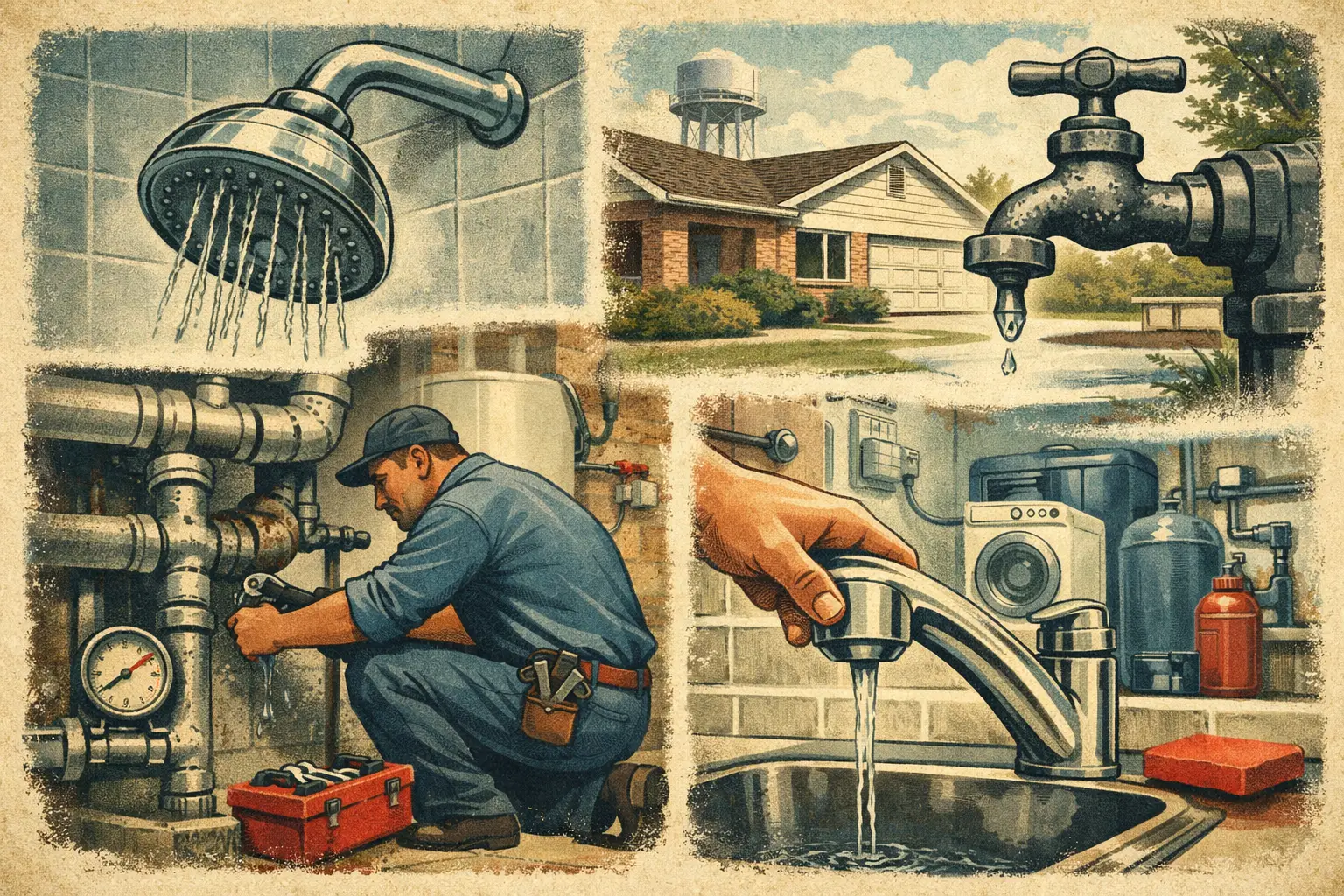
A shower that suddenly feels weak, a washing machine that takes longer to fill, or a kitchen faucet that barely rinses a dish can turn ordinary routines into frustrating ones. The causes of low water pressure range from a simple clogged fixture to a hidden pipe leak, so the first step is determining whether the problem affects one fixture, one area, or the entire property.
Low pressure is not always an emergency, but it should not be ignored when it appears suddenly, worsens over time, or comes with other plumbing symptoms. Knowing what to look for can help homeowners and property managers make a faster, more informed decision about when professional service is needed.
Start by Identifying Where Pressure Is Low
The location of the issue often provides the best clue. If only one bathroom faucet has weak flow while the rest of the home is normal, the issue is usually at that fixture or in the nearby plumbing. If every faucet, shower, and appliance has low pressure, the cause may be at the main water supply, pressure regulator, or a larger section of piping.
Compare hot and cold water at the same fixture as well. Low pressure on the hot side only points to a different set of possibilities than pressure that is weak on both sides. A short check of these patterns can save time and help a plumber narrow down the diagnosis.
Common Causes of Low Water Pressure at One Fixture
Mineral Buildup in Aerators and Showerheads
Faucet aerators and showerheads have small openings that can collect mineral sediment over time. When those openings become restricted, water may still reach the fixture normally but exit in a weak, uneven stream. This is one of the more common reasons a single faucet has poor flow while other fixtures work as expected.
You may notice spraying from the sides of the faucet, an uneven shower pattern, or a gradual reduction in flow. The fixture itself may need cleaning, repair, or replacement depending on its condition.
A Partially Closed Fixture Shutoff Valve
Most sinks and toilets have small shutoff valves near the fixture. If a valve was not reopened fully after a previous repair, it can limit water flow. Valves can also become stiff, worn, or internally damaged with age, meaning a valve that appears open may not be allowing full flow.
This situation is especially worth considering when low pressure begins shortly after plumbing work, appliance installation, or a fixture replacement. A professional can confirm whether the valve is operating correctly without causing damage to an older connection.
A Failing Faucet or Shower Valve
Internal faucet cartridges, shower valves, and other fixture components can wear out or become obstructed by sediment. In a shower, the issue may affect both the volume of water and the ability to maintain a comfortable temperature. A dripping faucet combined with weak flow can also signal worn internal parts.
Fixture repairs are often straightforward when the problem is isolated, but the correct replacement parts depend on the fixture type and condition. For older fixtures, replacement may be more practical than repeated repairs.
Causes of Low Water Pressure Throughout the House
A Main Shutoff Valve That Is Not Fully Open
The main shutoff valve controls water entering the home. If it is partly closed, water pressure can be reduced throughout the property. This can happen after repairs, renovations, winter preparation, or a water service interruption when the valve is not returned to its fully open position.
Because main shutoff valves can be old or difficult to operate, forcing one can create a leak or cause the valve to fail. If the valve has not been moved in years, it is safer to have it inspected rather than trying to force it open.
Pressure Regulator Problems
Many homes have a pressure regulator, also called a pressure-reducing valve, installed on the main water line. Its job is to keep incoming water pressure at a level appropriate for the home’s plumbing system. When this component fails or falls out of adjustment, pressure may become too low, inconsistent, or noticeably different at different times of day.
A failing regulator can cause more than weak flow. Some homeowners notice pressure that surges briefly and then drops, rattling pipes, or changes in water flow when another fixture is turned on. Diagnosing a regulator requires checking the actual pressure and reviewing the condition of the valve and supply line.
A Leak in the Water Line or Plumbing System
A hidden leak can reduce available water pressure, particularly when the leak is significant. Unlike a visible drip below a sink, leaks inside walls, beneath floors, or in an underground service line may not be immediately obvious.
Watch for a water meter that continues moving when all water fixtures and appliances are off, damp areas near plumbing, unexplained sounds of running water, or a sudden pressure drop. A leak that affects the main supply should be addressed promptly to prevent property damage and further water loss.
Corroded or Restricted Pipes
Older metal pipes can corrode from the inside. As buildup develops, the opening inside the pipe becomes smaller and water flow declines. This process is usually gradual, which is why many homeowners adjust to weaker pressure before realizing it has become a problem.
Corroded piping may affect the entire home or only certain branches. The most useful solution depends on the pipe material, the affected area, the extent of restriction, and whether there are other signs of aging plumbing. A targeted repair may be enough in some homes, while widespread deterioration may call for a broader plan.
Supply Issues Outside the Building
Sometimes the plumbing inside the property is working properly, but the incoming supply is temporarily reduced. Utility work, a neighborhood water main repair, or unusually high local water use can affect pressure for a period of time. If neighbors are experiencing the same issue, the source may be outside your home or business.
If pressure remains low after the outside issue has passed, an inspection is still worthwhile. A change in supply conditions can expose an existing weakness in a pressure regulator, valve, or aging pipe.
When Low Hot Water Pressure Is the Only Problem
When cold water pressure is normal but hot water flow is weak at several fixtures, the issue may be connected to the water heater, hot-water piping, or valves serving that side of the system. Sediment, a partially closed valve, pipe restrictions, or a failing component can all interfere with hot-water delivery.
Do not assume that low hot-water pressure is simply a water heater problem. The pattern matters. If one shower has weak hot water but other hot fixtures are normal, the shower valve may be the likely source. If every hot fixture is affected, the issue is more likely within the hot-water supply system.
Why Pressure Drops When Multiple Fixtures Run
A modest decrease in flow when someone showers while a washing machine fills can be normal, especially in a smaller home with several fixtures operating at once. A dramatic drop, however, may indicate a supply limitation, undersized piping, a failing pressure regulator, or restrictions in older lines.
Commercial properties and rental homes can experience this issue during periods of high use. For property managers, noting the time of day and which fixtures are running can help identify whether the concern is isolated or system-wide.
When to Call a Plumber for Low Water Pressure
Call for professional plumbing service when pressure drops suddenly throughout the property, you suspect a leak, water flow is inconsistent, or the problem affects daily use. Prompt attention is also appropriate when low pressure comes with discolored water, banging pipes, visible moisture, or a water meter that shows use when everything is off.
For homes and small businesses in Plano, McKinney, Allen, Garland, Royse City, and nearby North Texas communities, MasterTex Plumbing and Drain can inspect the system, locate the cause, and recommend the right repair based on the actual condition of the plumbing.
Low water pressure is rarely just something to tolerate. A clear diagnosis can restore everyday convenience while helping you catch a developing plumbing issue before it becomes a larger disruption.