
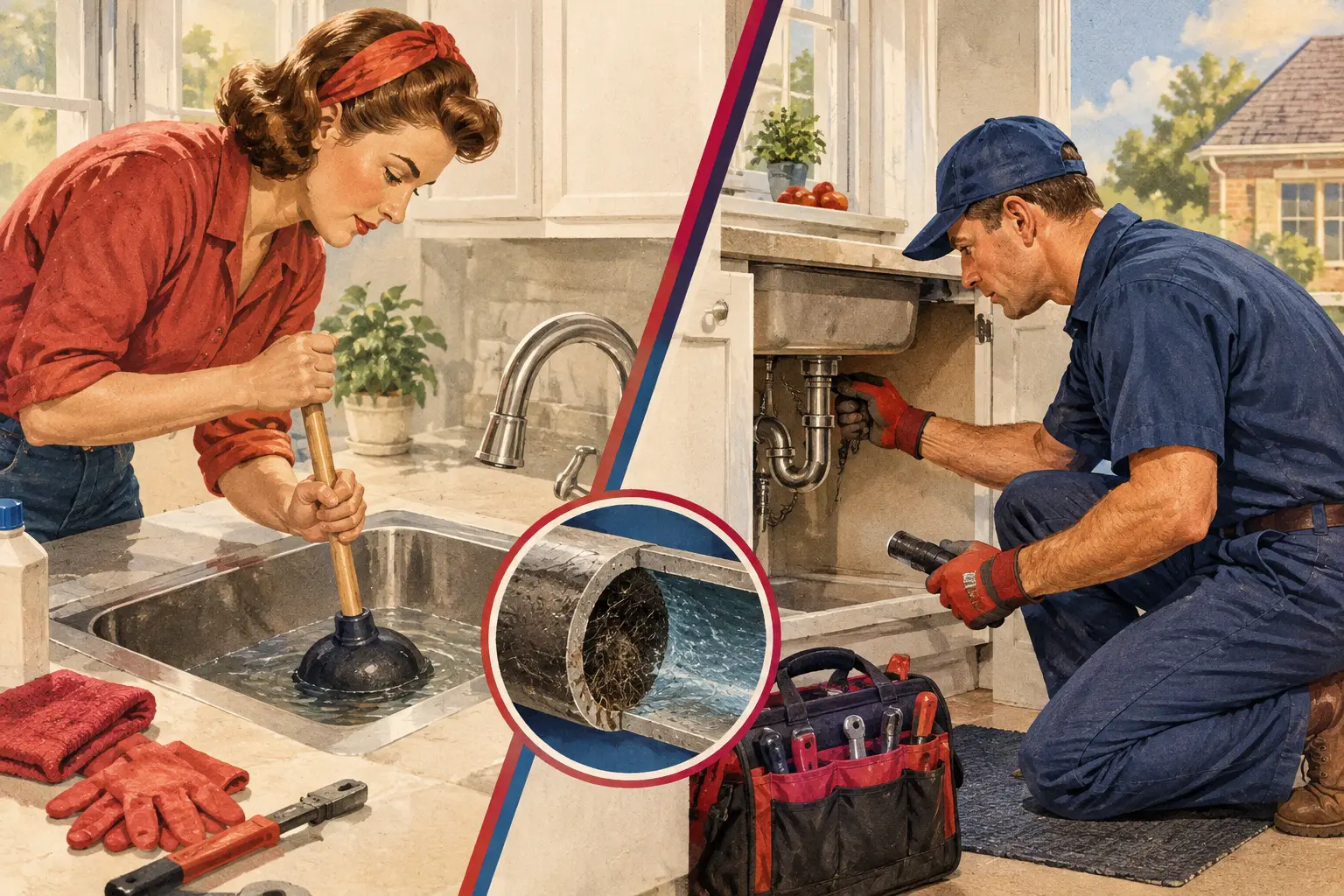
A sink that drains slowly before work can feel like a minor annoyance. A shower that fills around your ankles or a toilet that backs up is different. The decision between DIY drain clearing vs plumber comes down to more than convenience: it is about identifying where the clog is, preventing damage, and knowing when a small symptom may point to a larger drain-line issue.
Some simple clogs are reasonable for a homeowner or property manager to address. Others need professional equipment and an experienced diagnosis. Acting early can keep a drain problem from disrupting your home, tenant property, or business for longer than necessary.
When DIY Drain Clearing Makes Sense
A DIY approach is most appropriate when the problem is limited to one fixture, has just started, and does not involve sewage, repeated backups, or water appearing in another drain. For example, a bathroom sink draining slowly because hair and soap residue have collected near the stopper is often an accessible, localized clog.
Start with the simplest option: remove visible debris from the drain opening and stopper, then rinse the area with hot tap water if the fixture can handle it. A clean plunger used with a proper seal can also help move a soft blockage in a sink, tub, or toilet. Use a separate plunger for toilets and for sinks or tubs.
The goal is not to force the clog deeper into the line. It is to clear material that is close to the fixture and easy to identify. If normal flow returns and stays normal, the issue was likely minor.
Avoid using chemical drain cleaners. These products can be hard on pipes, may leave hazardous liquid sitting in a blocked drain, and can create an unsafe situation for anyone who later needs to work on the line. They also do not solve the underlying problem when the blockage is farther down the pipe.
Signs the Clog Is Probably Local
A local clog usually affects one sink, one tub, or one toilet. The drain may be slow, but nearby fixtures work normally. There is no gurgling from other drains, no sewage odor, and no water backing up elsewhere when the fixture is used.
In those situations, carefully cleaning the accessible parts of the drain or using a plunger may be enough. If the problem returns quickly, however, treat that as useful information rather than something to repeatedly fight. A recurring clog usually means buildup or an obstruction remains beyond the area you can reach.
DIY Drain Clearing vs Plumber: The Key Difference
The main difference is not simply the tools involved. It is the ability to locate the blockage, clear it without damaging the pipe, and verify that the drain line is actually flowing as it should.
A homeowner can often address hair, soap residue, or a small obstruction close to the drain opening. A professional plumber can assess deeper blockages, determine whether multiple fixtures are connected to the same affected line, and use equipment designed for the pipe and the problem.
Professional drain clearing may involve drain cabling, specialized cleaning equipment, or camera inspection when the cause is unclear or the problem keeps coming back. The right method depends on the location of the blockage, the pipe material, and whether the issue is isolated or affecting a larger section of the drainage system.
Trying to clear a deeper clog with improvised tools can damage a fixture, scratch porcelain, disconnect a drain component, or compact debris farther into the line. That is why a do-it-yourself attempt should stay limited to accessible, low-risk situations.
When It Is Time to Call a Plumber
Certain symptoms call for a prompt professional response because they suggest the clog is no longer limited to one fixture. If you notice any of the following, stop using the affected plumbing when possible and schedule drain service:
- Water backs up into a tub or shower when a toilet is flushed.
- More than one sink, tub, or toilet drains slowly at the same time.
- Drains gurgle, bubble, or make unusual noises after water is used.
- A toilet overflows or repeatedly clogs without an obvious cause.
- You smell sewage near drains or around the property.
- A clog returns soon after plunging or cleaning the accessible drain area.
- Water appears around a floor drain, or wastewater backs up into a low-level fixture.
These issues can indicate a blockage farther down a branch line or main drain line. For a property manager or small-business owner, waiting can mean more disruption for residents, employees, or customers. For a homeowner, it can turn an inconvenient slow drain into a messy backup.
Repeated Clogs Are Not Normal Maintenance
It is easy to view a recurring clog as part of owning an older home or managing a busy property. It should not be treated that way. If the same bathroom sink, kitchen drain, or toilet repeatedly has trouble, something is still restricting flow.
Kitchen drains commonly collect grease, food residue, and soap buildup over time. Bathroom drains can hold hair, personal-care residue, and mineral buildup. A professional can determine whether routine accumulation is the issue or whether there is a deeper obstruction that needs a more thorough clearing.
Repeated toilet clogs deserve particular attention. They may be caused by a fixture-level blockage, but they can also signal a restriction farther down the line. Continuing to flush in hopes that the problem will move along can lead to an overflow.
Why North Texas Drain Problems Can Be Difficult to Diagnose
Drain symptoms do not always reveal the exact source of the problem. A slow shower may be a simple hair clog near the drain, while a slow shower combined with gurgling sinks may point to a shared drain-line concern. The same visible symptom can have very different causes.
Homes across Plano, McKinney, Allen, Rockwall, Royse City, and surrounding North Texas communities also vary widely in age, pipe materials, and plumbing layouts. That is one reason a professional evaluation becomes more valuable when symptoms affect multiple fixtures or keep returning. Clearing the immediate blockage is helpful, but understanding why it formed helps prevent another service interruption soon after.
What to Do Before the Plumber Arrives
You do not need to dismantle pipes or keep testing the drain. Instead, note which fixtures are affected and when you first noticed the problem. Pay attention to whether using one fixture causes trouble in another. This information helps the technician narrow down the likely location of the blockage.
Keep children and pets away from any standing wastewater. Do not pour additional chemicals or cleaners into the drain, especially if you have already used a product. Let the technician know what has been used, if anything, so the work can be performed safely.
If a fixture is actively backing up, avoid running water, flushing toilets, using dishwashers, or doing laundry until the line has been evaluated. Added water can increase the risk of overflow when a drain line is restricted.
Choosing the Practical Option
DIY drain clearing is worth considering for a new, isolated, accessible clog that responds to simple cleaning or careful plunging. It can save time when the issue is truly minor. The trade-off is that DIY methods do not show what is happening deeper in the pipe, and repeated attempts can delay the right repair.
Calling a plumber is the practical choice when the clog is recurring, affects more than one drain, involves backups, or interrupts normal use of the property. Professional service is not about making a small issue sound larger than it is. It is about using the correct method before a drain problem causes avoidable damage and disruption.
MasterTex Plumbing and Drain helps homeowners, property managers, and local businesses across the Dallas-area communities it serves address drain issues with a clear diagnosis and professional care. When the drain is giving you more than a one-time warning, getting it checked is usually the easiest way to restore confidence in your plumbing.