
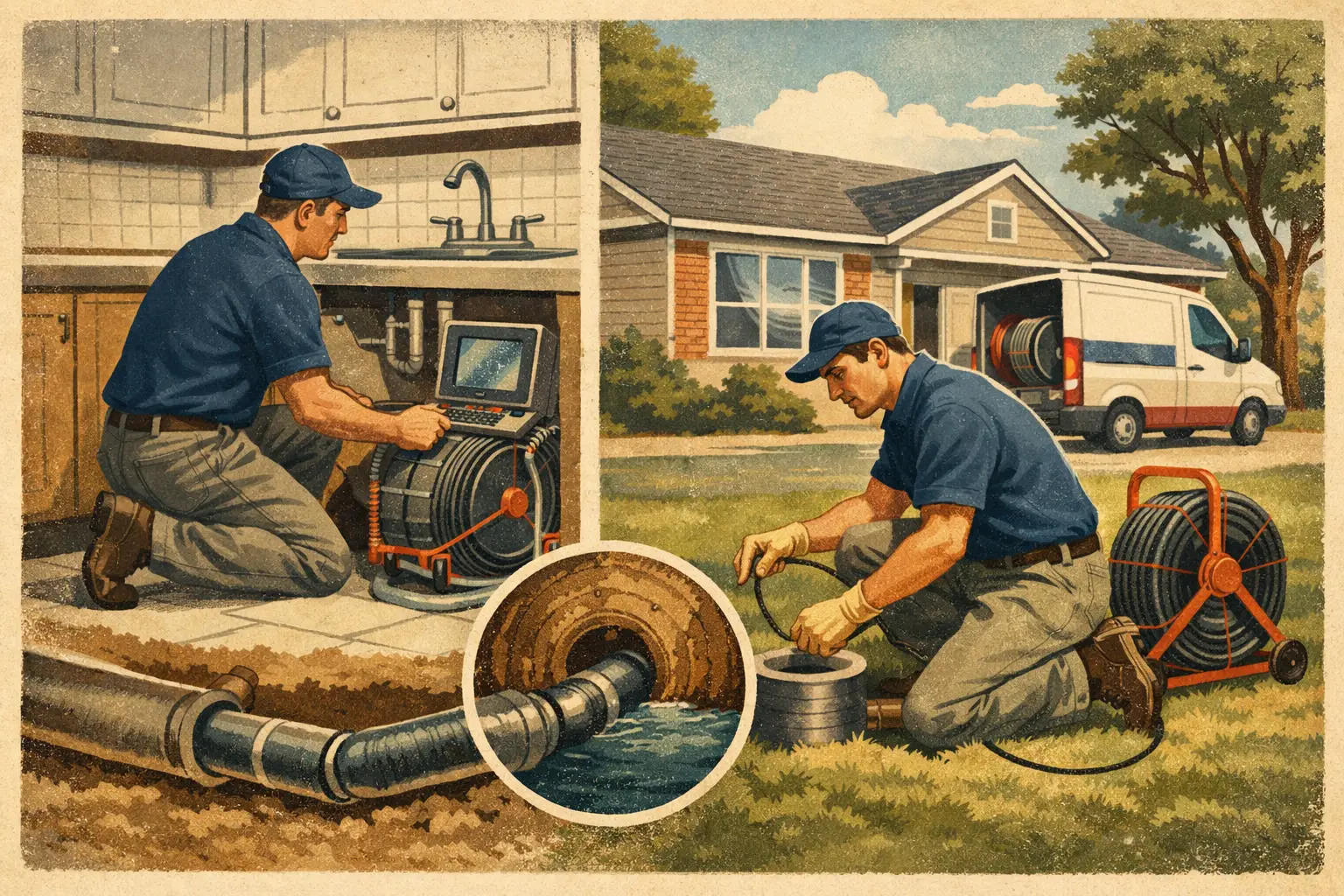
A drain that keeps backing up can feel like a guessing game. One day the kitchen sink drains slowly, then a shower gurgles, and soon a toilet may bubble when the washing machine empties. A homeowner guide to sewer camera inspections gives you a clearer way to understand what is happening inside a hidden drain line before deciding on the right repair.
A professional camera inspection does not replace skilled plumbing diagnosis. It gives the technician visual evidence from inside the pipe, helping separate a routine blockage from a damaged, shifted, or obstructed line. For homeowners across North Texas, that information can prevent unnecessary disruption and help repairs stay focused on the actual problem.
What a sewer camera inspection is
During a sewer camera inspection, a plumbing technician guides a small waterproof camera through an accessible drain opening, often a cleanout. The camera sends live video to a monitor while a built-in locator helps identify the camera's position and depth from above ground.
The inspection allows the technician to see the condition of the interior pipe, not just whether water is currently moving. They can watch for buildup, roots, cracks, separated connections, standing water, and other conditions that may be affecting drainage. In many cases, the video also helps determine where the problem begins and whether clearing the line is likely to provide a lasting result.
The camera is designed for drain piping, and the inspection is performed from a suitable access point. If a line is fully blocked, the technician may need to clear enough material first for the camera to pass through. That sequence matters because forcing a camera into an obstruction will not produce a useful inspection.
When homeowners should consider a camera inspection
A one-time slow sink is not always a sign of a main sewer line problem. Hair, soap residue, and everyday debris can affect a single fixture drain. But repeated or widespread symptoms deserve closer attention, especially when standard drain clearing has not solved the issue.
Consider requesting an inspection when multiple drains back up at once, toilets gurgle, or water appears in a tub or shower when another fixture drains. These symptoms can point to a restriction farther down the line. An inspection is also useful after recurring clogs, before a major drain repair, or when a property has a history of root intrusion or pipe issues.
For homeowners in Plano, McKinney, Allen, Rockwall, Royse City, and nearby communities, ground movement can be one factor worth considering. North Texas soils can expand and contract with changing moisture conditions. That does not automatically mean a pipe has shifted, but a camera can help confirm whether a drain line has cracks, low areas, or separated sections that need attention.
Before buying or renovating a property
A camera inspection can also be a practical planning tool. Older homes may have aging drain materials or prior repairs that are not visible from inside the house. If you are preparing for a large remodel that will add plumbing use, understanding the condition of the existing drain line can help you plan appropriately.
The goal is not to assume the worst. It is to get a direct look at a system that is normally buried behind walls, beneath floors, or underground.
What a sewer camera can reveal
The value of an inspection comes from connecting visible conditions with the symptoms in the home. A qualified technician should explain what appears on the screen in straightforward terms and discuss what it means for your next step.
Common findings include:
- Grease, scale, soap residue, or debris narrowing the pipe
- Tree roots entering through joints or damaged areas
- Cracked, fractured, or separated pipe sections
- A belly, which is a low area where water and debris can collect
- Misaligned or offset connections
- Construction material or foreign objects inside the line
Not every mark on a pipe requires excavation or replacement. Some buildup can be removed through professional drain cleaning. Roots may be cleared, but their return depends on how they entered the pipe and the pipe's condition. A visible crack, repeated root intrusion, or a line that holds standing water may call for a more detailed repair discussion.
A camera also has limits. It shows the inside of the pipe, but it cannot always identify every issue behind the pipe wall or determine the full cause of a small defect without considering the line's history, location, and drainage performance. That is why the video should be part of a complete diagnosis, not treated as a stand-alone answer.
What happens during the appointment
A professional inspection typically begins with a conversation about the symptoms. Be prepared to explain which fixtures are affected, when the issue began, whether it returns after drain cleaning, and whether there have been recent changes around the property.
The technician will identify an access point and assess whether the line can be inspected immediately. If the pipe has standing wastewater or a heavy blockage, clearing work may be needed before the camera can travel through it. Once the camera is in the line, the technician watches the video feed, notes significant findings, and uses locating equipment when a specific spot needs to be identified from the surface.
Ask the technician to show you the key sections of the video and explain the difference between a minor condition and a repair concern. Clear communication is especially helpful when you need to decide whether to monitor the line, schedule maintenance, or move forward with a repair.
How to prepare for a camera inspection
You do not need to do much to prepare, but a few simple steps can make the visit more efficient. Keep the area around known cleanouts, utility rooms, or plumbing access points clear if possible. Let the technician know about prior drain work, past backups, or landscaping changes near the suspected line.
Avoid running large amounts of water while the inspection is underway unless the technician asks you to do so. In some situations, flowing water helps test drainage. In others, it can make it harder to view a pipe clearly. Your technician can guide you based on the purpose of the visit.
It also helps to write down the symptoms before the appointment. Details such as whether a backup occurs after laundry, during showers, or when flushing a toilet can help narrow the diagnosis quickly.
Understanding your options after the inspection
The right next step depends on what the camera finds. If the issue is buildup or a localized blockage in an otherwise sound pipe, professional drain cleaning may restore normal flow. If roots are present, the technician should explain whether clearing is appropriate now and whether the pipe condition suggests a longer-term repair should be considered.
When a camera reveals a damaged or misaligned section, the location of that section matters. A surface locator can help determine where the concern sits in relation to the home, driveway, landscaping, or other features. From there, a plumbing professional can discuss repair methods that fit the pipe condition and access available.
Be cautious about making a major decision based only on a vague description of a blockage. Ask what was found, where it is, whether the line was fully viewed, and what problem the recommended work is intended to correct. A dependable plumber should be able to answer those questions directly.
A homeowner guide to sewer camera inspections: choosing the right help
The best inspection is one that leads to a clear, practical recommendation. Look for a plumbing team that uses professional camera and locating equipment, explains findings without pressure, and can address both the immediate drainage issue and the underlying cause when one is present.
MasterTex Plumbing and Drain helps homeowners throughout the Dallas-area communities it serves evaluate recurring drain and sewer line concerns with professional diagnostics and straightforward communication. Whether the answer is drain cleaning, repair planning, or simply monitoring a minor issue, seeing inside the line can replace uncertainty with useful information.
When a drainage problem keeps returning, do not settle for temporary guesses. A well-performed camera inspection can give you the facts needed to protect your home, plan calmly, and choose the next step with confidence.