
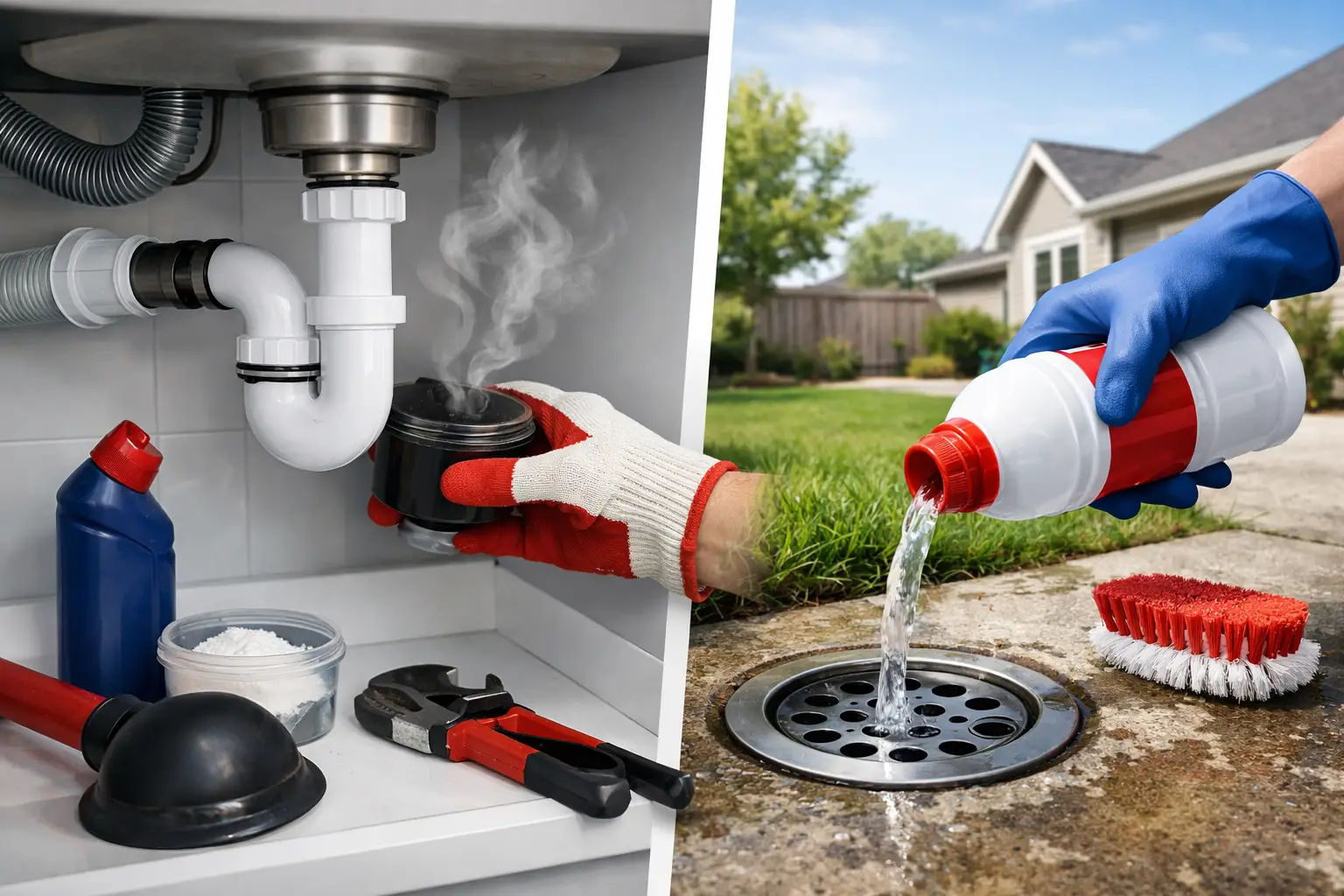
That sour, musty, or sewer-like odor coming from a sink or shower usually means something is building up where it should not. If you are searching for how to clean drain smell, the good news is that many odor problems start with a few common causes, and the right fix depends on which one you are dealing with.
Some smells come from simple buildup inside the drain. Others point to a plumbing issue that needs professional attention. The key is not just covering the odor. It is finding out why the drain smells in the first place so the problem does not keep coming back.
What causes a drain to smell?
In most homes and small commercial properties, drain odors come from one of three places. The first is organic buildup. Soap residue, grease, food particles, hair, and other debris can cling to the inside of the pipe and start to smell over time. Bathroom sinks and shower drains are common trouble spots because buildup happens slowly and often goes unnoticed.
The second is a dry drain trap. Every drain should have a P-trap, which is the curved section of pipe that holds a small amount of water. That water acts as a barrier and helps block sewer gases from moving back into the room. If a drain is rarely used, the water in the trap can evaporate and allow unpleasant odors to come through.
The third possibility is a venting or drainage issue. If there is a clog deeper in the line, a damaged seal, or a plumbing vent problem, smells may return even after surface cleaning. This is where a basic cleaning may not be enough.
How to clean drain smell from a sink or shower
If the smell seems limited to one drain and the fixture is still draining normally, start with a careful cleaning. In many cases, odor comes from buildup right below the drain opening rather than a major blockage farther down the line.
Begin by removing any visible debris from the drain cover or stopper. In bathroom sinks, that often means hair, soap film, and toothpaste residue. In kitchen sinks, it may be food scraps and grease buildup around the basket strainer. Wear gloves, especially if the odor is strong.
Next, wash the stopper, strainer, and the area around the drain opening with hot water and dish soap. A small cleaning brush can help remove grime from parts that are easy to miss. This step matters more than many homeowners expect, because the smell often sits on the surfaces right near the top of the drain.
After that, flush the drain with very hot water. Not boiling water in every situation, especially if you have older pipes or PVC concerns, but hot tap water can help loosen residue and rinse away softened buildup. Let it run long enough to move material through the trap.
If the odor remains, use a mechanical cleaning approach. A drain brush or small hand snake can pull out hair and sludge from the first section of pipe. This is especially effective in bathroom drains, where odor-causing buildup tends to collect just below the stopper assembly. It is not glamorous, but it is often the step that actually solves the problem.
How to clean drain smell when the trap is dry
Sometimes the fix is surprisingly simple. If the smell is coming from a guest bathroom, a floor drain, or another fixture that is rarely used, the P-trap may have dried out.
Run water into the drain for a minute or two and then wait a few hours. If the smell disappears, the trap was likely the issue. Infrequently used drains can dry out again, so occasional water flow helps keep that barrier in place.
This is common in utility rooms, secondary bathrooms, and some commercial spaces where a sink or floor drain may sit unused for long periods. If the odor keeps returning quickly even after water is added, there may be a larger issue involving the drain line or venting system.
Garbage disposal smells need a different approach
If the odor is coming from a kitchen sink with a garbage disposal, the smell may not be from the drain line itself. Food particles can cling inside the disposal chamber, under the rubber splash guard, and around the inner walls.
Turn off power to the disposal before cleaning it. Wipe under the rubber baffle carefully, since this area often traps food residue and develops a strong odor. Then rinse with hot water while running the disposal briefly once power is restored. If the sink still smells after the disposal is cleaned, the problem may be farther down the drain.
This is one area where people often assume the drain is clogged when the real issue is just buildup inside the disposal unit. It is a good example of why the source of the odor matters.
Why drain smell keeps coming back
A recurring odor usually means one of two things. Either the drain was only cleaned at the surface, or there is a deeper plumbing issue contributing to the smell.
For example, a shower may smell better for a day after cleaning the cover, but if hair and soap buildup remain packed into the trap arm, the odor returns. A kitchen sink may improve after rinsing, but grease farther down the line can continue to hold odor and catch new debris.
There is also the possibility of partial clogs. When a drain is still moving water but not as efficiently as it should, waste can sit in the pipe longer and create odor without causing a full backup. That is often the stage where professional drain cleaning makes the most sense. It clears the line more completely than surface-level cleaning and helps reduce repeat problems.
Signs the smell is more than a cleaning issue
Knowing when to stop troubleshooting can save time and prevent a bigger mess. If more than one drain smells at the same time, the issue may not be isolated to a single sink or shower. If the odor resembles sewer gas and is especially strong, that can point to a trap, vent, or line problem rather than normal buildup.
Slow drainage is another sign to pay attention to. A bad smell plus gurgling sounds, bubbling water, or backups usually means there is obstruction or pressure imbalance in the system. In that case, cleaning the visible part of the drain may not solve much.
Odors that come and go with weather changes or heavy water use can also suggest venting problems. Those are not ideal DIY situations. A trained plumber can inspect the line, identify where the smell is coming from, and recommend the right repair or cleaning method.
How to help prevent drain odor
Prevention is mostly about keeping buildup out of the line and making sure drains stay active. In bathrooms, cleaning hair and soap residue before it works its way deeper into the pipe can make a big difference. In kitchens, being careful about what goes into the sink matters just as much. Grease, food scraps, and starchy residue tend to cling to pipe walls and create both odors and clogs.
It also helps to periodically clean stoppers, strainers, and drain covers instead of waiting until a smell develops. These parts catch more debris than most people realize. For unused drains, running water occasionally can keep the trap sealed and odor-free.
There is a balance here. Routine maintenance helps, but repeated odor issues are usually a sign that the problem is beyond light cleaning. When that happens, the goal shifts from maintenance to correction.
When to call a plumber for drain odor
If you have cleaned the drain opening, checked for a dry trap, and still notice a persistent smell, it is time to get the line looked at. The same goes for odors paired with slow drains, frequent clogs, gurgling, or smells affecting multiple fixtures.
A professional can determine whether the issue is buildup, a blockage, a venting problem, or a defect in the drain assembly. That matters because each cause has a different solution. A simple sink odor is one thing. A sewer gas issue behind a wall or under a slab is another.
For homeowners and property managers in the Dallas-Fort Worth area, especially in communities like Plano, McKinney, Allen, Frisco, Richardson, Rockwall, and Royse City, recurring drain odor is worth addressing early. It is easier to deal with a developing drain problem before it turns into a full blockage or a more involved plumbing repair.
MasterTex Plumbing and Drain handles drain cleaning and plumbing issues with the straightforward approach most property owners want - identify the cause, fix the problem correctly, and help prevent it from coming right back.
If a drain smells bad once, cleaning may be enough. If it keeps happening, the smell is usually telling you something useful. Listening to it early is often the easiest way to avoid a larger plumbing problem later.