
A slow bathroom sink before work or a kitchen drain that leaves water standing after dinner can disrupt the whole day. Learning how to clean a drain with baking soda can be a reasonable first step for a mildly slow drain caused by surface buildup. It is not a cure for every clog, though, and knowing the difference can prevent a small inconvenience from becoming a larger plumbing problem.
When Baking Soda Can Help Clean a Drain
Baking soda works best as a light maintenance method for drains that are still flowing, just more slowly than usual. In a bathroom sink, the issue may be soap residue, toothpaste, and light buildup near the drain opening. In a kitchen sink, it may help freshen a drain with minor grease residue and food particles.
The fizz created by baking soda and vinegar can help loosen some light residue around the upper portion of the drain. The hot-water rinse that follows helps move loosened material through the pipe. This is why the method can improve a drain that is sluggish but not fully blocked.
It has limits. Baking soda will not remove a packed hair clog deep in a bathroom line, a solid grease blockage in a kitchen pipe, or an obstruction farther down the plumbing system. It also cannot correct a damaged pipe, root intrusion, improper pipe slope, or a drain line with recurring buildup. If water does not move at all, this is not the right place to keep trying home remedies.
How to Clean a Drain With Baking Soda and Vinegar
Before you begin, remove the stopper or drain cover if you can do so easily. Pull out visible hair, soap residue, or food particles using gloves. This simple step often makes more of a difference than anything poured into the drain.
Start by running hot tap water for a minute or two. Avoid using boiling water, especially if you have PVC piping or a porcelain fixture, because very high heat can create unnecessary stress on plumbing components. Hot tap water is usually enough for this process.
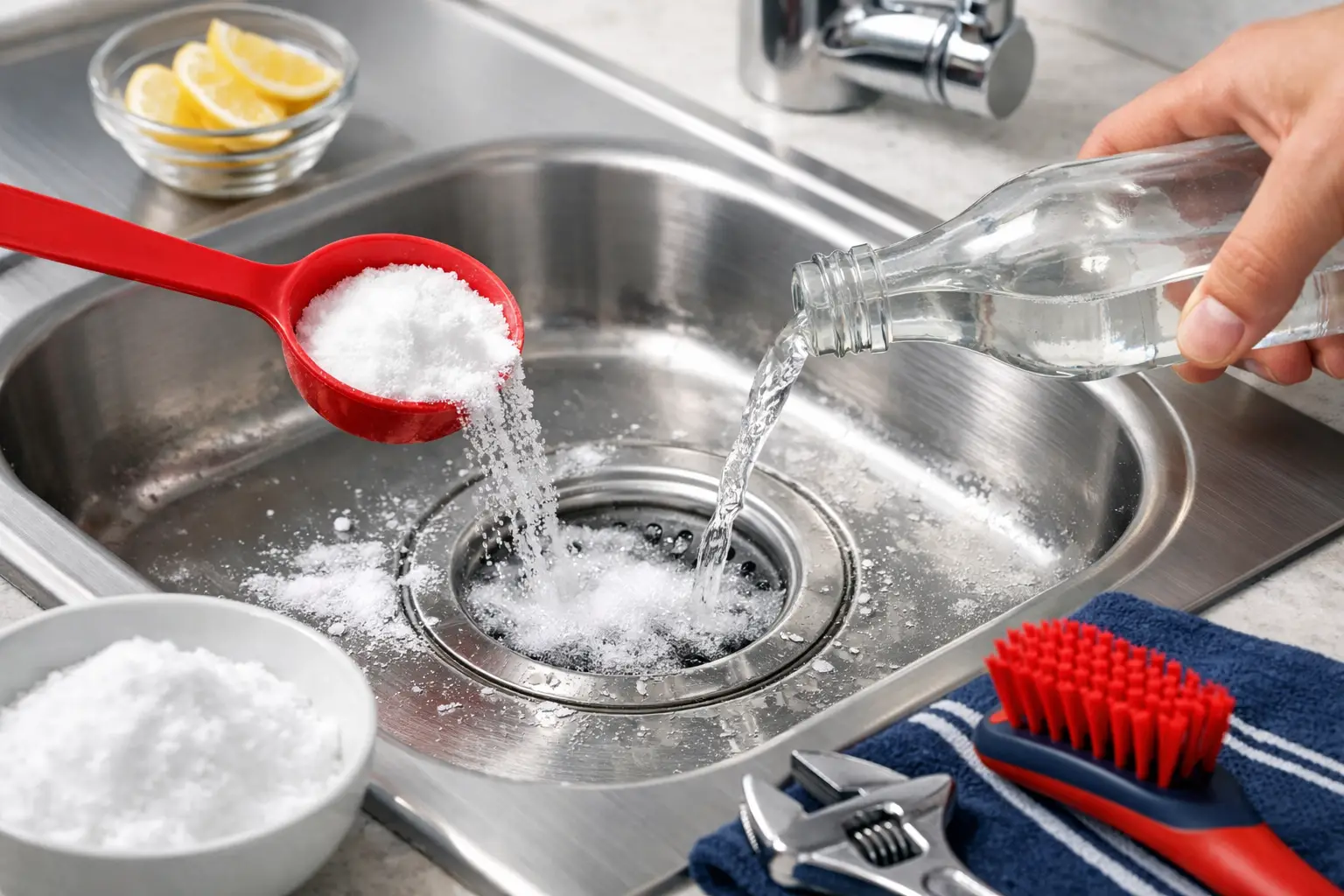
Pour about one-half cup of baking soda directly into the drain. Follow it with one cup of plain white vinegar. You should see and hear fizzing. Cover the drain opening with the stopper or a wet cloth to keep the reaction concentrated near the drain rather than allowing it to bubble back into the sink.
Allow the mixture to sit for 15 to 30 minutes. For a drain that has been slowing down gradually, leaving it for the longer end of that range may be helpful. Then flush the drain with hot tap water for several minutes.
Test the result by filling the sink partway with water and releasing it. A clear improvement means the buildup was likely minor. If the water still drains slowly, repeating the process once may be reasonable. Repeating it several times in one day usually will not solve a clog that the first attempt could not move.
Do Not Mix Products in the Drain
Only use the baking soda and vinegar method in a drain that has not recently had another drain-opening product poured into it. Mixing substances in a closed drain can create fumes, splashing, or an unsafe reaction. If you are unsure what was used previously, do not add anything else. Flush with water if the drain is flowing and contact a plumbing professional for guidance.
Also, do not use this method immediately before taking apart a trap or other drain connection. The remaining mixture can spill when the pipe is opened. If you need to inspect a removable stopper or clear visible debris, do that first.
A Better Approach for Bathroom Sink Drains
Bathroom drains frequently slow down because hair and soap film collect around the stopper assembly. Baking soda may freshen the pipe, but it cannot always reach the material wrapped around the stopper or lodged just below it.
If your sink has a pop-up stopper, lifting it out and cleaning away the visible buildup can restore drainage quickly. Take a photo before removing any parts so you can reinstall them correctly. Avoid forcing the stopper mechanism if it does not come out easily.
After cleaning the visible debris, the baking soda and vinegar process can be useful for rinsing away remaining surface residue. If the sink drains slowly again within days or weeks, there is likely more buildup farther in the line than a household method can handle.
Using Baking Soda in a Kitchen Drain
Kitchen sinks need a little more caution because grease and food debris are common causes of clogs. Baking soda may help with odor and light residue, but it will not reliably clear grease that has cooled and hardened inside the pipe.
First, remove food scraps from the strainer. Run hot tap water, then use the baking soda and vinegar method as described above. If you have a garbage disposal, make sure it is off before reaching near the opening. Never put your hand inside the disposal.
A recurring kitchen clog often points to material accumulating beyond the sink trap. This is especially common when the drain works briefly after flushing but then slows again once the sink is used normally. Professional drain cleaning removes the blockage rather than simply pushing water through a narrow opening.
Signs It Is Time to Stop DIY Drain Cleaning
A slow drain is one thing. A plumbing issue that affects multiple fixtures or keeps returning needs a more complete diagnosis. Waiting too long can lead to an overflow, unpleasant backup, or disruption for tenants, employees, and customers.
Call for professional drain cleaning when you notice any of the following:
- Water backs up into a sink, tub, or shower instead of draining.
- More than one fixture is draining slowly or backing up at the same time.
- The drain improves briefly, then clogs again soon after.
- You hear gurgling from nearby drains or toilets when water is used.
- Water appears around a fixture, under a cabinet, or from a plumbing connection.
- The clog is affecting a business restroom, break room, or other frequently used area.
Multiple slow drains can indicate a blockage farther down the line, where baking soda will not reach effectively. A professional can inspect the situation, identify where the restriction is located, and use equipment designed to clear the line without guesswork.
Preventing the Next Slow Drain
The most reliable way to keep drains moving is to limit what enters them. Use a simple hair catcher in shower and bathroom sink drains, and clear it regularly. In the kitchen, scrape food into the trash and allow grease to cool in a container before disposing of it properly rather than sending it down the sink.
A monthly hot-water flush can help with routine maintenance in drains that are otherwise working well. If you choose to use baking soda occasionally, treat it as a light cleaning step, not a solution for a persistent clog. Recurring problems usually mean there is material or a condition in the line that needs professional attention.
For homeowners, property managers, and local businesses in Plano, McKinney, Allen, Garland, Rockwall, Royse City, and surrounding North Texas communities, a drain that will not stay clear is worth addressing early. MasterTex Plumbing and Drain can help when a slow drain becomes a repeat problem or an active backup. A clear, properly flowing drain should stay that way after normal daily use.