
A slow kitchen sink is frustrating. A toilet that bubbles when the washing machine drains is a different kind of warning. The difference matters because learning how to know drain blockage location starts with noticing which fixtures are affected, when the problem appears, and whether wastewater is coming back up.
You do not need to take apart pipes to make useful observations. In many homes, the pattern of the clog can tell you whether the issue is close to one fixture, farther down a branch drain, or in the main sewer line. That information helps you respond appropriately and gives a plumbing professional a clearer starting point when service is needed.
Start With the Fixtures That Are Affected
Drain piping works like a tree. Each sink, tub, shower, toilet, or appliance connects through a smaller branch line. Those branches eventually join a larger main drain that carries wastewater out of the building. A blockage affects everything upstream of where it sits, which is why the affected fixtures provide the first clue.
When only one fixture drains slowly, the restriction is often close to that fixture. A bathroom sink that holds water while the nearby tub, toilet, and shower work normally usually points to a localized sink-drain issue. Likewise, a kitchen sink that backs up only when its own faucet runs may have a blockage in its trap, drain arm, or nearby branch line.
If two fixtures in the same room are slow, the blockage may be beyond their individual connections. For example, a shower and toilet that both struggle can indicate a restriction in the bathroom branch drain. This is more likely if flushing the toilet makes water rise or gurgle in the shower.
When fixtures in separate parts of the home are affected, look beyond a single branch line. A main drain blockage can cause lower-level tubs, showers, or floor drains to back up when an upstairs toilet flushes or a washing machine empties. That situation deserves prompt attention because continued water use can lead to wastewater overflow indoors.
Use the Lowest Fixture as a Clue
Water follows gravity, so the lowest available drain opening often reveals a main-line problem first. In a one-story North Texas home, that might be a hall bathroom tub or shower. In a home with a lower level, it may be a floor drain, shower, or bathroom fixture on the lowest floor.
Here is a common pattern: the toilet flushes, but water appears in the tub. The toilet may not be the location of the blockage at all. It may simply be sending a large volume of water toward a restriction farther down the line. Since the tub drain is lower, wastewater finds that opening before it can move past the blockage.
A floor drain that fills when the washer discharges is another significant clue. Washing machines release a large amount of water quickly. If the main line is partially blocked, that flow may overwhelm the available pipe capacity and force water back through a low drain.
Do not keep running water to test a suspected main blockage. One brief, controlled observation is enough. Repeated flushing, laundry cycles, dishwasher use, or long showers can turn a drainage issue into a cleanup problem.
Pay Attention to the Type of Symptom
Not every drain problem looks the same. The symptom can help narrow the likely location and severity of the restriction.
A drain that is simply slow may have partial buildup near the fixture or in a branch line. It may still pass water, just not at the rate it should. Gurgling often means air is struggling to move through a pipe because a partial blockage is disrupting normal flow. Odors can occur when standing water and debris remain inside a drain, though odor alone does not confirm where the clog is located.
A complete backup is more urgent. If water will not move at all, or if wastewater comes up through another fixture, the blockage is likely more substantial or located farther downstream. Dark water, toilet paper, or wastewater appearing in a tub, shower, or floor drain should be treated as a reason to stop using the plumbing fixtures connected to that line.
An intermittent problem can be harder to diagnose. A drain that works most days but backs up during laundry or after several showers may have a partial obstruction. It may also be a pipe condition that only becomes obvious when larger volumes of water pass through. In those cases, a professional inspection can be more useful than waiting for a full stoppage.
How to Know Drain Blockage Location by Testing Carefully
A few simple checks can help you describe the problem accurately without creating a larger backup. Use small amounts of water and observe one fixture at a time.
First, identify the fixture with the most obvious symptom. Then check nearby fixtures that likely share the same bathroom, kitchen, or laundry branch. If a sink is slow but the tub and toilet are normal, the problem is probably isolated near the sink. If using the sink affects the tub, or flushing the toilet affects the shower, the blockage is more likely in their shared branch drain.
Next, consider fixtures in other areas of the home. If a kitchen drain is slow while every bathroom fixture works normally, the issue may be limited to the kitchen branch. If several bathrooms and the laundry are involved, the main drain becomes a stronger possibility.
You can also note what triggers the backup. A toilet flush, a full sink of water released at once, and a washing-machine discharge each place different demands on the drainage system. The trigger helps a plumber understand whether the line is partially restricted and where the affected pipes may connect.
Avoid forceful testing. Do not repeatedly plunge a toilet if water is rising in a tub, and do not run multiple fixtures at the same time to see what happens. Also avoid chemical drain cleaners. They can damage certain plumbing components, create a safety hazard for anyone working on the line, and often fail to address a blockage deeper in the drain system.
Check Accessible Cleanouts, but Do Not Open Them
Many homes have a drain cleanout - an access point that allows a plumber to service the drainage system. It may be outside near the foundation, in a garage, utility area, or another accessible location. Its location can help a professional understand where the building drain exits the home.
You can look for a capped pipe and note whether it is accessible, covered, or surrounded by standing water. However, do not remove the cap yourself when there is an active backup. A blocked line can hold wastewater under pressure, and opening the cleanout may release it suddenly.
Instead, share the cleanout location with the plumber. Knowing where it is can save time during drain cleaning or camera inspection, especially when the symptoms suggest a main-line issue.
When a Drain Camera Is the Best Way to Locate the Problem
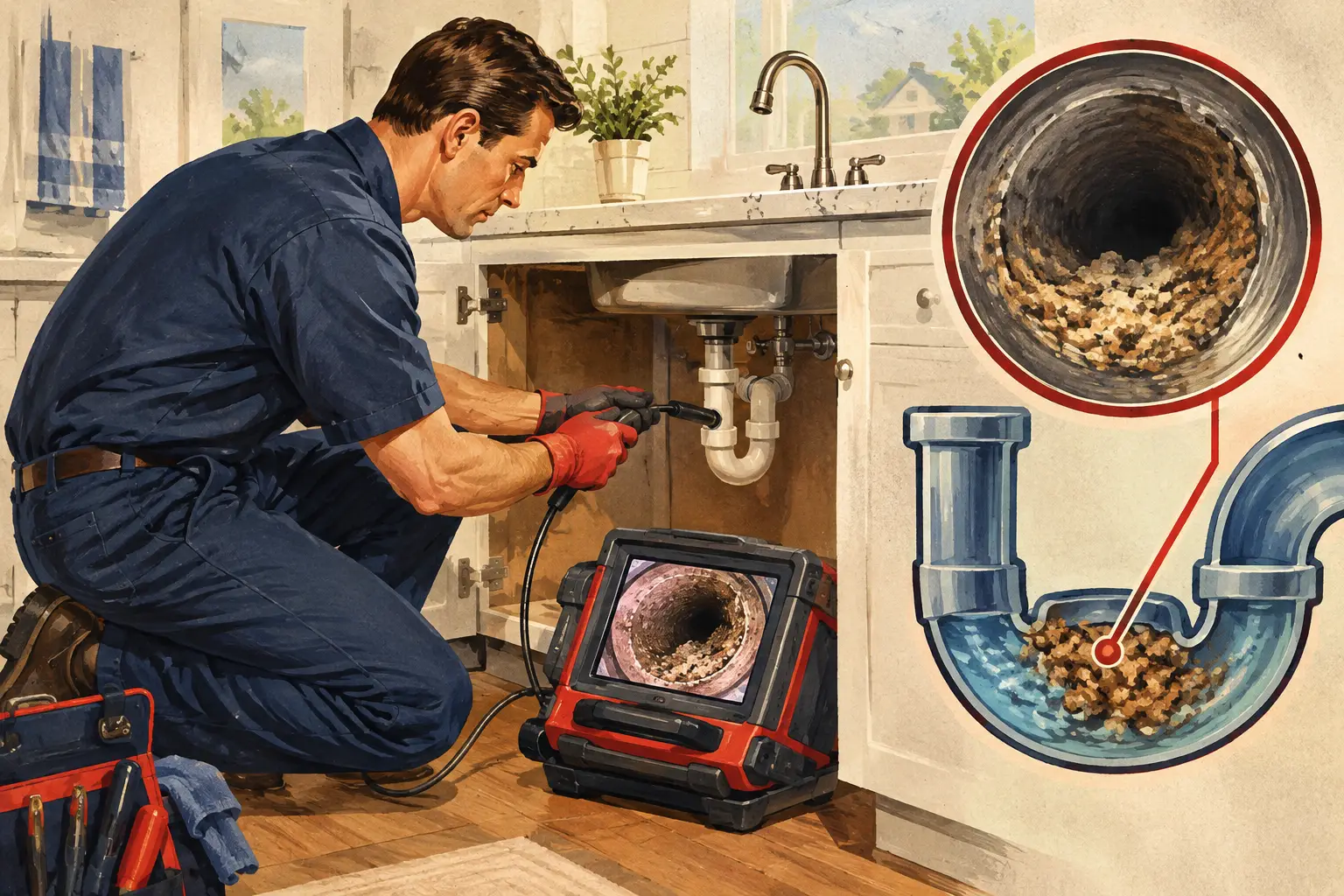
Fixture patterns are useful, but they cannot always identify the exact point of a blockage. A professional drain camera inspection provides a direct view inside the pipe. The camera can show where flow is restricted and whether the issue appears to be buildup, a lodged obstruction, root intrusion, pipe damage, or another condition that needs a specific repair approach.
Camera inspection is particularly helpful when backups keep returning after clearing, when multiple areas of the home are affected, or when there are concerns about an older drain line. It can prevent guesswork and help determine whether standard drain cleaning is likely to solve the problem or whether the pipe needs further evaluation.
For property managers and small-business owners, a camera can also be valuable when a drainage problem disrupts tenants, customers, or daily operations. Finding the location before planning repairs helps limit unnecessary downtime.
Know When to Call for Professional Drain Service
Call for professional help promptly if wastewater is backing up into a tub, shower, floor drain, or sink; if multiple fixtures are clogged; or if the toilet causes water to rise elsewhere. Those signs can point to a shared branch or main drain blockage that needs proper equipment and diagnosis.
A single slow fixture may not always be an emergency, but recurring slow drainage is worth addressing before it becomes a full stoppage. MasterTex Plumbing and Drain serves homeowners and local businesses throughout communities including Plano, McKinney, Allen, Richardson, Garland, Rockwall, and Royse City with professional drain cleaning and diagnostic service.
The most helpful next step is often simple: stop adding water, note which fixtures react to each other, and arrange service before a partial blockage has a chance to become an indoor backup.