
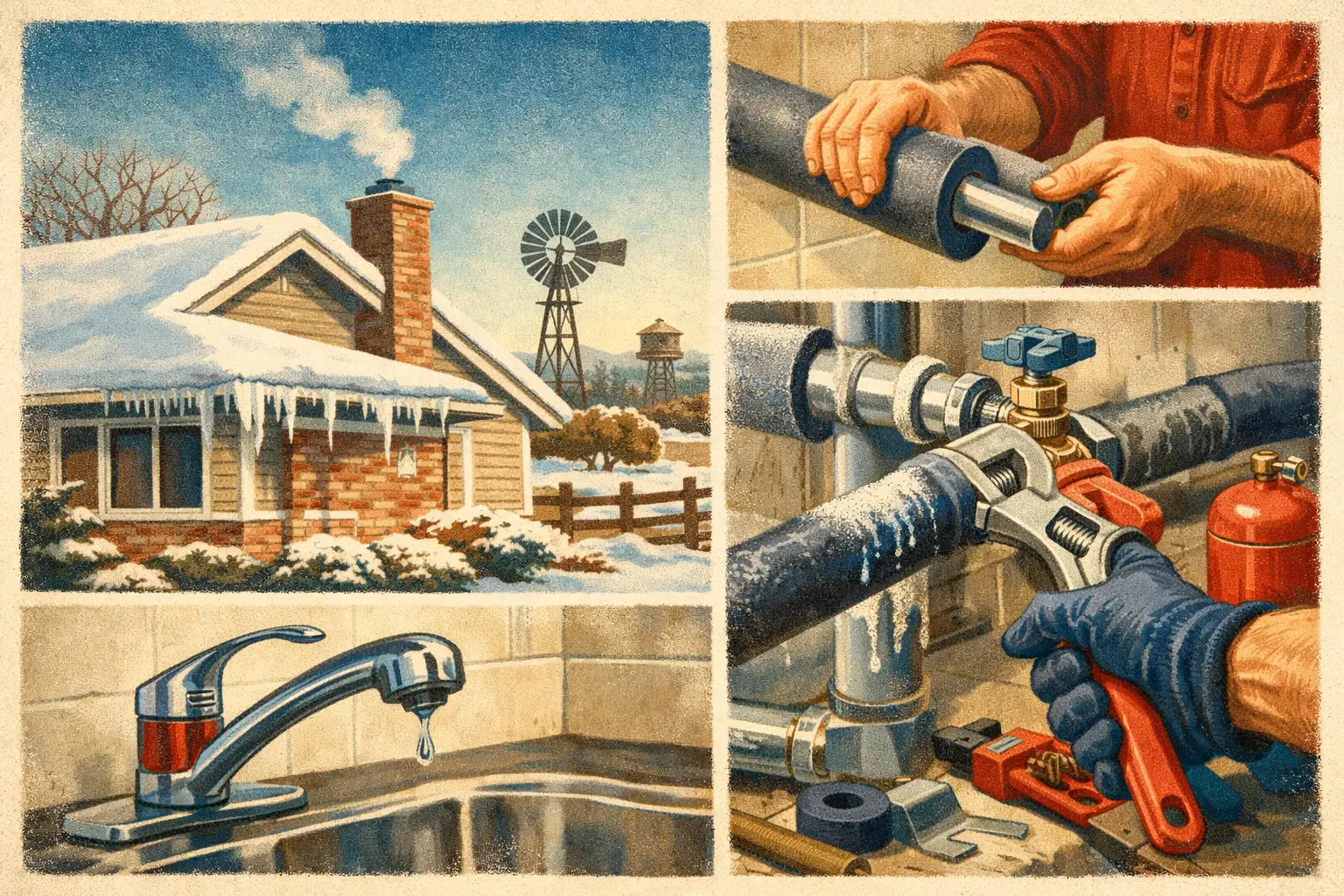
A North Texas freeze can arrive quickly, often after a day that felt mild enough to ignore the forecast. That fast temperature drop is exactly why knowing how to prepare pipes for freezes matters. A few focused steps before the cold arrives can help protect your plumbing from a burst pipe, water damage, and an inconvenient repair when conditions are at their worst.
Pipes do not need days of below-freezing weather to be at risk. Outdoor faucets, exposed pipes in garages or attics, and water lines along exterior walls can freeze first. Homes with unheated spaces, older insulation, or plumbing near exterior openings deserve extra attention whenever a hard freeze is expected.
Start With the Pipes Most Exposed to Cold
Walk around the outside of your home before temperatures fall. Disconnect every garden hose from its outdoor faucet. A connected hose can hold water against the faucet and allow the freezing point to reach the plumbing inside the wall.
If your outdoor faucet has an indoor shutoff valve, close it and open the exterior faucet to drain the remaining water. Not every home has a dedicated shutoff for each outdoor faucet, so do not force or guess at a valve. If you are unsure which valve controls it, a plumbing professional can help identify and label the right shutoffs before winter weather returns.
Once hoses are removed, install insulated faucet covers on exterior spigots. Covers are a helpful first layer of protection, but they do not replace draining the line when an interior shutoff is available. Make sure the cover fits snugly and stays in place during wind and rain.
Then look at exposed pipes in the garage, attic, crawlspace, utility room, and beneath sinks near outside walls. Pipe insulation sleeves or wrap can slow heat loss and reduce the risk of freezing. Pay close attention to elbows, joints, and short pipe sections near foundation vents or garage doors, where cold air can move in quickly.
How to Prepare Pipes for Freezes Inside Your Home
The goal indoors is simple: keep heat around vulnerable plumbing and keep water moving where freezing is most likely. Set the thermostat to a consistent temperature, including overnight. Avoid turning the heat down too far just because you are away for a few hours. During a hard freeze, keeping the home at 55 degrees or warmer is a practical baseline for an occupied or vacant property.
Open cabinet doors under kitchen and bathroom sinks that sit on exterior walls. This allows warmer indoor air to circulate around the supply lines. Move cleaners, medications, and other items out of reach of children and pets before leaving cabinets open.
For faucets served by pipes in exterior walls or unheated areas, let both the hot and cold sides run at a slow drip during the coldest period. Moving water is less likely to freeze than standing water. A steady stream is usually unnecessary and wastes water, while a light, consistent drip may be appropriate when temperatures remain below freezing for several hours.
It depends on your home’s layout. A newer, well-insulated home may only need attention at a few exterior-wall fixtures. A home with a history of frozen pipes, an unheated garage, or plumbing in the attic may need a more cautious approach. When in doubt, protect the fixtures most exposed to outside temperatures first.
Seal Cold Air Gaps Before the Freeze
Insulation around a pipe helps, but cold air entering the building can still create trouble. Check for gaps around pipes where they enter exterior walls, as well as openings near dryer vents, utility penetrations, garage doors, and attic access points. Sealing obvious gaps helps preserve heat around plumbing and can make the home more comfortable during a cold snap.
Close garage doors and keep them closed as much as possible. If water lines run through the garage, leaving the door open for even a short time can expose them to freezing air. Do not rely on a space heater in the garage or attic as a primary pipe-protection plan. These devices can create safety concerns and may not deliver dependable heat to concealed plumbing.
If you have a sprinkler system or other outdoor water connection, follow the system manufacturer’s winterization instructions or arrange professional service before sustained freezing temperatures. Exposed components and backflow assemblies can be vulnerable even when the rest of the home is warm.
Know Where Your Main Water Shutoff Is
A burst pipe is less damaging when the water can be stopped quickly. Every homeowner, property manager, or designated building contact should know where the main water shutoff valve is located and how to operate it. It is often near the water meter, in a garage, utility area, or an exterior wall, but locations vary by property.
Test the valve only if it appears to be in good condition and you know what it controls. A stiff, corroded, or leaking shutoff valve may need professional attention. The middle of a freeze is not the time to discover that the main shutoff will not close.
For rental homes, small offices, and other managed properties, make sure the responsible person has access to the building and knows the shutoff location. Vacant properties need special planning: maintain heat, inspect the property before and after the freeze, and consider shutting off the water if the building will be unoccupied for an extended period. The right approach depends on the property and its heating setup.
A Quick Freeze-Preparation Checklist
Complete these steps before the temperature drops:
- Disconnect outdoor hoses and protect exterior faucets with fitted covers.
- Shut off and drain exterior faucet lines where dedicated shutoff valves are available.
- Insulate exposed pipes in garages, attics, crawlspaces, and utility areas.
- Keep indoor heat steady, open sink cabinets on exterior walls, and drip vulnerable faucets.
- Close garage doors, seal noticeable air gaps, and locate the main water shutoff valve.
These tasks are most effective when done before ice forms. Waiting until pipes are already cold or frozen limits what preventive steps can accomplish.
What to Do If You Suspect a Frozen Pipe
Warning signs include little or no water from a fixture, frost on a visible pipe, or unusual banging, dripping, or water sounds inside a wall. Start by opening the affected faucet. If a pipe is frozen but has not burst, opening the faucet can give melting water a place to escape.
For a visible, accessible pipe, apply gentle heat gradually with a hair dryer or warm towels. Never use an open flame, torch, or other direct high-heat source. Do not attempt to thaw a pipe you cannot safely reach, and do not ignore bulging pipe sections, cracks, or water stains. Those signs can indicate a more serious problem.
If you find a leak or a burst pipe, turn off the main water supply as soon as possible and contact a qualified plumber. Remove standing water if it is safe to do so, and keep people away from wet areas near electrical outlets or appliances. Fast action limits disruption, but professional repair is the right next step when plumbing has frozen or failed.
Prepare Before the Next North Texas Cold Snap
A few minutes of preparation can make a meaningful difference when freezing weather reaches Plano, McKinney, Royse City, and nearby communities. The best time to inspect exposed lines, replace worn faucet covers, and confirm shutoff access is while the weather is still calm. If you have recurring freeze concerns or need help with a damaged pipe, MasterTex Plumbing and Drain can help you address the issue with clear, professional service.