
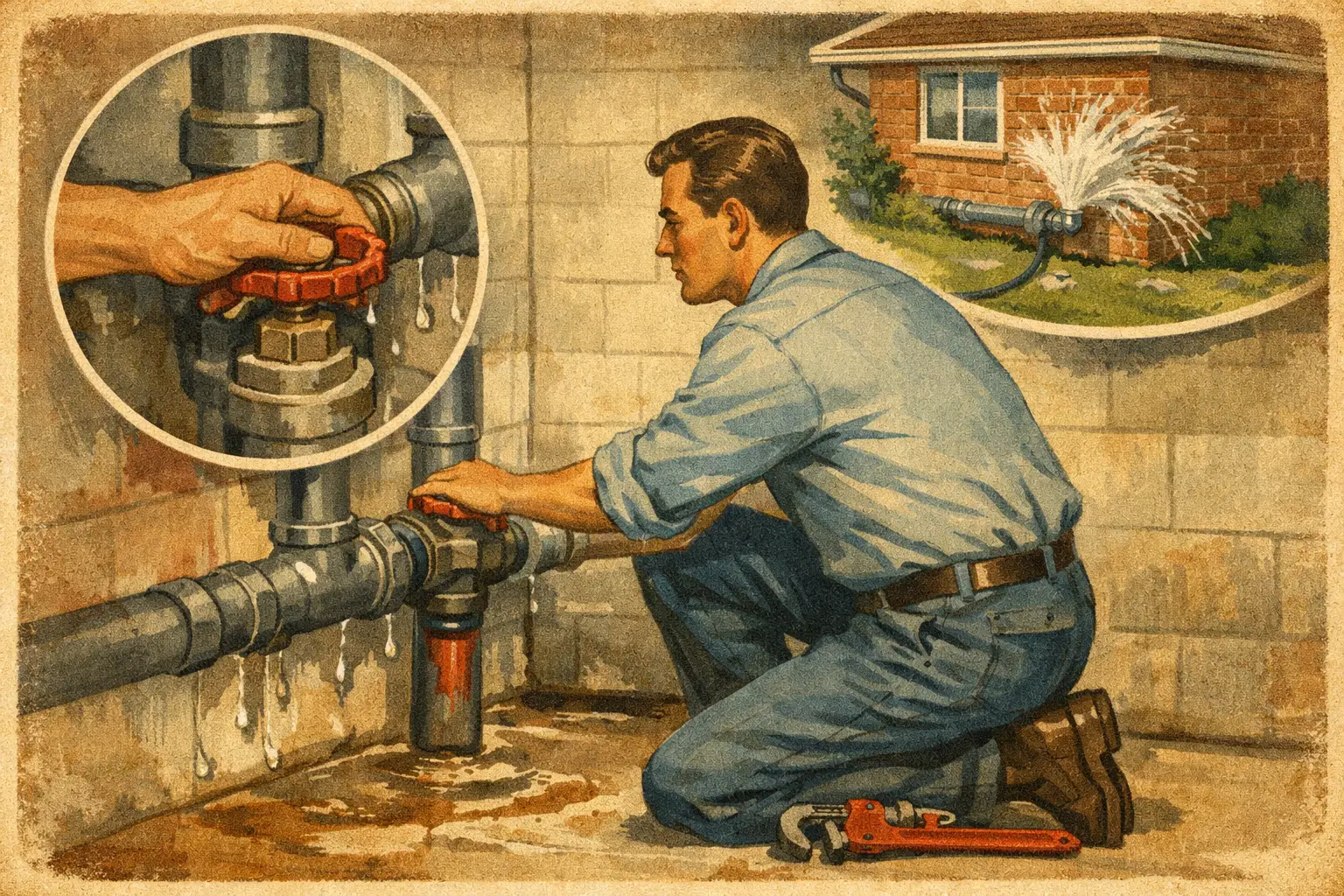
A pipe can split behind a washing machine, a supply line can burst under a sink, or water can begin coming through a ceiling with very little warning. Knowing how to shut off the water main before that happens can keep a plumbing emergency from spreading through your home.
The goal is not to repair a pipe yourself. It is to stop the incoming water safely, reduce the immediate damage, and give a plumbing professional a manageable starting point. For homeowners, property managers, and small businesses, a few minutes of preparation can make a significant difference when water is moving where it should not.
First, know when to shut off the water main
Your main shutoff valve stops the water supply entering the building. Use it when the leak is substantial, when you cannot identify the source quickly, or when a fixture-level shutoff valve will not stop the flow.
A local shutoff is often the better choice for a contained problem. Toilets usually have a small valve on the wall or floor behind the toilet, while sinks, dishwashers, washing machines, and some refrigerators have nearby supply valves. Closing the local valve allows the rest of the home to keep running normally.
Shut off the main water supply when you see a burst pipe, continuous flooding, a major leak inside a wall or ceiling, or water flowing from a fixture that will not stop. It is also appropriate if a supply line has failed and you are not sure which fixture is involved.
If water is near electrical outlets, appliances, or your electrical panel, do not step into standing water or attempt to handle electrical equipment. Move to a safe area and contact the appropriate emergency professionals.
Where is the main water shutoff valve?
In many North Texas homes, the customer-side main shutoff is inside the house, often near the point where the water line enters the building. Look in a garage, utility room, laundry room, closet, mechanical area, or along an exterior-facing wall. Some homes have the valve in a covered outdoor box near the foundation.
The valve may look different depending on the age of the property and prior plumbing work. You may find a round wheel-shaped handle, called a gate valve, or a lever handle, called a ball valve. A ball valve is generally easier to identify because the handle sits parallel with the pipe when open and perpendicular to the pipe when closed.
Your water meter is usually located in a ground-level meter box near the street or property line. The meter area may include valves, but it is best to rely on the accessible customer shutoff valve whenever possible. Meter equipment can be utility-owned, difficult to operate, or affected by dirt, insects, and standing water. If the indoor or customer-side valve is unavailable during a major emergency, contact your water utility and a plumber for guidance.
Find it before there is an emergency
Do not wait for a leak to begin your search. Take a few minutes to locate the valve, clear stored items away from it, and make sure every responsible adult in the home knows where it is. Property managers should also make sure tenants know who to call and where the emergency shutoff is located.
A simple label can help, particularly in garages or utility spaces with multiple pipes and valves. If the valve is hidden, inaccessible, corroded, or difficult to turn, have it evaluated before you need it.
How to shut water main service off safely
Once you have found the correct valve, act calmly and avoid forcing anything. The exact motion depends on the valve style.
For a wheel-style valve, turn the handle clockwise until it stops. It may take several full turns. Turn it steadily, but do not use excessive force. Older gate valves can seize, and forcing one can damage the valve or create another leak.
For a lever-style ball valve, rotate the handle a quarter turn so it is perpendicular to the pipe. The handle should stop in that position. If it resists strongly, do not use a wrench or strike it with a tool.
After closing the valve, open a cold-water faucet at the lowest practical point in the home, such as a first-floor sink or an exterior hose faucet if it is safe to access. This relieves pressure in the plumbing lines and helps drain remaining water. Then open a faucet near the leak if doing so is safe. Water may continue to run briefly because the pipes still contain water, but the flow should slow and stop once the supply is isolated.
Check the leaking area from a safe distance. If water continues flowing at the same rate after a few minutes, the main valve may not be fully closed, may be failing internally, or may not be the correct valve. In that situation, call for professional plumbing help right away.
What not to do when turning off the water
Avoid treating every valve as an emergency shutoff. Some valves serve irrigation equipment, water heaters, or individual fixtures rather than the entire building. Closing the wrong valve may not stop the leak.
Do not force a stuck valve with pliers, pipe wrenches, or added leverage. A valve that has not been operated for years may be brittle or heavily corroded. Breaking it can turn a controlled situation into a larger water problem.
Also, do not assume the water is completely gone as soon as the main is closed. Water stored in pipes, upper-floor plumbing, and fixtures can still drain out. Keep buckets, towels, and a safe path around the affected area while you wait for service.
If a ceiling is sagging or bulging from water, stay out from beneath it. The weight of trapped water can cause drywall or ceiling material to fall suddenly.
After the water is off
Once the incoming water has been stopped, focus on containing the area rather than beginning a major repair. Move dry belongings away from the leak if you can do so safely. Place towels or containers beneath small drips, and avoid using sinks, toilets, dishwashers, washing machines, or other water-using appliances until the plumbing has been inspected.
Take note of what happened. Was a toilet supply line leaking? Did water appear beneath a slab, under a cabinet, or from a ceiling? Did the issue begin while an appliance was running? This information helps a plumber narrow down the source faster when they arrive.
If the leak is minor and isolated to one fixture, a local shutoff may allow the rest of the property to remain in service. If the source is unclear or water has affected multiple areas, leaving the main shut off is usually the safer choice until the problem is diagnosed.
When a plumber should handle the next step
A main valve that will not close, a valve that leaks when operated, or a valve that is difficult to reach deserves professional attention. The same is true for burst pipes, repeated leaks, water inside walls or ceilings, slab-area moisture, and pressure problems that seem to affect more than one fixture.
A qualified plumber can identify the failed component, make the repair, and confirm that the water supply can be restored safely. They can also replace or improve an aging main shutoff valve so it is ready the next time it is needed.
For homeowners and businesses in Plano, McKinney, Allen, Richardson, Royse City, and nearby North Texas communities, MasterTex Plumbing and Drain can help with urgent leak repairs, failed shutoff valves, and plumbing issues that need professional diagnosis.
The best time to find your water main valve is on an ordinary day, when nothing is leaking and you can take your time. Locate it, make sure it is accessible, and keep the number of a dependable plumber available for the moment you need more than a shutoff valve.