
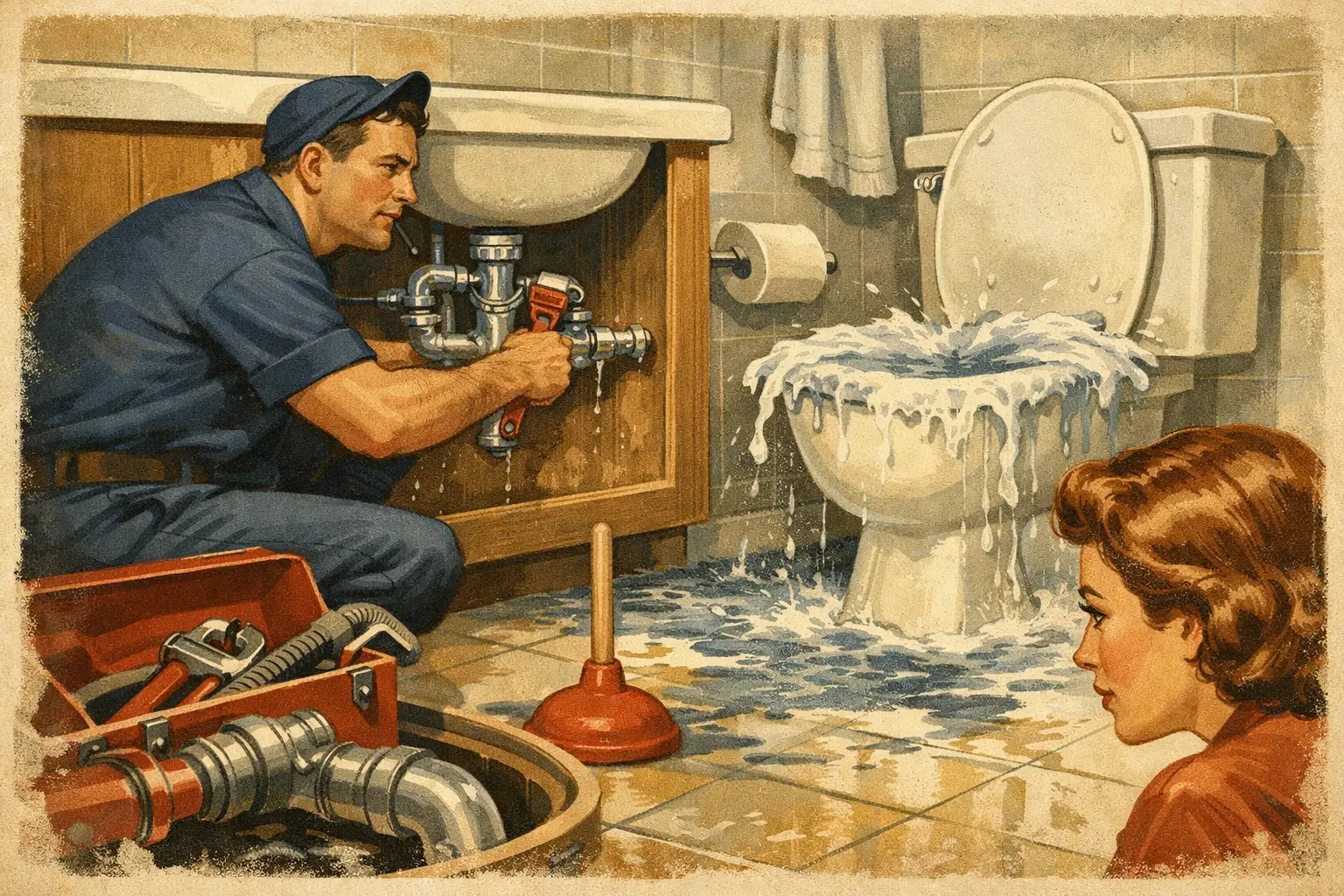
A toilet bowl rising toward the rim is one of those household emergencies that leaves very little time to think. Knowing how to stop toilet overflow before water reaches the floor can protect your bathroom, flooring, and nearby rooms. The first priority is not clearing the clog. It is stopping the flow of water.
Stop the Water Before It Spills
Do not flush again. A second flush is the most common reason a slow-draining toilet turns into an overflow. If the bowl is still filling, remove the tank lid carefully and set it on a towel or stable surface. Porcelain lids can crack easily.
Look inside the tank for the rubber flapper at the bottom. If it is open and water is continuing to leave the tank, press it down firmly to stop the flush cycle. On toilets with a canister-style flush valve, press the canister down into its seated position instead.
Next, turn off the toilet's water supply valve. It is usually located on the wall or floor behind the toilet, connected to the supply line. Turn the valve clockwise until it stops. This prevents the tank from refilling after the immediate problem is under control.
If you cannot reach the tank in time, lift the float inside the tank. This can slow or stop incoming water while you close the shutoff valve. Do not force the float or any internal tank parts. The goal is simply to prevent more water from entering the toilet.
Keep Overflow Water Contained
Once the water has stopped rising, protect the surrounding area. Put on gloves and use old towels to create a barrier around the toilet base. If water has already reached the floor, soak it up promptly and place the wet towels in a bucket or laundry area.
Avoid stepping through contaminated water and then walking across the rest of the home. Keep children and pets away from the bathroom until the area is cleaned. If water has spread into carpeting, baseboards, cabinets, or an adjacent room, a plumbing professional should identify the cause and help prevent another backup before repairs are made.
If the bowl is very full but no longer rising, give the water time to recede. Trying to plunge a bowl filled to the rim can create a messy splash and make it harder to get a proper seal.
How to Stop a Toilet Overflow From a Simple Clog
Many toilet overflows happen because of a clog in the toilet trap, the curved passage built into the fixture. Once the bowl level has dropped to a manageable point, a toilet plunger is usually the first tool to use.
A toilet plunger should have a flange, which is the fold-out rubber sleeve at the bottom of the cup. That sleeve helps seal the opening in the toilet bowl better than a flat sink plunger. Position the plunger over the drain opening and make sure the rubber cup is submerged enough to create a seal.
Start with a few gentle pushes to remove trapped air. Then use controlled, firm strokes for about 15 to 20 seconds. Pull the plunger up at the end to break the seal. You are trying to move water through the trap, not force the handle as hard as possible.
Wait a moment and watch the bowl. If the water drains normally, turn the water supply valve back on slowly and allow the tank to refill. Before flushing, test the toilet cautiously. A partial flush is often enough to confirm that water is moving through the bowl without sending a full tank of water into a possibly restricted drain.
If the water rises again, stop immediately. Shut the supply valve off if necessary and do not keep testing the toilet. Repeated flushing will not solve a stubborn blockage and can create more water damage.
When a Plunger Is Not Enough
A toilet that will not clear after careful plunging may have an object lodged in the trap or a blockage farther down the drain line. Small toys, wipes, paper towels, hygiene products, excessive toilet paper, and other non-flushable materials can all cause this type of problem.
A toilet auger can sometimes clear an obstruction in the toilet itself, but it must be used carefully to avoid scratching the porcelain or pushing an object deeper into the drain. If you do not have experience with one, it is often better to call a plumber rather than risk damaging the fixture or worsening the backup.
Never use chemical drain cleaners in an overflowing toilet. They may not reach the blockage effectively, can damage plumbing components, and create a hazard for anyone who later needs to work on the toilet or drain line. A mechanical approach and an accurate diagnosis are safer choices.
Signs the Problem May Be in the Main Drain
One overflowing toilet does not always mean the toilet is the source of the clog. In some homes, it can point to a larger drainage issue. Pay attention to what other fixtures are doing while the toilet is backing up.
Call for professional plumbing help promptly if you notice any of the following:
- Water or waste coming up in a shower, tub, or floor drain when the toilet is flushed
- More than one toilet draining slowly or backing up
- Gurgling sounds from nearby sinks, tubs, or drains
- Sewage odors near drains or outside cleanout access points
- A recurring toilet backup that returns after plunging
These symptoms can indicate a blockage beyond the toilet trap. The location and severity of the obstruction matter. A clog limited to one toilet may need a different solution than a blockage affecting several fixtures in the property.
Do Not Ignore a Toilet That Refills or Runs Constantly
Sometimes the immediate overflow is caused by a clog, but a tank problem can make the situation worse. After the bowl drains and the water is back on, watch how the toilet refills.
If water continues running into the overflow tube inside the tank, the fill valve or float may need adjustment or replacement. If the flapper does not close correctly, the toilet may keep sending water from the tank into the bowl. These issues do not always cause an overflow on their own, but they can waste water and make a partial clog more likely to become a larger problem during repeated flushes.
A toilet that frequently needs plunging also deserves attention. It may have a partial obstruction, inadequate flushing performance, or a drain-line issue that has not fully developed yet. Addressing it before the next overflow is usually far easier than responding after water reaches the floor.
What Property Managers and Business Owners Should Do
For rental homes, offices, and small businesses, a toilet overflow can affect more than one bathroom. Make sure occupants know where the toilet shutoff valve is and that they should stop flushing at the first sign of slow drainage.
Document when the issue began, which fixtures are affected, and whether there was a recent blockage or unusual item flushed. This information helps a plumbing technician narrow down whether the issue is isolated to one fixture or part of a broader drain problem. Until service arrives, keep the affected restroom closed if there is any risk of another backup.
Get Help Before a Small Backup Becomes a Larger Repair
A plunger can resolve many minor toilet clogs, but it is not the right answer for every overflow. If the toilet repeatedly backs up, multiple drains are affected, or water has spread beyond the bathroom, professional drain cleaning and diagnosis can identify the source without guesswork.
For homeowners and property managers in Plano, McKinney, Allen, Rockwall, Royse City, and nearby North Texas communities, MasterTex Plumbing and Drain can help address urgent toilet and drain problems with practical, professional service. The best next step after containing an overflow is simple: leave the water off, keep the bathroom clear, and get the right help before the next flush creates a bigger mess.