
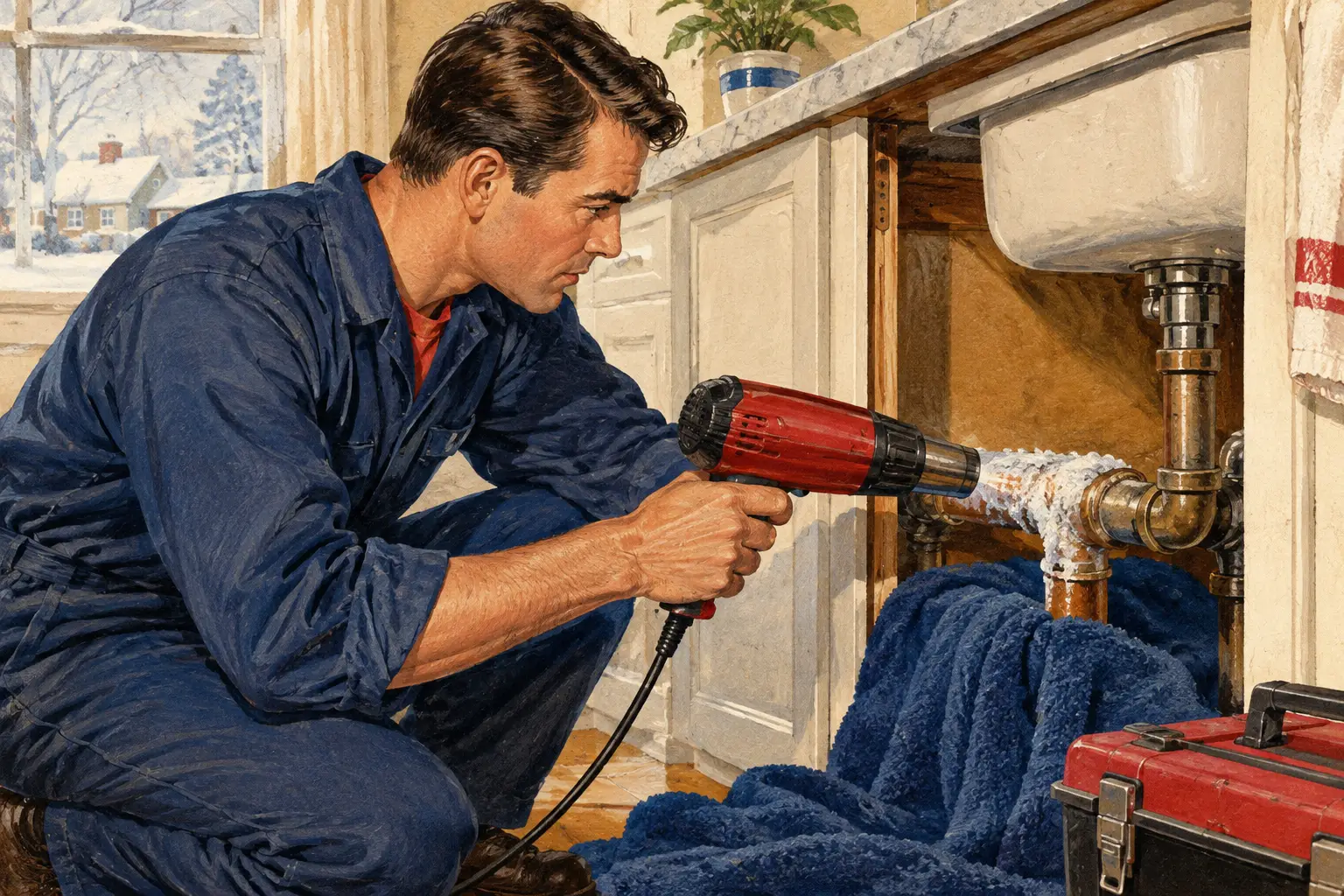
A hard North Texas freeze can turn an ordinary morning into a plumbing emergency. You may open a faucet and get only a trickle, or no water at all. Knowing how to thaw frozen pipes safely can restore water service and, more importantly, help you avoid the pipe rupture that often happens when trapped ice expands.
The priority is not speed at any cost. Heat must be applied gradually and safely, while you watch for leaks as the ice begins to melt. If you cannot locate the frozen section, see frost on a pipe, smell something burning, or find water already leaking, stop and arrange professional plumbing service.
First, check for a burst pipe
Before trying to thaw anything, look carefully around accessible plumbing. Check under sinks, in garages, near exterior walls, inside cabinets, and around water heaters or laundry connections. A frozen pipe can split while it is frozen, but the opening may not become obvious until the pipe warms and water starts flowing again.
If you see active leaking, hear water moving where it should not be, or find water pooling, turn off the home's main water supply if you can do so safely. Then open a nearby faucet to relieve pressure in the lines. Do not continue heating a pipe that is visibly cracked or leaking.
A complete loss of water at one fixture can point to a localized frozen supply line. Low or no water at several fixtures may mean the frozen area is closer to the main water entry or located in a shared section of plumbing. In either case, a pipe hidden behind walls, above ceilings, or under a slab is not a good DIY thawing project.
How to thaw frozen pipes safely
Start by opening the faucet served by the suspected frozen pipe. If it has separate hot and cold handles, open the one that is not producing water. Keeping the faucet open gives melting ice and built-up pressure a place to escape. You may first see a small drip, then a slow stream, before normal flow returns.
Locate the most likely frozen section. It is usually in an unheated or poorly insulated area, such as a garage, crawl space, attic, exterior wall, or cabinet against an outside wall. The pipe may feel unusually cold, show visible frost, or have a noticeable bulge. Do not assume the section closest to the faucet is the frozen one.
For an exposed, undamaged pipe, apply gentle heat beginning closest to the open faucet and work back toward the colder section. This approach helps melt ice in a direction that allows water to flow out rather than remain trapped behind it.
A hair dryer on a warm setting is often the simplest option for a small exposed section. Keep the dryer moving rather than concentrating heat in one spot. You can also wrap the pipe with towels soaked in hot water, then replace the towels as they cool. A portable space heater may help warm the surrounding room, but it should be positioned well away from water, combustible materials, and the pipe itself. Never leave it unattended.
Continue until full water pressure returns. Keep the faucet running briefly and inspect the thawed section for drips, damp joints, or water collecting below the pipe. A small leak can worsen quickly once the line is back under normal pressure.
What not to use on frozen plumbing
Frozen pipes need controlled, even heat. A torch, open flame, propane heater, or any other flame-producing device can overheat the pipe, ignite nearby materials, and create a serious fire hazard. High heat can also damage certain pipe materials and fittings.
Avoid using boiling water directly on plumbing. The sudden temperature change can stress a pipe, while spilled water creates a slip and electrical hazard. Do not use exposed heating elements near standing water, and do not attempt to thaw a pipe with electrical equipment if you suspect a leak nearby.
It is also best not to cut into walls, remove electrical covers, or dismantle plumbing to reach a frozen line. What looks like a simple blockage may involve a split pipe, wiring, or a location that needs professional equipment and repair.
When a frozen pipe requires a plumber
Calling a plumber early is often the practical choice when the pipe is not fully accessible. Professionals can locate the affected section, thaw it using appropriate methods, and inspect for damage before a minor freeze turns into water damage.
Contact a plumbing professional if you have no water at multiple fixtures, cannot find the frozen pipe, or have already tried gentle warming without results. You should also call if the frozen section is behind a wall, beneath a floor, in an attic, or near electrical wiring. These situations are more difficult to diagnose safely and carry a higher risk of an unnoticed break.
A burst pipe needs prompt attention. Turn off the main water supply, move valuables away from the affected area if possible, and avoid using electrical equipment near water. If the leak is near a water heater or another appliance, do not take chances with electrical connections or gas equipment.
For homeowners and property managers in Plano, McKinney, Allen, Richardson, Rockwall, Royse City, and surrounding North Texas communities, MasterTex Plumbing and Drain can help assess frozen or damaged plumbing and make the needed repairs. Fast action can limit disruption to your home or business.
Prevent pipes from freezing during the next cold snap
The best response to frozen pipes starts before temperatures fall. In North Texas, severe freezes may be occasional, which is exactly why vulnerable plumbing can be overlooked between winters. Pipes in garages, exterior walls, attics, and unconditioned utility spaces deserve attention before another hard freeze arrives.
Disconnect outdoor hoses and protect exterior faucets before freezing weather. A connected hose can hold water against the faucet and contribute to freezing at the connection. Inside, close garage doors, keep cabinet doors open where plumbing sits against exterior walls, and maintain reasonable indoor heat throughout the building.
During extended freezing temperatures, allowing a vulnerable faucet to run at a small, steady drip can help keep water moving. This is most useful for plumbing that has frozen before or runs along an exterior wall. It is not necessary for every fixture, and it does not replace proper insulation or repair of a known problem area.
If your home has exposed water lines in a garage, attic, or crawl space, pipe insulation may reduce heat loss. Insulation slows freezing, but it does not create heat. When temperatures remain well below freezing for long periods, protecting the surrounding space and addressing drafts matter just as much.
Property managers should also confirm that vacant units or commercial spaces maintain adequate heat during a freeze. A thermostat set too low, an open garage bay, or an unheated utility room can put plumbing at risk even when the rest of the property seems comfortable.
A quick response makes the difference
A frozen pipe is a warning that part of the plumbing system is exposed to damaging cold. Once water service is restored, take a moment to identify why that line froze and address the condition before the next cold front. A professional inspection can be especially worthwhile after a severe freeze, when a small crack or weak fitting may not reveal itself until later.
If gentle, safe thawing does not restore flow quickly, protect the property by turning off the water when needed and getting qualified help. The right response is calm, careful, and focused on preventing a larger repair.