
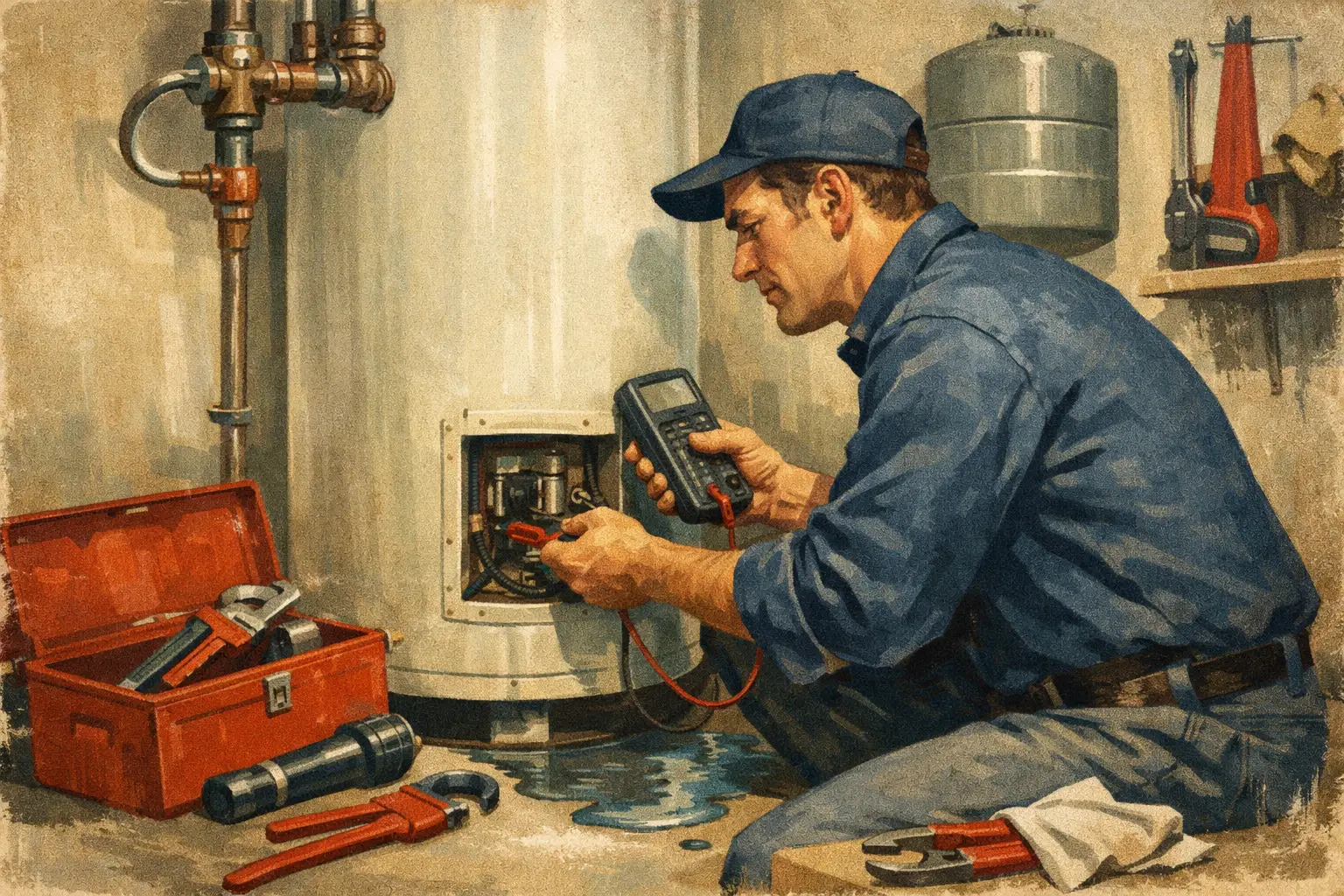
A cold shower is usually the first sign something is wrong, but it is not the only one. Rumbling from the utility room, rusty water at a faucet, a small puddle near the tank, or water that runs out too quickly can all point to a water heater problem. Knowing how to troubleshoot water heater issues helps you narrow down the cause, protect your home from a larger leak, and recognize when professional repair is the safest next step.
Water heaters combine water, electricity or gas, heat, pressure, and plumbing connections. That means a few simple observations are useful for homeowners and property managers, while internal repairs should be left to a qualified plumber. Start with what you can see and hear without removing access panels, disconnecting lines, or attempting gas-related work.
Start With Safety and a Quick Inspection
If there is active leaking, standing water, a burning smell, visible corrosion around electrical components, or any concern about a gas odor, stop using the water heater and contact a plumbing professional promptly. Do not try to relight, repair, or adjust a gas water heater yourself. If you smell gas, leave the area and follow your gas utility's emergency instructions.
For less urgent concerns, look around the unit with a flashlight. Check whether the water is collecting directly beneath the tank, near a pipe connection, or at the temperature and pressure relief valve discharge pipe. Note whether the leak is constant or only appears after hot water is used. These details make diagnosis much faster.
Also check the area around the water heater for blocked airflow, stored items pressed against the unit, or signs of moisture on nearby walls and flooring. A clear, dry space makes it easier to spot changes and helps a technician access the equipment safely.
How to Troubleshoot Water Heater Issues by Symptom
The symptom matters more than the age of the water heater alone. A unit that is several years old may need a manageable repair, while a newer unit with a tank leak may need more urgent attention. The following checks can help identify what is happening.
No Hot Water at All
When no fixture in the building receives hot water, first confirm that the issue affects more than one faucet. If only one shower or sink is affected, the problem may be at that fixture rather than the water heater.
For an electric unit, check whether the appropriate circuit breaker has tripped. Reset it once if it is clearly off, then monitor it. If it trips again, leave it off and schedule service. Repeated tripping can indicate an electrical or heating-element issue that should not be ignored.
For a gas unit, do not attempt to diagnose or repair the burner, pilot, venting, or gas connection. Confirm only that the unit is not displaying an obvious error message, if it has a display, and contact a professional for service. Gas water heater problems require careful inspection because safe operation depends on proper combustion, venting, and controls.
Water Is Warm, but Not Hot Enough
Lukewarm water can have several causes. The thermostat setting may be lower than expected, the water heater may be undersized for current demand, or one heating component may not be operating correctly. A household that recently added occupants, installed a larger soaking tub, or began using several showers at once may simply be exceeding the unit's recovery capacity.
Check the exterior temperature setting only if it is clearly labeled and accessible without opening the appliance. Avoid setting water temperatures excessively high, since very hot water can create a scalding risk. If the setting seems normal but the problem continues, a plumber can test the unit and determine whether repair or replacement makes more sense.
Tankless water heaters can also produce inconsistent temperature when demand exceeds their capacity, a filter is restricted, or the unit has an operational fault. Error codes, temperature swings, or shutdowns are good reasons to arrange professional service.
Hot Water Runs Out Too Fast
If hot water starts normally but disappears sooner than it used to, sediment inside a tank may be reducing usable capacity. This is common in water heaters that have been in service for years. Sediment can also make the unit less efficient and contribute to popping or rumbling sounds as water heats beneath buildup.
The issue can also be related to household demand. Running a dishwasher, washing machine, and multiple showers close together puts heavy demand on a standard tank-style heater. If the problem is new and your hot water use has not changed, have the water heater evaluated rather than assuming it is simply too small.
Discolored or Rusty Hot Water
Brown, orange, or rusty water appearing only from hot-water faucets can suggest corrosion within the water heater or its connected piping. Run cold water at the same fixture for comparison. If the cold water is clear while the hot water is discolored, note that pattern for your plumber.
Do not overlook the age and condition of the tank. Visible rust at the tank body, especially around seams or the bottom, can signal that the tank is nearing failure. Once a tank itself is corroded through, repair is generally not a dependable long-term solution.
Rumbling, Popping, or Knocking Sounds
A water heater should not be completely silent, but new or increasingly loud noises deserve attention. Popping and rumbling often occur when sediment collects in the bottom of a tank. Knocking may also be related to pipe movement or pressure changes elsewhere in the plumbing system.
Do not strike the tank, remove fittings, or take apart the unit to chase the sound. Describe when it happens - during heating, when hot water is running, or all the time - and whether performance has changed. That information helps distinguish normal operation from a service issue.
Water Around the Water Heater
A small amount of water can come from a loose connection, a valve, condensation, or the temperature and pressure relief valve. A continuing puddle, however, is never something to ignore. Dry the area if it is safe to do so, then observe where fresh water appears.
Water at a threaded pipe connection may be repairable. Water seeping from the tank shell or its base is more serious and often means the tank has failed internally. Turn off the water supply to the unit if you can do so safely and without forcing a damaged valve, then arrange service as soon as possible. Protect nearby belongings and avoid using electrical equipment near standing water.
Check for Pressure Relief Valve Warning Signs
The temperature and pressure relief valve is a critical safety component. Its discharge pipe should point downward and terminate near the floor, where released water can be noticed. Water dripping from this pipe may indicate that the valve is operating because of excessive pressure or temperature, or that the valve itself needs attention.
Do not cap, plug, or block this discharge pipe. Do not tie it up or route it into a container where a warning discharge could go unnoticed. Because pressure-related issues can involve the water heater and the larger plumbing system, this is a situation for a licensed plumbing professional.
When Repair Is Reasonable and When Replacement May Be Better
The right decision depends on the type of failure. A faulty control, heating component, valve, or connection may be repairable when the tank is otherwise in good condition. A leaking tank, extensive corrosion, recurring performance problems, or a unit that cannot meet the building's hot-water needs may point toward replacement.
For rental homes, retail spaces, and other small businesses, downtime matters. A planned evaluation after the first warning signs is usually easier to manage than waiting for a full failure and water damage. Keep the water heater's approximate age, fuel type, capacity, model information, and a record of any error code available when requesting service.
Get Local Help Before a Small Problem Grows
Water heater trouble rarely improves on its own. If you have no hot water, recurring temperature changes, unusual noises, discolored hot water, or any leak, professional inspection provides a clear path forward. MasterTex Plumbing and Drain serves homeowners, property managers, and local businesses across North Texas communities including Plano, McKinney, Allen, Richardson, Garland, Rockwall, and Royse City.
A timely service call can identify whether the issue is a connection, a serviceable component, or a water heater that is approaching the end of its useful life. The most helpful next step is simple: document the symptoms, limit use if a leak or safety concern is present, and have a qualified plumber assess the system before the inconvenience becomes a larger disruption.