
A drain that backs up again a few weeks after it was cleared is more than an inconvenience. It usually means the original blockage was opened enough for water to pass, but buildup remains inside the pipe. When comparing hydro jetting vs snaking, the right choice depends on what is causing the clog, the condition of the line, and whether the problem keeps returning.
Both methods are professional drain-cleaning tools. Neither one is automatically better for every home or business. A drain snake is often the efficient solution for a localized obstruction, while hydro jetting can provide a deeper cleaning when grease, sludge, or widespread buildup is coating the pipe walls.
Hydro Jetting vs Snaking: The Main Difference
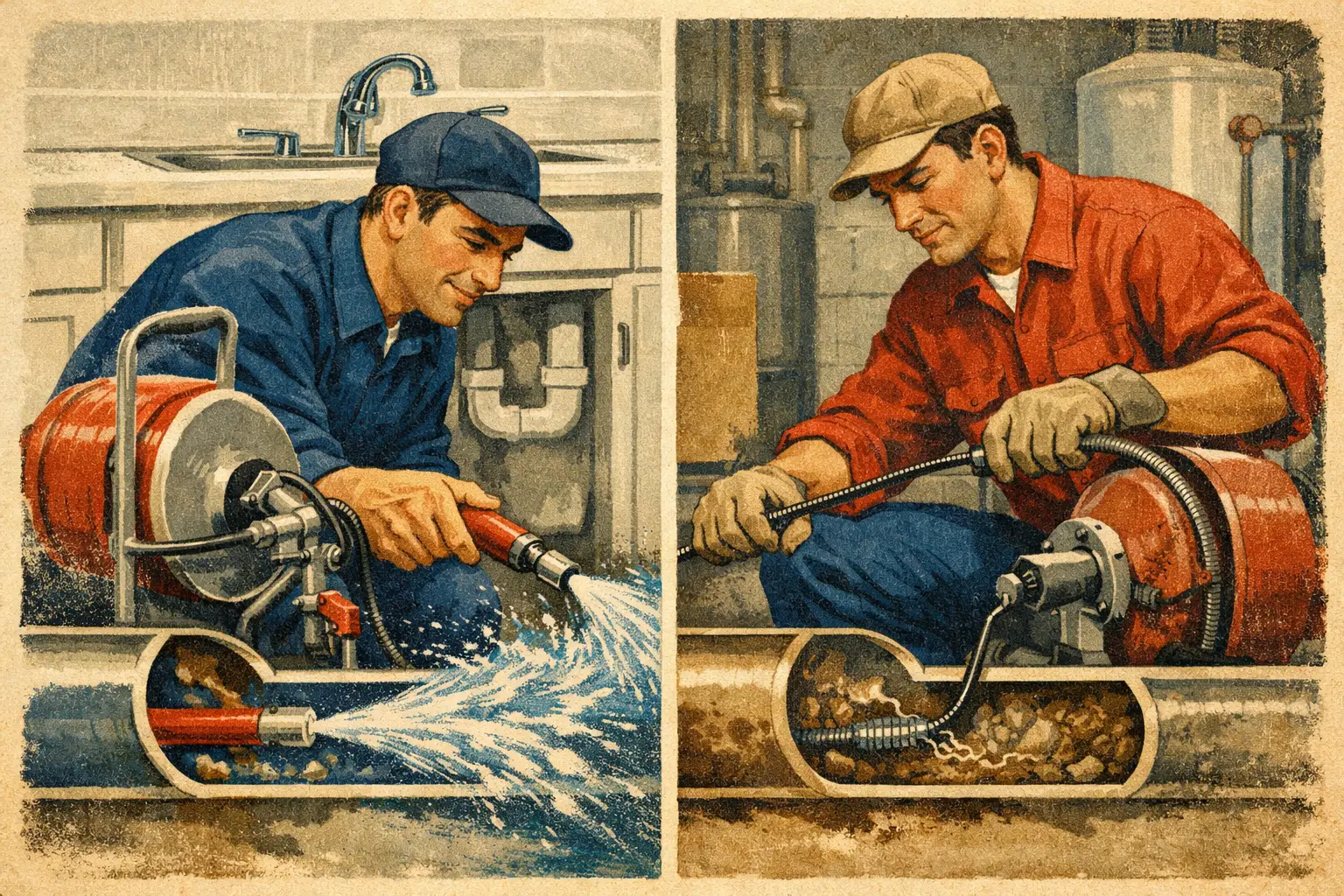
Drain snaking uses a flexible cable with a specialized cutting or retrieval head. A technician feeds the cable through the drain to reach a blockage, break it apart, pull it back, or create an opening through it. It is a direct, mechanical method designed to restore flow.
Hydro jetting uses a hose with a purpose-built nozzle that sends high-pressure water through the drain line. The nozzle directs water forward to help break through the blockage and backward to scrub material off the interior of the pipe as the hose moves through the line. The goal is not only to open a path for water but also to clean accumulated residue from the pipe wall.
Think of snaking as removing the obstruction that is stopping the drain. Hydro jetting is more like washing out the line after the obstruction has been addressed. In many situations, a professional may use a cable machine first and then recommend jetting if the pipe needs more complete cleaning.
When Drain Snaking Is the Better Choice
A drain snake is often the practical first option when there is a single, defined clog. For example, a bathroom sink may be blocked by hair and soap residue near the drain opening, or a toilet line may have an obstruction that needs to be reached and removed. Snaking can also be effective when a line is draining slowly because of a smaller blockage rather than extensive buildup.
It is typically the right approach when the immediate goal is to restore drainage and the pipe does not show signs of a larger recurring issue. A professional cable machine has more power and reach than a small hand auger, allowing the technician to work farther into the line with the proper head for the job.
Snaking also gives the technician useful information. If the cable repeatedly catches at the same location, encounters a hard obstruction, or brings back roots or heavy debris, that can point to a problem that needs more evaluation. The clog may not be the only concern.
Still, snaking has limits. It can create a channel through grease or scale without removing everything stuck to the pipe wall. Water may begin moving again, but the remaining buildup can collect new debris and cause another backup. That is why a drain that has been snaked several times may eventually need a more thorough cleaning method.
When Hydro Jetting Makes More Sense
Hydro jetting is commonly recommended for recurring clogs and lines with heavy internal buildup. Kitchen drains are a frequent example. Grease, food residue, detergent film, and other material can gradually narrow the inside of the pipe. A snake may poke through that material, but hydro jetting can clear much more of the coating along the length of the line.
It can also be a strong option for laundry drains, floor drains, and commercial drain lines that handle regular volumes of soap, residue, or wastewater. For small businesses, recurring drain interruptions can disrupt staff, customers, and daily operations. Cleaning the line more completely may reduce the chance of another near-term service call.
Hydro jetting may also help when roots have entered a sewer or drain line. Roots can catch paper and debris, creating repeat blockages. However, jetting is not a permanent repair for a damaged pipe or a line with openings that allow roots to return. If roots are found, a camera inspection can help determine the location and condition of the affected section.
The major advantage of hydro jetting is its cleaning ability. Rather than simply reopening a narrow passage, it can remove loose scale, sludge, grease, and debris from more of the pipe interior. For a line with years of accumulation, that difference can matter.
Is Hydro Jetting Safe for Older Pipes?
Hydro jetting is safe when it is selected correctly and performed by a trained plumbing professional. The key issue is not simply the age of the home. It is the actual condition of the drain or sewer line.
An older pipe may have corrosion, cracks, weak joints, previous damage, or sections that have shifted. High-pressure water should not be used blindly in a line with unknown condition. Before recommending hydro jetting, a plumber may need to assess the symptoms, review the history of the problem, and use a camera inspection when there is concern about pipe damage.
This is especially relevant in older North Texas homes where drain lines may have gone through years of use, soil movement, and repeated backups. If a pipe is severely compromised, cleaning it aggressively will not correct the underlying defect. The appropriate next step could be repair or replacement of the damaged section rather than another round of drain cleaning.
A professional evaluation protects against using the wrong tool. It also helps avoid the frustration of paying to clear a drain only to have the same issue return because the real problem was never identified.
What a Professional Will Look For
The best drain-cleaning method is based on the cause of the blockage, not just the symptom. A slow sink, a gurgling toilet, and water coming up through a shower drain can all involve different parts of the plumbing system.
During a service visit, a technician will consider where the backup is occurring and whether one fixture or several fixtures are affected. A single slow fixture often suggests a localized drain issue. Backups affecting multiple drains, especially lower-level fixtures, can indicate a larger blockage farther down the line.
The material coming out of the drain also matters. Hair, grease, roots, wipes, mineral scale, and construction debris do not behave the same way inside a pipe. The right cable head, jetting nozzle, or inspection method should match the conditions in that specific line.
Camera inspection is particularly valuable when clogs keep coming back. It can reveal a broken pipe, a belly where water and debris collect, root intrusion, or heavy buildup that is not fully removed by basic snaking. It provides a clearer basis for deciding whether hydro jetting is appropriate or whether the line needs another type of repair.
Choosing the Right Option for Your Drain
Choose snaking when the clog appears isolated, the line needs to be opened quickly, or the problem is likely caused by a direct obstruction. It is a reliable, effective method for many common household drain issues.
Consider hydro jetting when clogs return, grease or sludge is likely coating the line, or a larger section of pipe needs cleaning. It can offer a more complete result, but it should be used only after the pipe condition and the source of the problem have been considered.
Avoid relying on repeated temporary fixes for a drain that continues to back up. Frequent clogs are a signal to look beyond the immediate blockage. For homeowners and property managers in Plano, McKinney, Allen, Richardson, Rockwall, Royse City, and nearby communities, MasterTex Plumbing and Drain can evaluate the line and recommend the drain-cleaning method that fits the problem.
If your drains are slowing down, gurgling, or backing up, acting before a full overflow gives you more options. A clear diagnosis and the right cleaning method can help keep a small drain issue from becoming a larger disruption.