
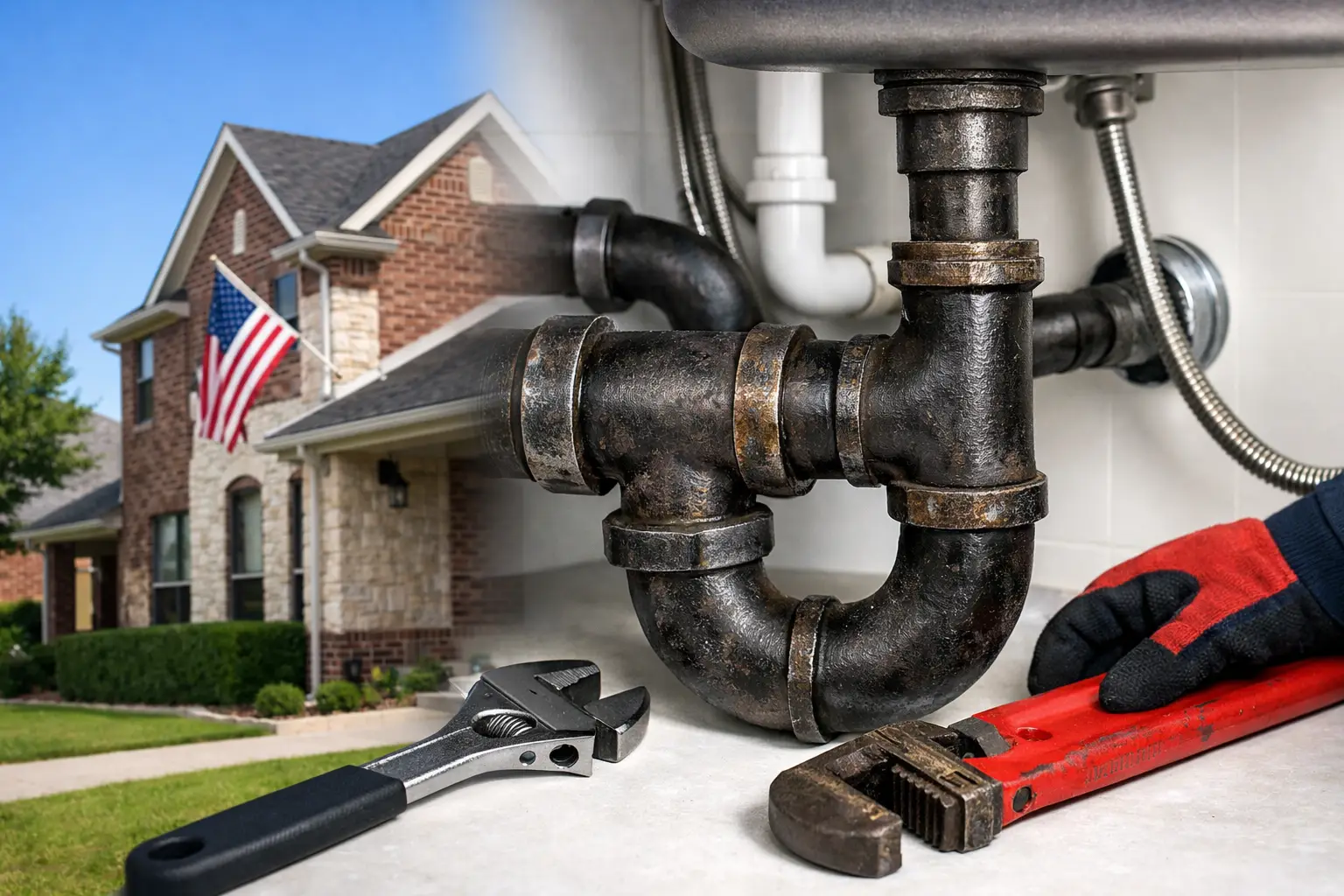
A slow bathroom drain can seem like a small inconvenience until another fixture begins gurgling, water appears near a shower drain, or a backup interrupts the day. For many owners of older homes, this North Texas cast iron pipe guide starts with that practical concern: knowing whether an aging drain line needs attention before a minor symptom becomes a larger plumbing disruption.
Cast iron was a common material for residential drain and sewer piping for decades. Many established homes across Plano, Richardson, Garland, Mesquite, East Dallas, and surrounding North Texas communities still have original cast iron beneath slabs, in crawl spaces, or along exterior drain routes. These systems can provide many years of service, but age, corrosion, ground movement, and repeated drain use eventually take a toll.
Why Cast Iron Pipes Need Attention in North Texas
Cast iron drain pipes are strong, heavy, and well suited to carrying wastewater. Their main limitation is that they corrode from the inside over time. Wastewater, moisture, and normal mineral buildup can create rough scaling on the pipe walls. As the interior becomes uneven, toilet paper, soap residue, grease, and debris are more likely to catch and restrict flow.
North Texas soil conditions add another variable. Clay soil can expand when wet and contract during dry periods. That movement does not automatically mean a pipe has failed, but it can place stress on older joints and sections of pipe beneath a slab. A small separation, crack, or low spot may allow roots or debris to enter the line and lead to recurring drainage problems.
The age of the house matters, but it is not the only factor. Some older cast iron systems remain functional with limited corrosion, while a newer-looking line may have a localized break, poor slope, or root intrusion. A proper diagnosis should focus on the pipe's actual condition rather than its age alone.
Common Signs of Cast Iron Drain Line Problems
A single slow sink may be caused by a localized clog. The concern rises when multiple fixtures are affected or the same issue returns after clearing. Pay attention to patterns, especially when they involve drains on the lowest level of the home.
Recurring backups in tubs, showers, or toilets are common warning signs. You may also hear gurgling after a toilet flushes, notice water rising in a shower drain, or smell sewer-like odors near drains. If a cleanout overflows or wastewater appears outside, stop using water fixtures as much as possible and arrange professional service promptly.
Other signs can be less obvious. A drain may clear temporarily, then slow down again within weeks or months. A washing machine discharge may cause another fixture to bubble. In some cases, a plumber may find damp areas, deteriorated pipe visible in a crawl space, or evidence that a line is holding water where it should be draining freely.
These symptoms do not prove that every section of cast iron needs replacement. They do show why guessing is costly. Clearing a blockage can restore flow, but it will not correct a cracked, collapsed, heavily scaled, or separated pipe.
The Best Starting Point: Camera Inspection
For an older drain system, a sewer camera inspection is often the most useful first step. A plumbing camera travels through the line and provides a view of the interior condition. It can help identify scaling, root intrusion, cracks, offset joints, standing water, bellies, and blockages.
Camera results give homeowners and property managers a clearer basis for deciding what comes next. The findings may support targeted cleaning, a focused repair, or a larger replacement plan. Just as important, the inspection can show when a line is still serviceable and does not need extensive work at that time.
Ask for an explanation of where the issue is located and what the camera showed. A dependable plumber should be able to distinguish between a simple obstruction and a structural concern. If cleaning is recommended first, it should be clear whether the goal is to restore flow, improve visibility for inspection, or both.
Cleaning Can Help, but It Has Limits
Professional drain cleaning can remove many blockages and cut through some buildup in cast iron pipe. It is often the right response when the line is intact and the main issue is accumulation or a localized obstruction. For a drain that has been neglected, cleaning may make a noticeable difference in flow.
However, cleaning is not a permanent repair for every condition. Heavy corrosion can leave rough pipe walls that quickly collect debris again. A line with a major crack, offset joint, sag, or collapse may continue to back up even after it is cleaned. Repeatedly treating the symptom without checking the pipe condition can lead to unnecessary disruptions and avoidable damage.
The practical question is not whether cleaning works. It is whether cleaning addresses the specific problem found in the line.
Repair and Replacement Options for Aging Cast Iron
The right repair depends on the extent and location of the damage. A limited problem in an accessible area may only require replacement of a short section. If several parts of the system are deteriorated, a broader repair or replacement may be the more sensible long-term approach.
For lines located beneath a foundation, the repair method should be selected after reviewing the route, depth, pipe condition, access points, and the condition of connected branches. Some situations call for accessing the pipe directly. Others may allow for trenchless methods, depending on the layout and whether the pipe can support that approach. Neither option is automatically better in every home.
Direct access can provide a straightforward way to replace damaged sections, particularly when the pipe has collapsed or has major structural damage. Trenchless approaches may reduce excavation in certain situations, but they are not appropriate for every type of failure. A line with severe offsets, missing sections, or unsuitable slope may need a different solution.
For commercial properties and rental homes, planning matters as much as repair method. Consider fixture downtime, tenant communication, access to the building, and whether the issue affects one branch line or the main building drain. A clear inspection report and scope of work help property decision-makers plan with fewer surprises.
How to Protect an Older Drain System
You cannot stop cast iron from aging, but good drain habits can reduce avoidable clogs. Keep wipes, paper towels, hygiene products, and other non-flushable items out of toilets. Avoid sending cooking grease and food waste into kitchen drains. Address slow drains early instead of waiting for a full backup.
If your home has a history of recurring main-line stoppages, keep a record of when they occur and which fixtures are affected. That information can help a plumber identify whether the problem is isolated or part of a larger pattern. For properties with mature trees, periodic inspection may also be worthwhile if roots have entered the line before.
Do not rely on chemical drain cleaners for recurring cast iron problems. They may not solve the underlying obstruction or structural issue, and a professional assessment gives you a more useful answer about the pipe itself.
When to Call a Professional Plumber
Call for professional help when multiple drains are slow, a backup returns after cleaning, wastewater is coming up through a tub or shower, or a cleanout is overflowing. Those are signs that the problem may be beyond a fixture-level clog.
MasterTex Plumbing and Drain serves homeowners, property managers, and local businesses throughout much of North Texas with drain cleaning, camera inspections, and practical guidance on aging drain systems. The goal should be to identify the condition of the line, explain the available options clearly, and perform the work that fits the problem.
An older cast iron system does not always require immediate replacement, but recurring symptoms deserve more than a temporary fix. A timely inspection can turn uncertainty into a clear plan and help keep a drain issue from taking over your home or property.