
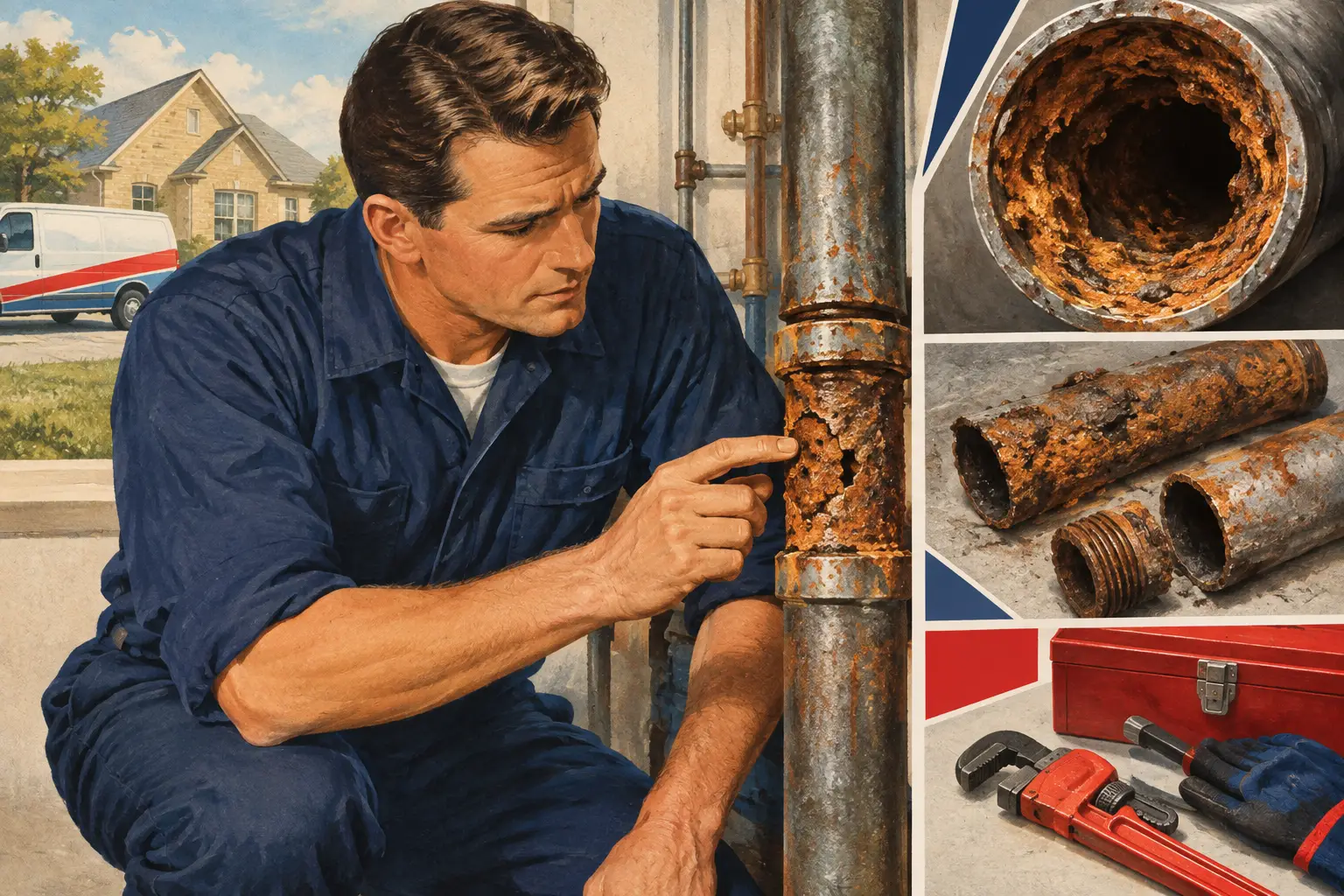
A small stain beneath a sink, a pinhole leak in a utility room, or water that suddenly looks rusty can point to the same hidden problem: pipe corrosion. It rarely begins as an emergency, but it can become one when weakened pipe walls finally fail. For homeowners and property managers, recognizing the early signs can mean addressing a focused repair before water damage and major disruption follow.
What Pipe Corrosion Means for Your Plumbing
Corrosion is the gradual breakdown of metal pipe caused by chemical reactions between the pipe material, water, oxygen, and minerals. It affects many older plumbing systems, particularly galvanized steel, copper, and cast-iron drain piping. The process may happen inside the pipe, outside the pipe, or both.
Internal corrosion can narrow the passage where water flows. That restriction may reduce water pressure, contribute to recurring clogs, or release particles that affect water color. External corrosion often appears where pipes are exposed to moisture, such as beneath sinks, near water heaters, in crawl spaces, or around connections.
Not every discolored-water or low-pressure issue comes from corroded pipes. A plumbing professional should evaluate the system rather than assume the cause. Mineral buildup, a failing fixture, a localized leak, or an issue with a specific plumbing component can produce similar symptoms.
Common Signs of Pipe Corrosion
Corrosion often stays out of sight until a pipe leaks. Still, there are warning signs worth taking seriously, especially in an older home or commercial building.
Rust-colored or cloudy water
Brown, orange, or yellow water from one or more fixtures may indicate rust or sediment moving through the plumbing. If the color clears quickly, the cause may be temporary. If it persists, returns regularly, or is limited to hot water, an inspection can help identify whether the issue is within the pipes, the water heater, or another component.
Low water pressure that gets worse over time
A gradual pressure drop is different from a one-time fixture problem. Corrosion and scale can reduce the inside diameter of aging pipes, limiting water flow. You may first notice it at a shower or kitchen faucet, then at multiple fixtures throughout the property.
Frequent leaks or damp spots
Pinhole leaks are a common result of deteriorating copper piping. A small leak may leave a greenish or bluish residue, a water mark on a cabinet floor, peeling paint, or unexplained moisture. Even a slow drip deserves prompt attention because moisture can damage surrounding materials long before it becomes visible from the room below.
Flaking, staining, or buildup on exposed pipes
Visible rust, white mineral deposits, green discoloration on copper, or crust around joints can signal that a pipe or connection has been leaking or corroding. Surface corrosion does not always mean the entire plumbing system needs replacement, but it should not be ignored.
Recurring drain problems in older lines
Cast-iron drain pipes can corrode internally, creating rough surfaces that catch debris. The result may be repeated backups, slow drains, or blockages that return after clearing. Drain cleaning can restore flow when buildup is the immediate issue, but a camera inspection may be the right next step if the same line keeps causing trouble.
Why Pipes Corrode
There is no single cause of pipe corrosion. The age and material of the plumbing, the condition of joints, pipe location, water chemistry, and past repairs all matter.
Galvanized steel pipes are especially prone to internal rust as they age. Rust can build inside the pipe and restrict flow substantially, even when the outside appears intact. Copper can develop pinhole leaks under certain conditions, while cast iron can deteriorate from the inside of a drain line over many years of use.
Mixed-metal connections can also create problems. When certain dissimilar metals are connected without the proper fitting between them, an electrochemical reaction can accelerate deterioration at the joint. Moisture on the outside of a pipe, condensation, and poorly supported pipe runs can add to the risk.
North Texas properties vary widely. A newer home may have modern piping with a localized issue, while an older home in Plano, Garland, Richardson, or East Dallas may contain original sections of aging metal pipe. That difference is why an on-site evaluation matters. The practical solution depends on which pipes are affected, how accessible they are, and whether the damage is isolated or widespread.
What Happens When Corrosion Is Left Alone
A corroded pipe does not repair itself. In most cases, the metal continues to thin or accumulate buildup over time. A line that is only mildly restricted today may eventually deliver poor flow, leak at a fitting, or fail along a weakened section.
The biggest concern is not only the pipe itself. Water escaping from a hidden leak can damage cabinets, flooring, walls, ceilings, and nearby finishes. It can also interrupt business operations when a restroom, break room, kitchen, or tenant space cannot be used normally.
Waiting is not always the wrong choice for a minor, monitored issue, but waiting without knowing the condition of the pipe creates unnecessary uncertainty. An inspection gives you a clear basis for deciding whether repair can be planned or needs to happen promptly.
How a Plumber Diagnoses Corroded Pipes
A proper diagnosis begins with the symptoms and the affected areas. A plumber may check water pressure, inspect visible pipes and fittings, look for evidence of moisture, and ask whether the problem occurs with hot water, cold water, one fixture, or the entire property.
For drainage concerns, a camera inspection can show the interior condition of a sewer or drain line. It may reveal rust scale, cracks, channeling, separated joints, or heavy buildup. This is especially useful when a drain backs up repeatedly but appears to clear after service.
Leak detection may be needed when moisture is hidden behind walls, under floors, or in another inaccessible area. The goal is to locate the source accurately before opening finished surfaces or replacing pipe unnecessarily.
Repair or Replacement: Which Makes Sense?
The right solution depends on the scope of the damage. A single corroded fitting or short accessible pipe section can often be repaired without replacing a larger system. This is usually appropriate when the rest of the piping is in good condition and there is no pattern of recurring leaks.
Replacement becomes more practical when leaks have occurred in multiple areas, pressure is consistently poor because of internal buildup, or inspection shows broad deterioration. Replacing only one failed section in a heavily aged system can solve an immediate leak while leaving similar weak points elsewhere. That does not automatically mean a full repipe is necessary, but it is a discussion worth having before repeated repairs add up.
For commercial properties, the decision also involves downtime. A targeted repair may be the least disruptive option, while a planned replacement can make sense when recurring problems affect employees, customers, or tenants. A professional assessment should explain the options clearly, including what is urgent and what can be scheduled.
Steps Property Owners Can Take Now
Pay attention to changes rather than waiting for a major failure. Check under sinks and around exposed plumbing for moisture or stains. Note whether low pressure affects one fixture or several. If a drain has been cleared more than once and slows down again, ask whether the line should be inspected rather than repeatedly treated as a simple clog.
Avoid trying to patch a corroded pipe with temporary materials. Surface patches can delay a visible drip, but they do not restore metal that has thinned from corrosion. If you see active leaking, turn off the local fixture valve when possible or shut off the main water supply if the leak cannot be contained, then contact a qualified plumbing professional.
MasterTex Plumbing and Drain helps homeowners, property managers, and local businesses across the North Texas service area evaluate leaks, aging pipes, pressure problems, and recurring drain concerns. A timely inspection can replace guesswork with a practical repair plan.
When a plumbing problem seems small but keeps returning, treat it as useful information. Corrosion is easier to manage when it is found early, before a weakened pipe chooses the worst possible time to fail.