
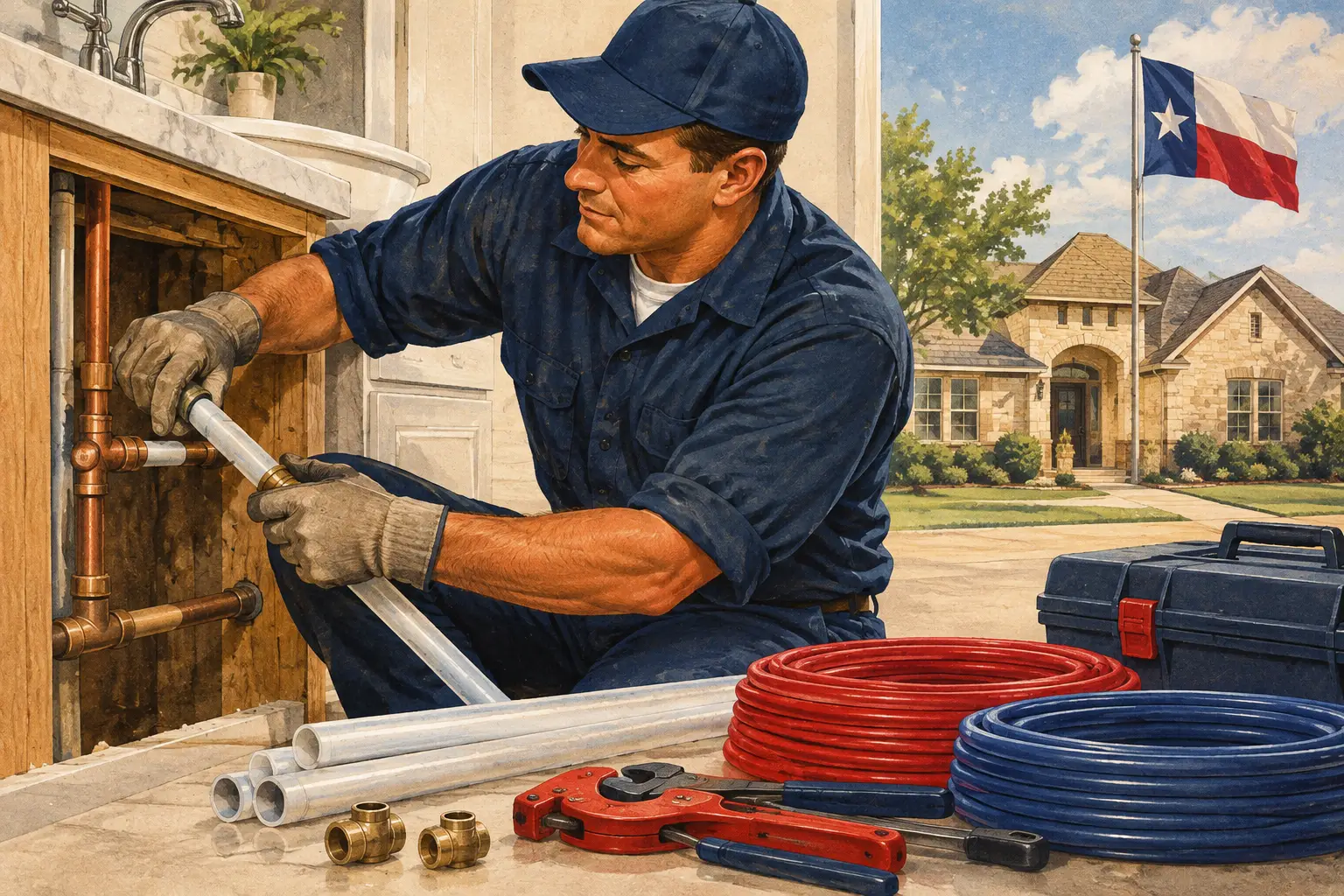
A small leak behind a wall can become a major disruption fast, especially when the home has aging polybutylene supply lines. This polybutylene pipe replacement guide Texas homeowners can use explains what to look for, when replacement makes sense, and how to prepare for a professional repiping project in North Texas.
Polybutylene piping was commonly installed in homes built from roughly the late 1970s through the mid-1990s. It can be gray, blue, or black plastic tubing, and it may be visible near a water heater, under sinks, in a utility room, or at the main water connection. Because these pipes can deteriorate from the inside over time, a line may appear normal until a leak develops.
Why Polybutylene Pipes Need Attention
Polybutylene is not automatically leaking simply because it is present. Some systems may operate for years without an obvious issue. The concern is that the material and its fittings can become less reliable as they age, particularly after decades of regular water pressure, temperature changes, and normal household use.
When a failure occurs, it can happen at a fitting, along a pipe run, or inside a wall or ceiling where it is not immediately visible. That uncertainty is why many homeowners choose to evaluate the full system rather than waiting for repeated repairs.
North Texas homes also experience seasonal temperature swings, expansive soil movement, and high household demand in busy family homes. Those conditions do not prove a pipe will fail, but they can make an already aging plumbing system less forgiving.
How to Tell If Your Home Has Polybutylene
Start with the exposed water supply piping. Polybutylene pipe is usually flexible and plastic, often gray, though color alone is not enough for identification. Look for markings printed along the pipe, including “PB” followed by a number or other manufacturer information.
Do not confuse it with newer PEX piping. Both are flexible plastic materials, but they are different products. A licensed plumber can identify the piping, inspect visible fittings, and help determine whether the system has been partially updated over the years.
Homes built or substantially remodeled after the mid-1990s are less likely to have original polybutylene. Still, additions and repairs can create a mix of materials. It is common to find one newer section connected to older supply lines elsewhere in the house.
Warning Signs That Call for a Plumbing Inspection
A single plumbing problem does not always mean the entire system needs replacement. However, certain patterns deserve prompt attention:
- Unexplained water stains on ceilings, walls, or flooring
- A recurring leak at pipe connections or near fixtures
- Reduced water pressure that affects more than one fixture
- Discolored, warped, or soft areas around cabinets and walls
- The sound of water moving when fixtures are turned off
- An unexplained increase in water use
If there is active leaking, turn off the home’s main water supply if it is safe to do so and contact a plumber. Quick action can limit the amount of water entering the home while the source is located.
Polybutylene Pipe Replacement Guide Texas: Repair or Repipe?
The right choice depends on the pipe’s condition, where the problem is located, the number of prior issues, and the homeowner’s plans for the property. A localized repair may be reasonable when there is a clear, isolated failure in an otherwise updated plumbing system. It can restore service with less immediate disruption.
A whole-home repipe is often the more practical long-term option when original polybutylene runs through much of the house, leaks have occurred in multiple areas, or access to future repairs would require repeatedly opening finished walls. Replacing the system at once gives the plumber the opportunity to install consistent, modern supply piping and inspect connections throughout the home.
For rental homes and small commercial properties, the decision also involves operational disruption. Property managers may prefer a planned replacement window rather than responding to an unexpected water event that affects tenants, finishes, or business operations.
A professional assessment should explain the visible conditions, likely access points, proposed pipe material, and whether the recommendation is a targeted repair or broader repiping. A clear scope matters more than a one-size-fits-all answer.
What Happens During a Professional Repipe
Repiping is a coordinated plumbing project, not simply replacing one exposed section of pipe. The process usually begins with an inspection and a walkthrough of fixture locations, the water heater area, accessible pipe routes, and any signs of previous repairs.
The plumber then develops a route for new water lines. In many homes, this involves accessing pipes through walls, ceilings, attics, or other practical locations. The goal is to replace supply lines efficiently while limiting unnecessary openings. The exact approach depends on the home’s layout, slab or foundation design, story count, and where existing lines are located.
Water service may need to be shut off during portions of the work. A professional team should communicate the expected schedule and explain when fixtures will be unavailable. Once the new piping is installed, the system is pressure-tested, connections are checked, and fixtures are restored. Any necessary permits and inspections should be coordinated according to the requirements that apply to the project and location.
Wall and ceiling access is one of the main trade-offs homeowners should understand. Plumbing crews focus on proper pipe installation and access restoration as outlined in the work scope. Ask before work begins how openings, patching, painting, fixture protection, and cleanup will be handled so there are no surprises.
Choosing Replacement Pipe Material
Modern residential repipes often use PEX or copper, depending on the property, local requirements, and the project plan. PEX is flexible, which can reduce the number of fittings needed and allow efficient routing in many homes. Copper is a long-established material that may be appropriate for particular installations.
Neither material is automatically best for every building. The plumbing layout, access conditions, existing components, and owner priorities all affect the recommendation. The most useful question is not simply “Which pipe is better?” but “Which material and installation method best fit this home?”
Preparing Your Home for Pipe Replacement
A little preparation makes the service process easier for everyone. Before the scheduled start date, clear personal items from under sinks, around the water heater, and near areas the plumber has identified for access. Move furniture away from work zones when possible, and remove valuables or fragile items from nearby walls and shelves.
If you work from home, plan around potential water shutoffs and construction noise. Families with children or pets should also consider how work areas will be separated during the day. For a property manager, notifying occupants early and providing the planned access schedule can reduce missed-entry issues.
It also helps to walk through the home with the plumbing professional before work begins. Confirm which bathrooms, kitchens, laundry areas, and exterior fixtures are included. Ask how existing shutoff valves will be addressed, whether water heater connections are part of the scope, and what testing will occur before the project is complete.
Questions to Ask Before Scheduling a Repipe
A trustworthy plumbing conversation should be specific to your property. Ask whether the existing pipes have been positively identified, what evidence supports repair versus replacement, and how the crew will access the affected lines.
You should also ask about the expected project sequence, periods of water interruption, the replacement material, permit and inspection coordination, and how the work area will be protected. Request a written scope that distinguishes plumbing work from any separate finish repairs that may be needed afterward.
For homeowners in Plano, McKinney, Allen, Richardson, Rockwall, Royse City, and nearby North Texas communities, local experience can make planning easier. Home styles, access conditions, and municipal processes vary, so an on-site evaluation is more reliable than a recommendation based only on a phone description.
Do Not Wait for a Small Leak to Become a Bigger Project
Polybutylene piping does not always fail on a convenient schedule. If you suspect it is in your home, a professional inspection can replace uncertainty with a clear plan. MasterTex Plumbing and Drain can assess visible plumbing conditions, discuss practical repair or repiping options, and help you move forward with the level of service your property actually needs.
The best time to understand your pipes is before water finds its way behind a wall, under a floor, or into the middle of an already busy week.