
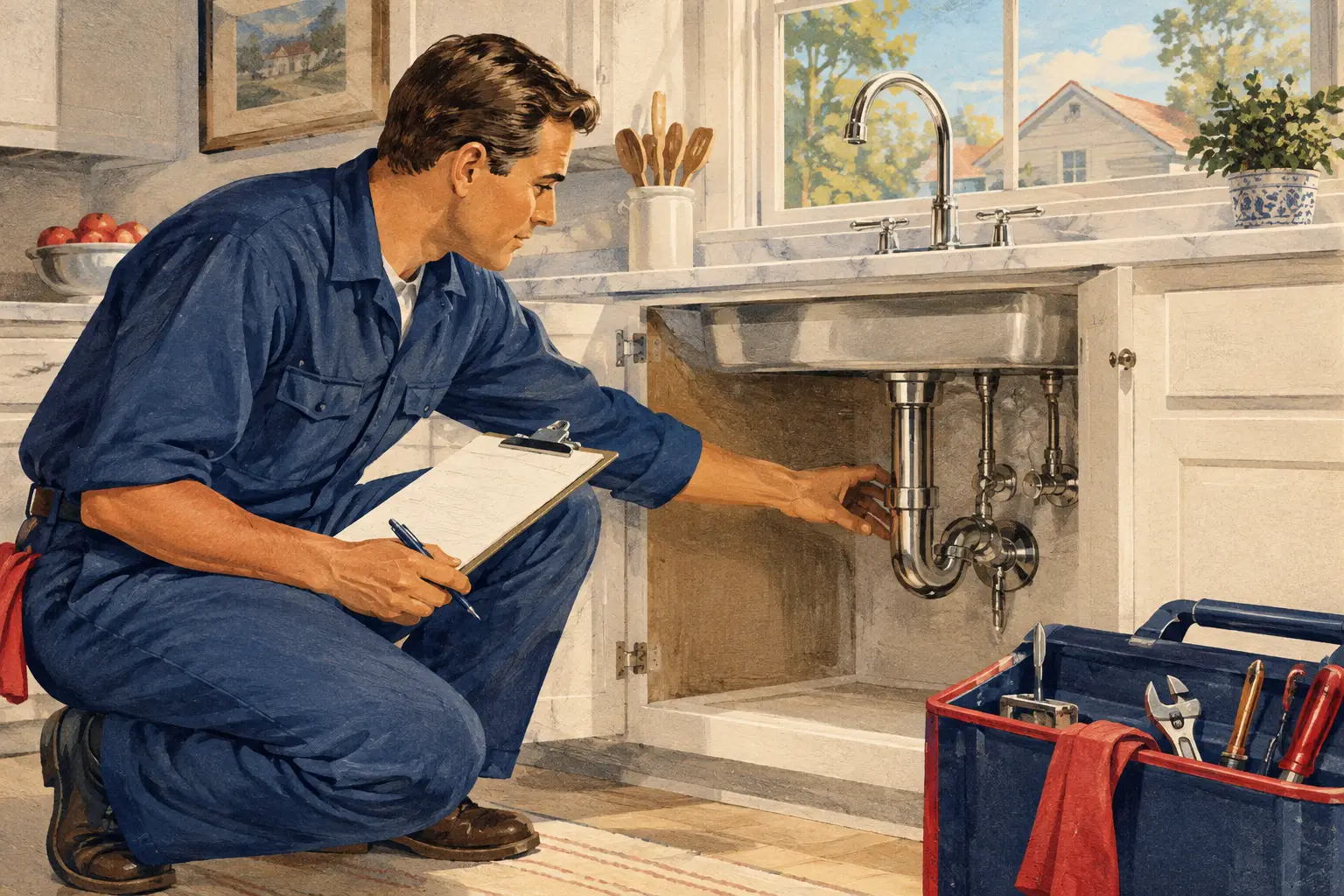
A plumbing repair is not finished just because the water is flowing again. A quality plumbing work checklist gives homeowners, property managers, and local businesses a practical way to confirm the repair addresses the real problem, protects the property, and leaves the area in good condition. Whether the work involves a leaking pipe, fixture replacement, clogged drain, or water heater concern, a few careful checks can provide real peace of mind.
Start With a Clear Scope of Work
Quality work begins before a tool is picked up. You should understand what problem was found, what work is recommended, and why that approach makes sense. A professional plumber should explain the condition in straightforward terms rather than leave you guessing about the source of a leak, backup, low-pressure issue, or recurring clog.
Ask whether the visible symptom is the main issue or a sign of something farther down the line. For example, a slow kitchen drain may be a localized buildup, while repeated backups in more than one fixture can point to a larger drainage issue. Replacing a worn shutoff valve is different from repairing a supply line leak inside a wall. The right repair depends on an accurate diagnosis.
Before work begins, confirm which fixtures, pipes, drains, or appliances are included. If access requires opening a cabinet, moving an appliance, or working behind a wall, the technician should explain that as well. Clear expectations reduce surprises and make it easier to verify the completed work.
Quality Plumbing Work Checklist During the Repair
You do not need plumbing training to recognize professional habits. Pay attention to how the work area is handled and whether the plumber takes appropriate steps to protect your home or business.
A dependable service visit generally includes the following:
- Protecting nearby floors, cabinets, and surfaces from water, debris, and tools.
- Shutting off water or isolating the affected line before repairs begin when needed.
- Using components suited to the application, pipe material, and local plumbing requirements.
- Keeping the work area organized instead of leaving loose parts, standing water, or sharp debris behind.
The exact process will vary by job. A drain cleaning appointment may involve testing multiple fixtures and inspecting how the line drains after service. A faucet replacement requires a different set of checks, including stable mounting, correct supply connections, and proper operation of the handle and drain assembly. What should not vary is careful workmanship.
For property managers and business owners, communication matters just as much. If the repair affects tenants, restrooms, kitchen operations, or normal water access, ask for a realistic timeline and clear notice when the system is ready for use again.
Check the Repair Before the Technician Leaves
The best time to spot a concern is while the plumber is still on site. Ask for a brief walkthrough of the completed repair and watch the affected fixture or drain operate. A professional should be prepared to show what was repaired and answer reasonable questions about normal use and maintenance.
Look for leaks under normal use
Run the faucet, flush the toilet, or operate the fixture as appropriate. Then look underneath sinks, around supply connections, near shutoff valves, and at the base of the fixture. A repair area should be dry once testing is complete.
Some plumbing connections may show a small amount of moisture during initial testing if water has splashed nearby. That is different from an active drip, a damp fitting, or water collecting inside a cabinet. If you see continuing moisture, point it out immediately.
Make sure drains flow and hold properly
For drain service, test the fixture with enough water to see how it performs under a normal load. The water should drain without pooling, gurgling, or backing up into another nearby fixture. A cleaned drain may still need a few seconds to empty depending on the fixture and piping layout, but it should show a clear improvement.
If a sink drain was reassembled, fill the basin and release the stopper. Check that the stopper opens and closes correctly, the water flows freely, and no water escapes around the drain or trap below. In bathrooms and kitchens, small leaks can damage cabinets over time, so this simple check is worthwhile.
Confirm stable, finished installation
New fixtures should be secure, properly aligned, and comfortable to use. A toilet should not rock. A faucet should not shift when you move the handle. Exposed piping should be supported where necessary and should not interfere with cabinet doors, drawers, or appliances.
Appearance is not the only measure of quality, but careless finishing can signal a problem. Look for clean connections, neatly sealed openings where applicable, and no unnecessary gaps around the completed installation. If wall or cabinet access was required, make sure you understand what has been restored and whether any separate finish work remains.
Ask About Materials, Testing, and Next Steps
A good repair includes more than a replacement part. Ask what failed, what was installed, and what testing was performed. This information is useful if the issue returns later or if you manage multiple properties.
For pipe repairs, a plumber may test the line under water pressure and inspect connections for leaks. For drainage work, testing may involve running water from the affected fixture and checking downstream flow. For a water heater concern, proper operation includes confirming the unit heats normally and that connections are secure. The appropriate test depends on the service performed.
You should also know whether the repair changes how you use the fixture. A newly installed garbage disposal, toilet, faucet, or drain component may have simple care instructions. Follow them closely, especially during the first few days after service.
If the plumber identifies aging pipes, a failing valve, root intrusion, or another issue outside the immediate repair, ask how urgent it is. Not every recommendation requires immediate action. However, understanding the risk helps you plan before a small problem becomes a disruptive one.
Signs the Work May Need a Follow-Up
Even well-completed plumbing work can reveal a separate issue once the system is back in regular use. Contact the plumbing company promptly if you notice recurring leaks, reduced water flow, unusual sounds, slow drainage, sewer odors, or water appearing where it should not be.
A repeat problem does not automatically mean the original repair was performed poorly. Plumbing systems are connected, and one symptom can have more than one cause. A cleared bathroom drain, for example, may expose a separate restriction farther along the line. The key is to report the details: which fixture is affected, when the issue occurs, and whether other drains or fixtures are involved.
Avoid waiting on an active leak or backup. Turn off the local fixture valve or the main water supply if water is spreading and you can do so safely, then request service. Fast action can limit disruption to cabinets, flooring, and daily routines.
Keep a Simple Record of the Service
Save the service paperwork and note the date, the location of the repair, and the issue that was addressed. For a rental property or commercial space, keep this information with the property's maintenance records. It gives future technicians useful context and helps you track recurring problems.
It is also helpful to take a photo of the completed work where accessible, such as under a sink or beside a water heater connection. The goal is not to inspect the repair like a plumber. It is simply to have a reference point if something changes later.
For homeowners across Plano, McKinney, Allen, Rockwall, Royse City, and nearby North Texas communities, reliable plumbing work should feel clear from the first explanation through the final test. MasterTex Plumbing and Drain can help when a repair, installation, or drain issue needs professional attention.
A few minutes spent checking the work, asking direct questions, and testing the affected fixture can make a real difference. When something does not look or feel right, trust that observation and address it while the issue is still manageable.