
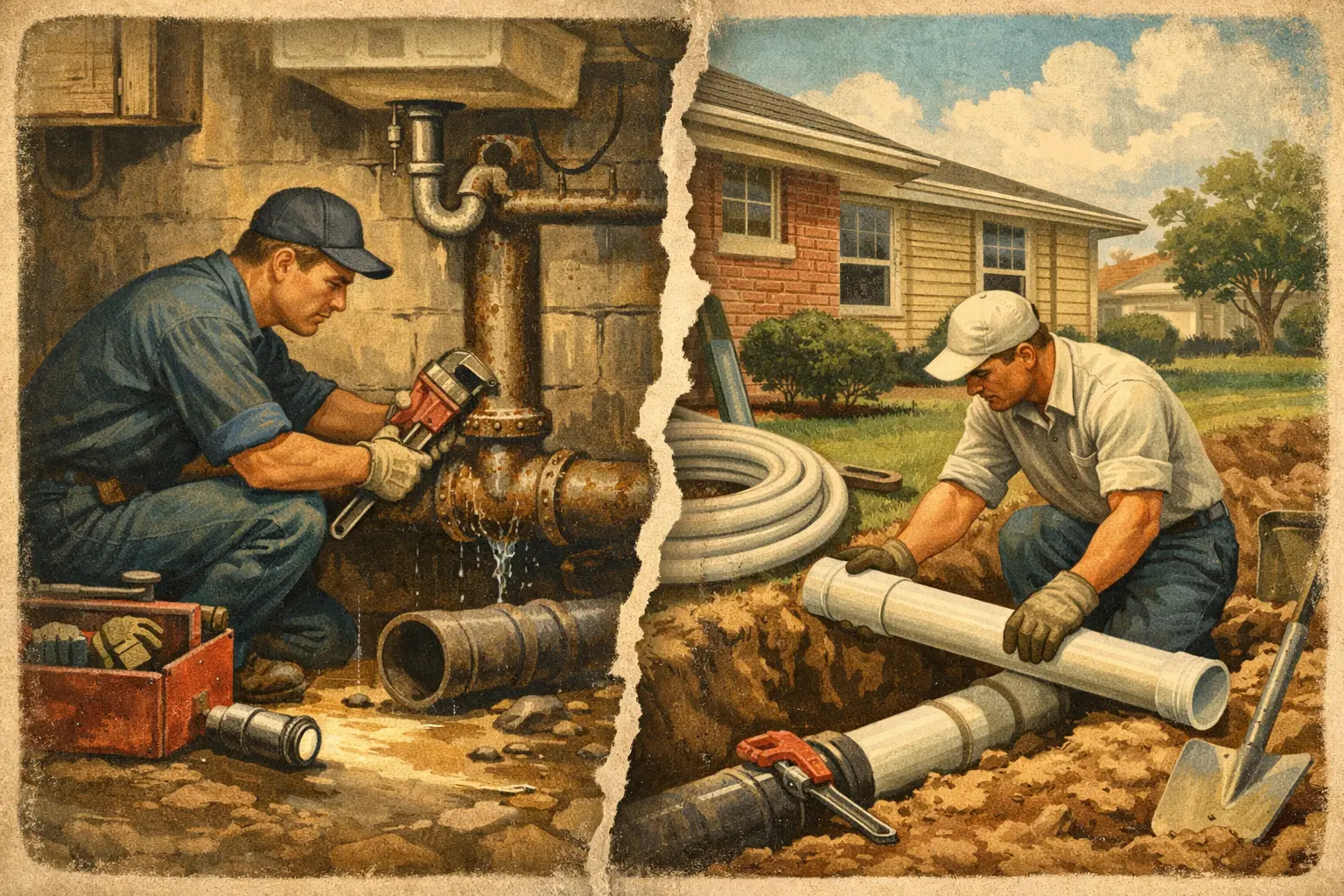
A recurring backup is rarely just a drain problem when an older home has cast iron piping. The real question is whether to repair or replace cast iron sewer lines before a small blockage becomes a larger disruption under the home or across the yard. For homeowners and property managers in North Texas, the answer should come from the pipe’s actual condition, not from guesswork or a one-size-fits-all recommendation.
Cast iron was a common sewer material in homes built decades ago. It is durable, but it does not last forever. Internal corrosion, separated joints, cracks, and low spots can gradually affect how wastewater moves through the line. A professional camera inspection helps identify the source of the issue and provides the information needed to choose a practical path forward.
Why Cast Iron Sewer Lines Begin to Fail
Cast iron sewer pipe can deteriorate from the inside out. Wastewater, normal pipe aging, and years of moisture exposure can cause the interior surface to become rough or scaled. As the pipe loses its smooth interior, paper, waste, and debris are more likely to catch and form repeated clogs.
In the Dallas-Fort Worth area, soil movement can also matter. Expansive clay soils shift with changing moisture conditions, placing stress on underground piping. That movement may contribute to cracked sections, misaligned joints, or areas where the pipe no longer maintains the proper slope.
Not every old cast iron line has failed. Age alone is a reason to inspect, not an automatic reason to replace. The condition of the pipe, the location of damage, and the history of drain problems are what determine the right recommendation.
Signs It Is Time to Inspect the Sewer Line
One slow fixture does not necessarily point to a sewer-line failure. Multiple plumbing fixtures acting up at the same time is more concerning, especially when the issue keeps returning after drain cleaning.
Watch for backups in tubs or showers when toilets flush, gurgling from drains, persistent sewer odors near drains or outside, and water appearing around floor drains. You may also notice that the lowest drains in the home back up first. These symptoms can indicate a blockage or damage in the main sewer line rather than an isolated fixture drain.
A sudden backup needs prompt attention. Even if water eventually drains away, the underlying obstruction or pipe defect may still be present. Clearing the immediate blockage is useful, but it should not be confused with confirming that the sewer line is structurally sound.
Start With a Camera Inspection, Not Assumptions
The most useful first step is a sewer camera inspection after the line is accessible and flowing well enough to view. A camera allows a plumber to see inside the pipe and locate corrosion, cracks, root intrusion, offset joints, standing water, or an obstruction.
The inspection should answer several practical questions: Is the defect limited to one area or spread along much of the line? Is the pipe still round and structurally stable? Is the problem under the foundation, in the yard, or near a connection point? Can the line be cleaned and monitored, or is its condition likely to cause ongoing trouble?
Camera findings also help distinguish pipe damage from a simple blockage. A line that is otherwise intact may need professional cleaning and follow-up observation. A line with extensive scaling, breaks, or repeated failures may call for a more permanent repair plan.
When Repairing Cast Iron Sewer Makes Sense
Repair is often the right choice when damage is limited and the remaining pipe is in serviceable condition. For example, a single cracked section, a failed joint, or a localized area of root intrusion may be addressed without replacing the entire sewer line.
A targeted repair can make sense when the issue is easy to access, the camera shows stable pipe on both sides of the damaged area, and there is no pattern of failures elsewhere. This approach focuses work where it is needed and avoids replacing piping that is still performing properly.
Some sewer lines may also be candidates for trenchless methods, depending on the pipe’s condition and layout. These methods can reduce excavation in certain situations, but they are not suitable for every cast iron line. A severely collapsed section, major misalignment, or pipe with extensive missing material may require a different approach.
Repairing a localized problem is not the same as ignoring the rest of an aging system. If the camera shows moderate deterioration in other areas, a plumber may recommend periodic inspections so future decisions are based on changing conditions rather than surprise backups.
When to Replace Cast Iron Sewer Lines
Replacement becomes more practical when deterioration is widespread. If the interior of the pipe is heavily corroded, multiple sections are cracked, joints are separating, or backups continue despite proper cleaning, repeated spot repairs can become less efficient over time.
A full or partial sewer replacement may also be recommended when the pipe has lost its structural integrity. Cast iron that is badly scaled or deteriorated can continue catching debris even after a blockage is removed. In that situation, the concern is not just today’s clog. It is the likelihood of future service calls, interruptions, and damage caused by another backup.
The scope does not always mean replacing every pipe in the home. A professional evaluation can identify whether the main building sewer, a branch line, or only a damaged section needs replacement. The best plan addresses the failed components while considering the condition of connected piping.
For homes with plumbing lines beneath a slab foundation, access planning is especially important. The method used depends on the pipe location, soil conditions, layout, and the extent of damage. A clear explanation of the work area, access points, and restoration needs should be part of the recommendation before work begins.
Repair or Replace Cast Iron Sewer: Key Decision Factors
The decision usually comes down to condition, location, and the pattern of problems. A single obstruction in an otherwise sound line points toward cleaning or repair. Multiple damaged areas in an aging line point more strongly toward replacement.
Consider the history of the property as well. Has the home had recurring backups in the same area? Have drains needed frequent clearing? Did a previous inspection identify scaling or defects that may have worsened? These details help put a current problem in context.
Access affects the work plan, but it should not be the only deciding factor. A less invasive option is valuable when appropriate, yet the repair still needs to solve the actual pipe problem. Choosing the right scope at the beginning can reduce the chances of repeated disruption later.
What to Expect From a Professional Evaluation
A dependable sewer assessment should begin with the symptoms you have noticed, followed by testing and camera inspection as needed. The plumber should explain what was found in plain language, identify the location of concern, and discuss whether the issue is isolated or system-wide.
You should also understand the available options and their trade-offs. A targeted repair may preserve more of the existing system but may not address deterioration elsewhere. Replacement is a larger project, but it can be the more sensible long-term choice when the line has widespread failure.
Avoid making decisions based only on a temporary improvement after a clog is cleared. Drain cleaning restores flow, but a camera inspection helps show why the clog developed and whether the pipe itself needs attention.
For homeowners in Plano, McKinney, Allen, Garland, Rockwall, Royse City, and nearby communities, MasterTex Plumbing and Drain can evaluate cast iron sewer concerns and explain the condition of the line before recommending next steps. The goal is straightforward: identify what is causing the problem, address it professionally, and help you move forward with a plan that fits the pipe and the property.
If your drains are backing up repeatedly or several fixtures are showing the same symptoms, schedule an inspection before the next backup chooses the timing for you.