
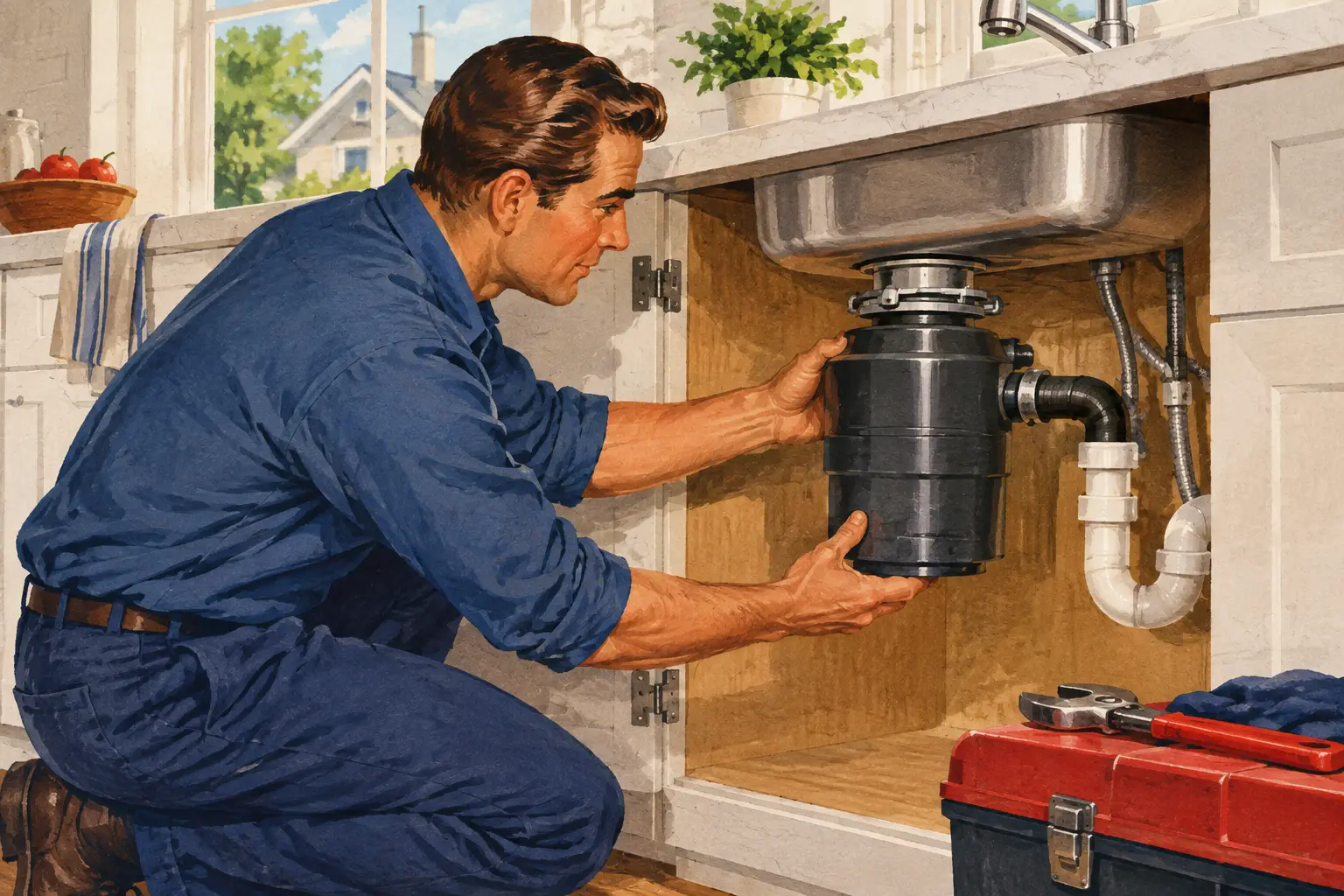
A garbage disposal that suddenly stops in the middle of cleanup can bring the kitchen to a standstill. Before assuming the unit has failed, you may be able to reset garbage disposal power safely using the built-in overload protector. The reset button is designed to shut the motor down before overheating causes more serious damage.
That said, a reset is not a cure for every disposal problem. If the disposal is jammed, repeatedly trips, leaks, or leaves water standing in the sink, the issue may need professional attention. Knowing the difference can help you protect the appliance and avoid turning a small kitchen plumbing problem into a larger repair.
What the Garbage Disposal Reset Button Does
Most garbage disposals have a small reset button on the bottom of the unit, underneath the kitchen sink. It is commonly red, although the color can vary by model. This button is part of the disposal's overload protector.
When the motor gets too hot or works too hard against a jam, the protector cuts power to prevent the motor from burning out. Pressing the reset button restores power after the unit has cooled down. It does not remove whatever caused the overload in the first place.
A disposal can overload after taking in too much food at once, trying to grind hard material, or operating with a developing mechanical problem. Older units can also trip more often as their internal components wear down.
How to Reset a Garbage Disposal Safely
Start by turning the wall switch for the disposal off. If the disposal is connected with a plug beneath the sink, unplug it. If it is hardwired, turn off the appropriate circuit breaker before working near the unit. The goal is to eliminate any chance that the disposal can turn on while you are checking it.
Give the disposal about 10 to 15 minutes to cool. Reaching for the reset button immediately may not work if the motor is still overheated. While you wait, look into the sink opening with a flashlight. Never put your hand into a garbage disposal, even when the power is off.
Once the unit has cooled, press the reset button firmly. If it was tripped, you may feel it click back into place. Restore power, run a steady stream of cold water, and switch the disposal on briefly.
If it runs normally, let cold water continue for another 15 to 20 seconds before turning the disposal off. This helps move ground food through the drain line. If it hums, remains silent, or trips again, turn it off and stop trying to run it.
If the Reset Button Will Not Stay In
A reset button that will not stay in often means the motor has not cooled sufficiently, there is still an obstruction, or the disposal has an internal electrical or mechanical problem. Wait a little longer and try once more. Do not repeatedly press the button and restart the unit, as repeated attempts can worsen motor damage.
If the button remains out after the unit has had time to cool, a plumbing professional can determine whether the disposal is jammed, the switch or wiring is faulty, or the appliance is nearing the end of its service life.
Check for a Jam Before Running the Disposal Again
A humming garbage disposal usually has power, but the grinding components cannot turn. This can happen when a hard object, utensil, piece of glass, bone fragment, or other material becomes lodged inside.
With the power disconnected, use a flashlight to inspect the disposal through the sink opening. If you can clearly see a loose object, remove it carefully with tongs or pliers. Keep your hands out of the unit.
Many disposals also have a hex-shaped opening on the bottom that accepts the wrench supplied with the unit. On compatible models, turning that wrench back and forth can free the grinding plate. This only applies if your disposal is designed for it. Do not force the mechanism, and do not use improvised tools that could damage the disposal.
After clearing a visible obstruction or freeing the plate, press the reset button if needed, restore power, and test the unit with cold water. A disposal that continues to hum or jam should be inspected rather than forced to operate.
When Resetting Will Not Fix the Problem
The reset button helps with an overload, but it cannot repair a damaged motor, a failed switch, a worn internal component, or a drain blockage farther down the line. A few warning signs point to a problem beyond a simple reset.
If the disposal makes a loud metallic grinding sound, turn it off. There may be an object inside or a damaged internal part. If it leaks from the bottom of the unit, that can indicate a failed internal seal and may require replacement. Leaks from connections near the sink drain or dishwasher hose can have different causes, but they should still be addressed promptly to protect the cabinet below.
Standing water in the sink is another reason to pause. The disposal may be clear while the kitchen drain line is clogged. Running the disposal against a blocked drain can leave water and food waste backed up in the sink. Avoid chemical drain cleaners, especially when water is standing, because they can create a hazardous situation and may not clear the actual obstruction.
Repeated reset trips are also not normal. One overload can happen. A disposal that trips every few days or every time it runs is signaling that something needs attention.
Common Habits That Help Prevent Disposal Overloads
Garbage disposals are convenient, but they are not built to process every leftover from a meal. Using the appliance correctly reduces the chance of jams, clogs, and unnecessary wear.
Keep cold water running before, during, and briefly after using the disposal. Cold water helps move food particles through the drain and keeps grease from becoming more fluid inside the pipe. Feed food scraps in gradually instead of packing the sink opening and trying to grind everything at once.
Hard items, fibrous food waste, large quantities of starchy scraps, grease, coffee grounds, and nonfood objects can create trouble. Even when the disposal appears to grind them, some materials can build up farther along the kitchen drain. Scrape large amounts of food into the trash first, then use the disposal for the small remnants left on dishes.
It also helps to listen to the unit. A disposal that sounds different, runs more slowly, or needs frequent resets is worth checking early. Addressing a developing problem is usually easier than waiting for the disposal to stop during a busy evening or before guests arrive.
When to Call a Plumber for Garbage Disposal Help
Call for professional help when the disposal will not reset, keeps tripping, hums without turning, leaks, or is paired with a slow or backed-up kitchen sink. These symptoms can overlap, and the correct repair depends on whether the issue is inside the disposal, at the sink connection, or in the drain line.
For homeowners, property managers, and small businesses in Plano, McKinney, Richardson, Garland, Royse City, and nearby North Texas communities, MasterTex Plumbing and Drain can evaluate the disposal and the connected kitchen drain system. A professional inspection can identify whether a jam can be cleared, a drain needs service, or the unit should be replaced.
A reset button is useful protection, not a button to press through a recurring problem. If your disposal does not return to normal operation after one careful reset, leaving it off and getting the right help is the safer next step.