
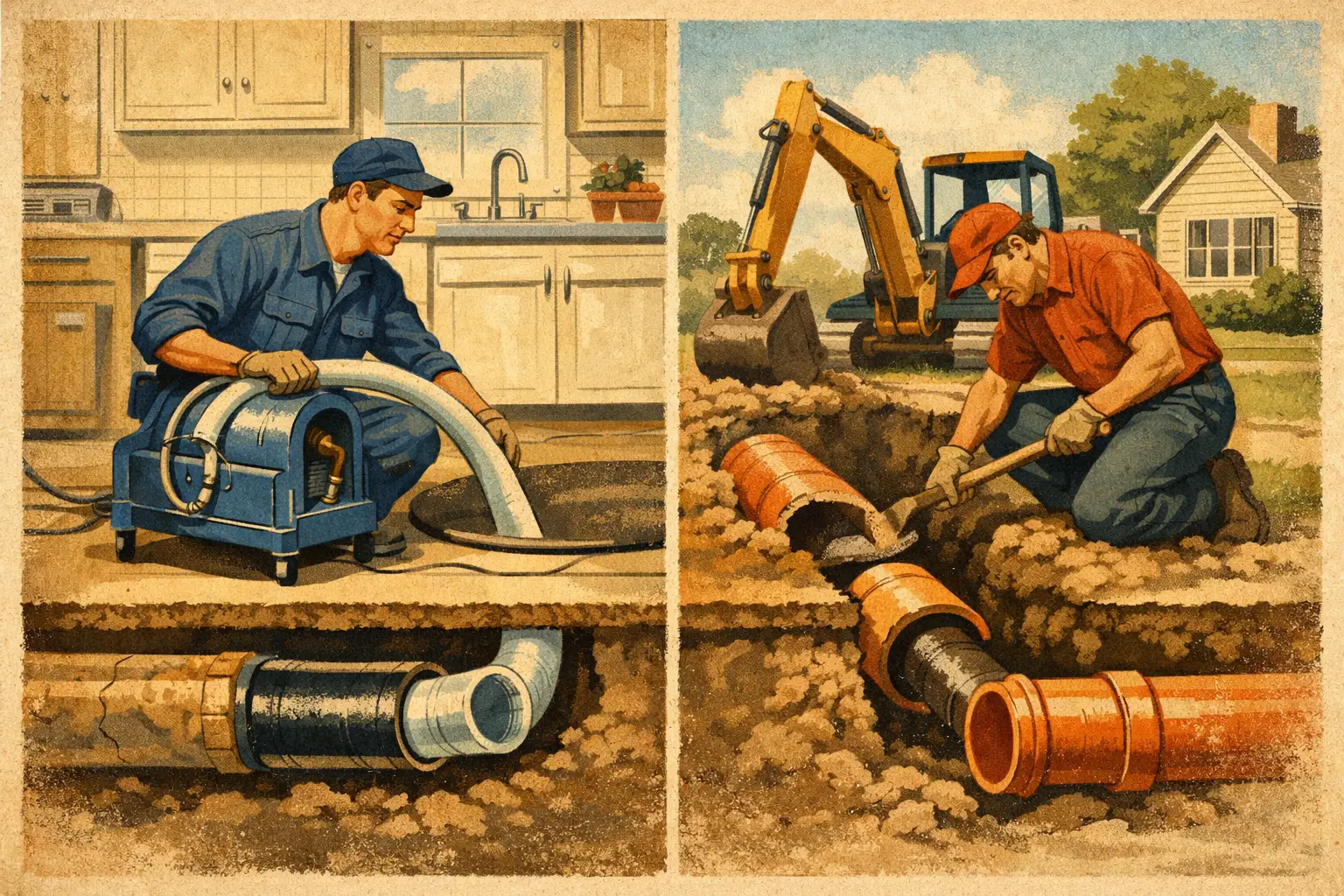
A sewer problem is rarely convenient, but the repair decision does not have to be a guess. When homeowners compare sewer liner versus replacement, the right answer depends on the actual condition of the pipe underground, not simply which option sounds less disruptive. A professional camera inspection can show whether the existing line has enough structural integrity for lining or whether replacement is the safer long-term repair.
For homes and small businesses across North Texas, that distinction matters. Aging pipe materials, root intrusion, ground movement, recurring backups, and damaged connections can all affect a sewer line differently. The goal is to restore reliable flow while choosing a repair method that fits the line, the property, and the extent of the damage.
What a Sewer Liner Does
Sewer lining is a trenchless repair method used to create a new pipe inside an existing damaged pipe. After the line is cleaned and inspected, a resin-saturated liner is installed within the old pipe. Once cured, it forms a smooth, durable inner wall that seals many cracks, small gaps, and areas affected by root intrusion.
The main appeal is reduced excavation. In many cases, lining can repair a section of sewer pipe without digging through landscaping, sidewalks, driveways, or finished areas of a property. It can also improve flow by creating a smooth interior surface that is less likely to catch debris.
That does not mean a liner is automatically the best choice whenever a sewer line has a problem. The existing pipe still serves as the host for the new liner. If that host pipe is badly collapsed, severely offset, missing in sections, or holding a significant belly, lining may not correct the underlying issue.
When Lining May Be a Good Fit
Lining is often worth considering when the pipe remains generally round and stable but has cracks, root entry points, leaking joints, or age-related deterioration. It can be especially practical when the affected line runs beneath a driveway, patio, mature landscaping, or another area where excavation would create substantial restoration work.
A camera inspection helps determine whether the damaged area can be properly cleaned and prepared. Roots and buildup must be removed before the liner is installed. If the pipe cannot be restored to a condition that supports the liner, another repair method may be more appropriate.
What Sewer Replacement Involves
Sewer replacement removes the damaged pipe and installs new pipe in its place. Depending on the location and condition of the line, this may involve open excavation or a trenchless replacement method designed for certain situations. The work is more involved than lining, but it allows the plumber to address structural problems that a liner cannot solve.
Replacement can correct a line that has collapsed, separated, shifted out of alignment, or developed poor slope. It also gives the repair team direct access to damaged fittings, failed connections, and pipe sections that no longer have enough strength to support a liner.
For a line with widespread deterioration or repeated issues in multiple areas, replacement may provide a clearer path forward than repairing one section while other weak portions remain underground. It can be the better choice when the pipe has reached the end of its useful condition.
When Replacement Is Usually Necessary
A sewer line should generally be considered for replacement when the camera shows major structural failure. A complete collapse, severe channeling, long sections of broken pipe, or a substantial belly can prevent wastewater from draining correctly. A liner may seal cracks, but it cannot rebuild missing pipe or restore proper grade where the line has sunk.
Replacement may also make sense when previous repairs have left several weak areas along the line. If one section is lined but the remaining pipe is deteriorated, future problems may still develop elsewhere. The best repair is the one that addresses the full condition of the sewer line, not just the most visible trouble spot.
Sewer Liner Versus Replacement: The Key Differences
The biggest difference between sewer liner versus replacement is what each method can correct. Lining rehabilitates an existing pipe from the inside. Replacement removes and rebuilds the damaged section or line. Both can be effective, but they solve different kinds of problems.
Lining is typically less disruptive to the surface above the pipe. It can be a strong option when the pipe is structurally stable and damage is limited to cracks, roots, leaking joints, or similar defects. Because it relies on the existing pipe path, it is not the answer for major slope issues or pipe sections that have lost their shape.
Replacement is more adaptable when conditions underground are severe. It can correct alignment, grade, damaged connections, and broken pipe that cannot support a liner. The trade-off is that access and restoration requirements may be greater, especially with traditional excavation.
Neither option should be selected based on a quick description of a backup or a recurring clog. A drain issue can come from grease buildup, roots, a localized obstruction, a damaged branch line, or a main sewer problem. The camera inspection is what separates a temporary symptom from the source of the problem.
Why a Sewer Camera Inspection Comes First
A camera inspection allows a plumber to view the inside of the sewer line and locate the issue with more precision. It can reveal root intrusion, cracks, separated joints, offsets, buildup, standing water, and other conditions that affect repair planning.
For example, a line with roots entering at a few joints may be a candidate for cleaning and lining if the pipe remains sound. A line that is flattened, broken, or filled with standing water due to a belly may call for replacement instead. These are not details that can be confirmed from above ground.
The inspection also helps identify the location and length of the affected area. That information matters when deciding whether a focused repair is appropriate or whether the condition of the full line should be evaluated. It gives property owners a clearer basis for making a decision and helps prevent unnecessary work.
Property Factors That Can Affect the Decision
The pipe itself is the first concern, but the property layout also matters. A sewer line under a landscaped yard may be easier to access than one running beneath a concrete driveway or building addition. In those cases, trenchless options can reduce surface disruption when the pipe condition allows them.
The age of the building and the material of the existing line can also influence the recommendation. Older properties may have materials that are more prone to cracking, root intrusion, corrosion, or shifting over time. Newer properties can still experience problems from construction debris, settlement, root growth, or connection defects.
For commercial properties and rental homes, downtime can be another factor. A recurring sewer backup can disrupt tenants, customers, and daily operations. Addressing the actual condition of the line rather than repeatedly clearing symptoms can help property owners plan a more dependable repair.
Questions to Ask Before Approving the Work
Before choosing a repair method, ask to review the camera findings and understand what they show. A clear explanation should cover the pipe condition, the location of the damage, whether the problem is isolated or widespread, and why lining or replacement is being recommended.
It is also reasonable to ask whether the line has proper slope, whether roots or buildup can be fully cleared, and whether other sections of pipe show signs of deterioration. These answers help put the recommendation in context. A good repair plan should match the condition underground, not push every sewer problem toward the same service.
If you are dealing with recurring backups, slow drains throughout the home, sewage odors near drains, or water appearing around the sewer line area, prompt professional evaluation can limit disruption. MasterTex Plumbing and Drain can inspect the line, explain the findings in practical terms, and help you choose a repair path that makes sense for your North Texas property.
The best next step is simple: get a clear view inside the sewer line before deciding how to repair it. Once the condition is known, the right solution becomes much easier to see.