
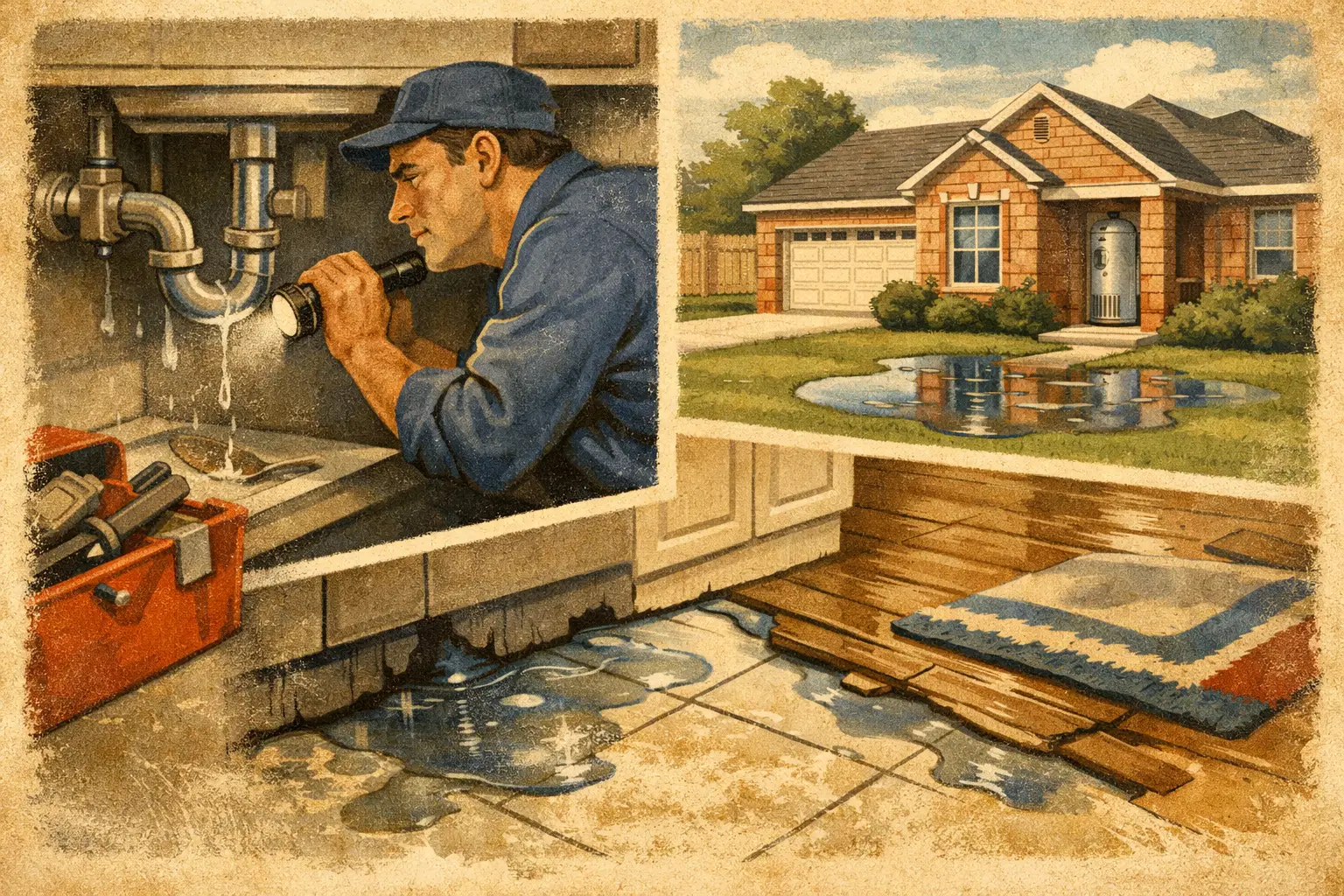
A slab leak rarely starts with a dramatic flood. In many Plano homes, the first clue is easy to dismiss: a water bill that rises without explanation, a warm patch on a tile floor, or the faint sound of water moving when every fixture is off. Knowing the slab leak warning signs in Plano can help you act before a hidden plumbing issue creates major disruption beneath your home.
A slab leak is a leak in a water or drain line located below the concrete foundation. Because the pipe is concealed, the water may travel before it becomes visible. That makes early attention especially valuable. A plumbing professional can identify the source of the problem and recommend the repair approach that fits the pipe, location, and condition of the home.
Why Slab Leaks Can Happen in Plano Homes
Many homes in Plano are built on concrete slabs, with plumbing lines running below or through the foundation. Pipes can develop leaks for several reasons, including age, corrosion, shifting soil, installation conditions, and normal wear over time.
North Texas soil movement can put added stress on a foundation and the plumbing lines associated with it. That does not mean every foundation movement causes a slab leak, and not every plumbing leak points to a foundation issue. It does mean that a small pipe weakness can become more noticeable as conditions change.
Hot-water lines are often involved because a warm-water leak can create a distinct temperature change at the floor. Cold-water lines and drain lines can leak as well, though their symptoms may look different. The only reliable way to know what is happening is through professional diagnosis.
Slab Leak Warning Signs in Plano Homes
One sign alone does not always confirm a slab leak. A higher bill may be caused by irrigation, a running toilet, or a fixture leak. Damp flooring could come from a spill, an appliance connection, or an exterior drainage issue. But when several signs appear together, it is time to schedule an inspection.
You Hear Water When Nothing Is Running
Turn off faucets, showers, appliances that use water, and any known water-using fixtures. If you still hear a steady hiss, rushing, or trickling sound near the floor or inside a wall, water may be escaping from a pressurized line.
Some homes have normal pipe sounds as water pressure changes, so this symptom is not definitive by itself. A consistent sound that continues when the home is quiet deserves prompt attention, particularly if it is paired with a high water bill or warm flooring.
Your Water Bill Rises Without a Clear Reason
A sudden increase in water use is one of the most common early warning signs. A hidden supply-line leak can waste water continuously, even when nobody is using a sink or shower.
Compare the bill with prior months while considering seasonal irrigation and household changes. If usage remains unusually high and you cannot find an obvious fixture leak, a plumber can test the system and help narrow down the cause.
A Floor Area Feels Warm or Damp
A hot-water slab leak can make one area of the floor noticeably warm, especially under tile, vinyl, or other hard surfaces. The warmth may be subtle at first and become more apparent in bare feet. With either hot- or cold-water leaks, flooring may also feel damp, look discolored, or begin to change shape.
Wood flooring can cup or separate. Carpet may develop damp areas. Tile can loosen or feel different underfoot. These issues can have other causes, but moisture from below the slab should be evaluated rather than covered up or ignored.
Water Pressure Has Changed
A leak in a supply line can affect water pressure at faucets and showers. You may notice weaker flow throughout the house or a change that seems to come and go.
Pressure problems can also result from a pressure regulator, a partially closed valve, mineral buildup, or a municipal supply condition. Since the possibilities vary, diagnosis matters. Treating only the symptom can leave the actual leak unresolved.
Floors, Walls, or Baseboards Show Moisture Damage
Water escaping below a slab does not always come up directly above the leak. It can move through the soil, follow a pathway under the foundation, or reach walls and flooring farther away. Look for unexplained staining, peeling paint near the baseboard, soft spots in flooring, or persistent dampness around the perimeter of a room.
Do not assume the nearest visible spot is the precise pipe location. Accurate leak detection helps avoid unnecessary opening of floors or walls and gives the repair team a clearer plan.
Cracks or Movement Appear Along With Plumbing Symptoms
Small hairline cracks in concrete, drywall, or tile are common in many homes and do not automatically mean a slab leak exists. However, visible movement combined with unexplained water use, warm floors, moisture, or pipe noise is worth investigating.
The key is the combination of changes. A new crack by itself may be a maintenance observation. A new crack plus a continuous water sound and rising bill calls for a plumbing evaluation sooner rather than later.
What to Do If You Suspect a Slab Leak
Start by limiting unnecessary water use until the issue is assessed. If water is visibly surfacing, spreading into living areas, or affecting electrical components, turn off the home's main water supply if it is safe to do so and call for plumbing service.
Avoid tearing into floors or walls based on a guess. The leak may not be directly beneath the wet area, and unnecessary demolition adds cost and inconvenience. A professional assessment can include checking the water meter, isolating parts of the plumbing system, pressure testing, and using specialized leak-location methods when appropriate.
It is also wise to make a short note of what you have observed. Record when the water bill changed, which rooms feel warm or damp, whether the sound continues when fixtures are off, and whether the issue appears to be getting worse. Those details can help the plumbing team work efficiently when they arrive.
Repair Options Depend on the Leak and the Home
There is no one-size-fits-all slab leak repair. The right approach depends on whether the affected line is a water line or drain line, how accessible it is, how many leaks or weak points are present, and the overall condition of the piping.
In some cases, a targeted repair to the damaged section is appropriate. In others, rerouting a line may reduce the need to access the slab. If aging pipe has developed repeated problems, a broader repiping recommendation may make more practical long-term sense. Each option involves different levels of access, disruption, and future planning, which is why an on-site evaluation is essential.
A dependable plumber should explain what was found, what repair options are available, and why one approach may be better suited to your property. Clear information gives homeowners and property managers a better basis for making a timely decision.
When to Call a Plano Plumbing Professional
Call promptly when you have persistent water sounds, unexplained usage, warm or wet flooring, or visible moisture with no clear source. Waiting can allow a small leak to continue affecting flooring, walls, and the area beneath the foundation.
MasterTex Plumbing and Drain serves Plano homeowners and local properties with professional plumbing support and straightforward communication. The goal is not to jump to conclusions, but to locate the problem accurately and recommend the right next step.
A quiet plumbing concern can become a disruptive repair if it is left alone. When something in your home does not look, sound, or feel right, getting it checked early is often the simplest way to protect your space and restore peace of mind.