
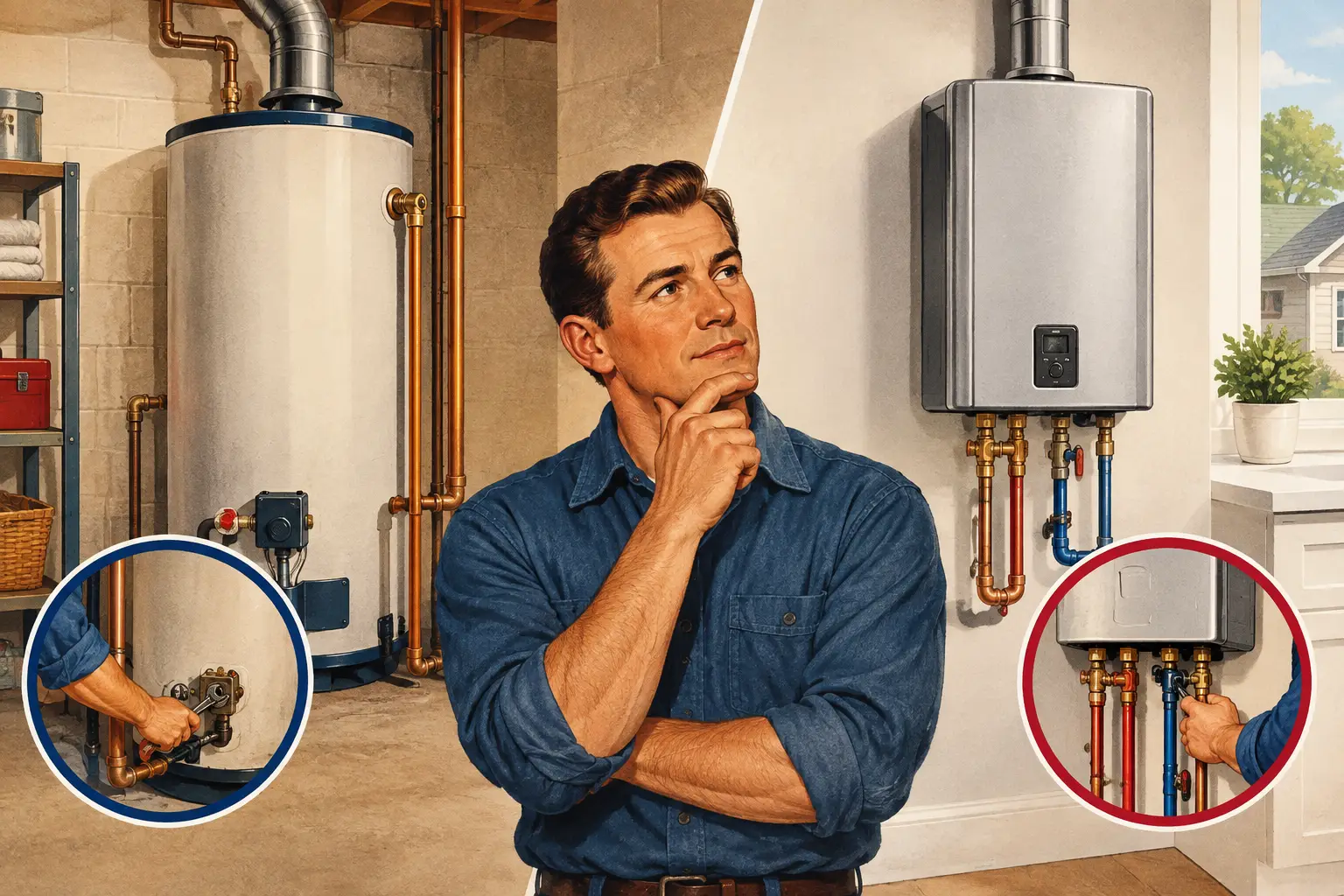
A failing water heater rarely waits for a convenient time. When hot water becomes unreliable, homeowners often face a bigger decision than simply replacing a broken unit: tankless conversion vs tank replacement. Both can be excellent choices, but the right answer depends on your household's hot-water demand, the condition of your current connections, and what you want from the system over time.
For homes across Plano, McKinney, Rockwall, and surrounding North Texas communities, a professional evaluation can prevent a rushed decision that leaves you with too little hot water or more installation work than expected.
Tankless Conversion vs Tank Replacement: The Real Difference
A traditional tank water heater stores a set amount of heated water, commonly 40 or 50 gallons. Once that supply is used, the unit needs time to heat another tankful. Replacing an existing tank heater with a similar tank model is usually the most direct path because the home already has a location, water connections, fuel source, venting arrangement, and drain provisions designed for that type of equipment.
A tankless water heater heats water only when a fixture calls for it. Rather than storing hot water, it uses a high-output burner or electric heating elements to warm water as it passes through the unit. That can provide a continuing supply of hot water, provided the unit is properly sized for the number of fixtures being used at once.
The difference is not simply old technology versus new technology. It is stored capacity versus on-demand output. A tank replacement prioritizes a familiar installation and dependable stored supply. A tankless conversion prioritizes efficiency, wall-mounted space savings, and the potential for longer continuous hot-water use.
When Tank Replacement Is the Better Fit
Replacing a tank water heater is often the practical choice when the existing unit has reached the end of its service life and the household has been satisfied with its performance. A properly sized modern tank can serve a family well, especially when showers, laundry, and dishwashing are not all competing for hot water at the same time.
This option can also make sense when the existing installation is straightforward and the homeowner wants to limit the scope of the project. Even then, a replacement is not always a simple swap. Current safety and plumbing requirements may call for updates to items such as the drain pan, discharge piping, shutoff valves, venting components, or expansion control. The exact needs depend on the home and the water heater being installed.
A tank system also offers a useful buffer during periods of heavy demand. If several people shower in the morning, the available hot water is based on both the tank size and its recovery rate. A larger tank can be a sensible answer for some households, particularly when changing fuel supply, venting, or electrical service for tankless equipment would add unnecessary complexity.
Tank replacement is not a lesser option. It is often the right choice for homeowners who want reliable hot water with an installation approach that fits the home as it is currently configured.
When a Tankless Conversion Makes Sense
A tankless conversion can be a strong long-term fit for households that routinely run out of hot water, have limited utility-room space, or expect to remain in the home long enough to value the system's efficiency and service life. Because the equipment mounts on a wall, it can free up floor space where a large tank once stood.
The key is accurate sizing. A tankless unit must be selected based on the incoming water temperature, the desired outlet temperature, and the number of fixtures that may operate at the same time. In North Texas, incoming water temperatures can change with the season, which affects how hard the unit must work to deliver hot water. A unit that looks adequate on paper may disappoint if it is not sized around real household habits.
Gas tankless systems commonly require more gas capacity than a standard tank heater. Depending on the home, that may mean evaluating the gas line size, gas meter capacity, and the combined demand of other gas appliances. Venting may also need to be replaced or rerouted because tankless equipment uses specific approved vent materials and configurations.
Electric tankless units have their own considerations. Their demand can be substantial, and some homes need electrical-panel or circuit upgrades before an electric model can operate properly. A qualified plumber can assess the plumbing side of the conversion and coordinate with the appropriate electrical professional when electrical changes are needed.
Tankless equipment also needs planned maintenance. Mineral scale can build up inside the heat exchanger over time, affecting performance and efficiency. Periodic professional service helps protect the equipment and keeps hot-water delivery consistent.
Choosing Between Tankless Conversion and Tank Replacement
The best choice comes from looking at how the property uses hot water, not from choosing based on a single feature.
Start with simultaneous demand
Think about the busiest 30 minutes of a normal day. If two showers, a dishwasher, and a washing machine may run together, the water heater must support that demand. A tankless system needs enough flow capacity for those fixtures at once. A tank system needs sufficient stored hot water and recovery capacity. A plumbing professional can calculate the right size rather than relying on the capacity of the old unit.
Consider the home's existing infrastructure
An older home may have a tank water heater with venting and gas piping that are suitable for that appliance but not for a high-output tankless model. Conversely, a remodel or utility-room redesign may make a wall-mounted system especially appealing. The condition and layout of the existing connections can have a major effect on the installation scope.
Look at your ownership plans
If you need a dependable replacement now and your current tank arrangement works well, another quality tank water heater may be the sensible decision. If you plan to stay in the home, want to reclaim floor space, and are willing to make infrastructure updates when needed, a tankless conversion may offer stronger long-term value.
Account for property type
For a rental property or small business, consistency and serviceability may carry more weight than adding new equipment features. For a larger household, continuous hot-water capability may be the priority. There is no universal winner because the demands of a two-person home are different from those of a busy family or commercial restroom area.
What to Expect From a Professional Evaluation
Before recommending either option, a plumber should inspect the existing water heater location, water lines, shutoff valves, drainage, fuel source or electrical supply, and venting. For tankless conversions, the review should also include hot-water fixture demand and the equipment's installation requirements.
This assessment protects against common problems such as undersized equipment, inadequate gas supply, improper vent routing, or a tank unit that does not provide enough usable hot water. It also gives homeowners a clearer picture of the work involved before installation begins.
Permit and code requirements can vary by location and project scope. A professional installation helps ensure the system is evaluated and installed according to applicable local requirements, rather than treating a water-heater change as a one-size-fits-all job.
Maintenance and Reliability After Installation
Both types of water heaters benefit from routine attention. Tank water heaters should be inspected for signs of corrosion, valve concerns, and sediment buildup. Tankless systems need periodic descaling and inspection of their water, gas, venting, and condensate components when applicable.
Ignoring maintenance can shorten the useful life of either system and lead to reduced performance. A tankless unit is not maintenance-free, and a tank heater should not be left untouched until it leaks. Regular service gives you a better chance to address small issues before they interrupt hot water for the household or business.
Make the Choice Around Your Home, Not the Hype
A tankless conversion can be an excellent upgrade, but it is not automatically the best answer for every property. A tank replacement can be efficient, reliable, and well suited to the home's existing setup. The right decision begins with an honest look at demand, infrastructure, installation requirements, and maintenance expectations.
When hot-water trouble starts, getting a clear professional assessment early gives you room to choose the system that fits your property instead of making a rushed decision after the old unit fails completely.