
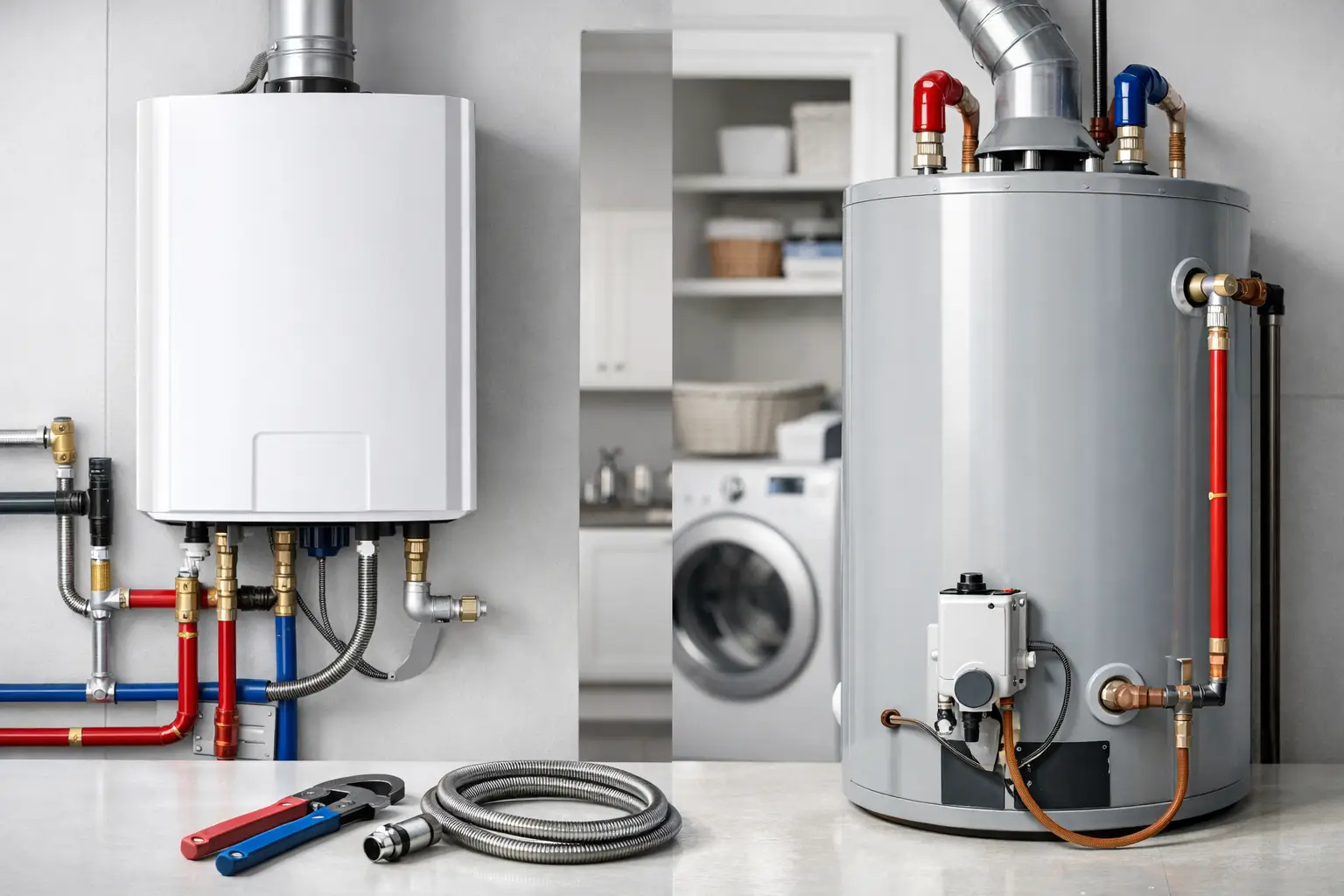
A water heater usually gets attention only when the shower turns cold, the utility room floor is wet, or a growing household starts running out of hot water every morning. When replacement time comes, the choice between tankless vs traditional water heaters affects daily comfort, utility use, installation requirements, and the way your home handles multiple hot-water demands.
For homeowners and property managers in North Texas, there is no single right answer. A tankless unit can be an excellent fit for the right household, while a properly sized traditional tank remains a practical, dependable choice for many homes. The best decision starts with how your property actually uses hot water.
Tankless vs Traditional Water Heaters: The Core Difference
A traditional water heater stores a set amount of hot water in an insulated tank, commonly 40 to 75 gallons in residential settings. The burner or electric elements heat the stored water, then cycle on as needed to maintain the selected temperature. When the tank’s available hot water is used, the unit needs recovery time before it can supply a full volume of hot water again.
A tankless water heater heats water as it passes through the unit. Rather than holding a reserve of heated water, it activates when a fixture calls for hot water. This is why tankless systems are often described as providing continuous hot water. More accurately, they provide hot water for as long as demand stays within the unit’s heating capacity.
That distinction matters. A tankless heater does not have a limited tank to empty, but it does have a maximum flow rate. If several showers, a dishwasher, and a washing machine are running at once, an undersized unit may not keep up with every demand.
When a Traditional Tank Is the Better Fit
Traditional water heaters remain common because they are simple, familiar, and effective. If your household has predictable hot-water use and enough space for a tank, a standard unit can provide reliable performance without making major changes to the home.
A correctly sized tank is especially practical when several fixtures may run at the same time but overall use occurs in shorter bursts. For example, a family may shower in the morning, run the dishwasher after dinner, and do laundry on weekends. A tank stores a ready supply of hot water for those peak periods, even if the incoming water is colder during winter.
Replacement can also be more straightforward when the existing home already has the appropriate connections, venting, drain pan, and utility-space layout. That does not mean every tank replacement is identical. Current installation requirements, shutoff valves, expansion control, venting condition, and code considerations should all be reviewed by a qualified plumber.
The trade-off is standby heat loss. Because a tank keeps water hot between uses, it uses some energy even when no one is opening a faucet. A tank also takes up more floor space and will eventually need replacement as internal components and the tank itself age.
Where Tankless Water Heaters Make Sense
Tankless water heaters are a strong option for households that value extended hot-water availability, need to reclaim utility-room space, or have usage patterns that favor on-demand heating. The compact wall-mounted design can be useful in homes where a large tank is inconvenient.
They are often appealing for larger households, homes with oversized soaking tubs, or properties where showers happen back-to-back. A properly sized and installed tankless unit can continue heating water through a long series of showers without waiting for a storage tank to recover.
Efficiency is another reason homeowners consider tankless equipment. Since water is heated when requested rather than stored around the clock, tankless systems can reduce energy used to maintain a standing supply. Actual savings depend on the unit type, household habits, incoming water temperature, recirculation setup, and whether the home uses natural gas or electricity.
Tankless systems do have their own service needs. Mineral scale can build inside the heat exchanger over time, particularly in areas with mineral-heavy water. Periodic professional maintenance helps protect performance and supports a longer service life. A homeowner should also understand that a tankless heater can take a moment to fire and deliver hot water, just as a tank system may have a brief wait while hot water travels through plumbing lines.
Flow Rate Matters More Than Household Size Alone
Tankless sizing should not be based on the number of bedrooms alone. The key question is how many hot-water fixtures may operate at the same time and what flow they require.
A shower, kitchen faucet, washing machine, and dishwasher each place demand on the system. The unit must raise the temperature of incoming water while delivering enough gallons per minute for those fixtures. During colder periods, incoming water requires a greater temperature increase, which can reduce a unit’s effective flow capacity.
A professional assessment looks at fixture count, appliance use, family routines, existing plumbing, fuel source, and the desired outlet temperature. In some larger homes, two tankless units or a carefully planned system may be more appropriate than one oversized unit.
Installation Is Often the Deciding Factor
A tankless water heater may save space, but converting from a traditional tank can involve more than mounting a smaller appliance. Gas-fired tankless equipment may require changes to the gas line, exhaust venting, combustion air provisions, electrical supply, and condensate drainage. The work needs to match the equipment specifications and local requirements.
Electric tankless models have different challenges. They can demand substantial electrical capacity and may require panel or circuit upgrades. They are not automatically the easiest replacement simply because they do not use gas venting.
For this reason, the initial evaluation should cover the entire installation, not just the water heater itself. A system that is well matched to the home can perform reliably. One that is selected only by advertised features may struggle to meet demand or require unexpected modifications during installation.
Traditional tank replacements also deserve a thorough review. The new unit should be sized for the household, installed with appropriate safety components, and placed where future maintenance is accessible. If a current tank is leaking, rusting, producing discolored water, or making unusual popping sounds, it is wise to schedule an inspection before the problem turns into a larger water-damage event.
Comparing Day-to-Day Performance
The practical difference is easiest to see in normal routines. A traditional tank supplies stored hot water quickly and consistently until its available volume is depleted. Once that happens, users may need to wait for recovery. A larger tank can reduce that risk, but it also requires more space and can increase standby energy use.
A tankless system avoids the “empty tank” moment when it is sized correctly for simultaneous demand. However, it cannot exceed its rated capacity. If your household regularly runs multiple high-flow fixtures at the same time, sizing and installation quality are more important than the tankless label on the unit.
Both types can deliver comfortable, dependable hot water. Neither can solve issues caused by damaged supply lines, failing fixtures, poor water pressure, or plumbing layouts that leave a long distance between the heater and the point of use. Those conditions should be considered before expecting a new heater to fix every hot-water complaint.
Questions to Ask Before You Choose
Before selecting a replacement, consider the age and condition of the current water heater, the number of people using hot water, and whether demand tends to happen all at once or throughout the day. Think about your available utility space and whether your household expects to stay in the home long enough for long-term efficiency and maintenance considerations to matter.
It also helps to identify what is frustrating you now. If the main problem is running out of hot water after two showers, a larger or better-matched tank may be enough. If the problem is repeated demand from a busy household and limited floor space, tankless may deserve a closer look. If hot water takes too long to reach fixtures, the plumbing layout and recirculation options may be part of the conversation regardless of heater type.
For homes in Plano, McKinney, Allen, Richardson, Rockwall, Royse City, and surrounding North Texas communities, a professional evaluation can clarify whether a tankless or traditional model fits the property’s existing utilities and daily demand. MasterTex Plumbing and Drain can assess the installation conditions and help you choose a water-heating solution based on performance, not guesswork.
A water heater should fit the way your home operates on its busiest morning, not just look good on a product label. When you are ready to replace an aging unit or address inconsistent hot water, have the system evaluated before a complete failure forces a rushed decision.