
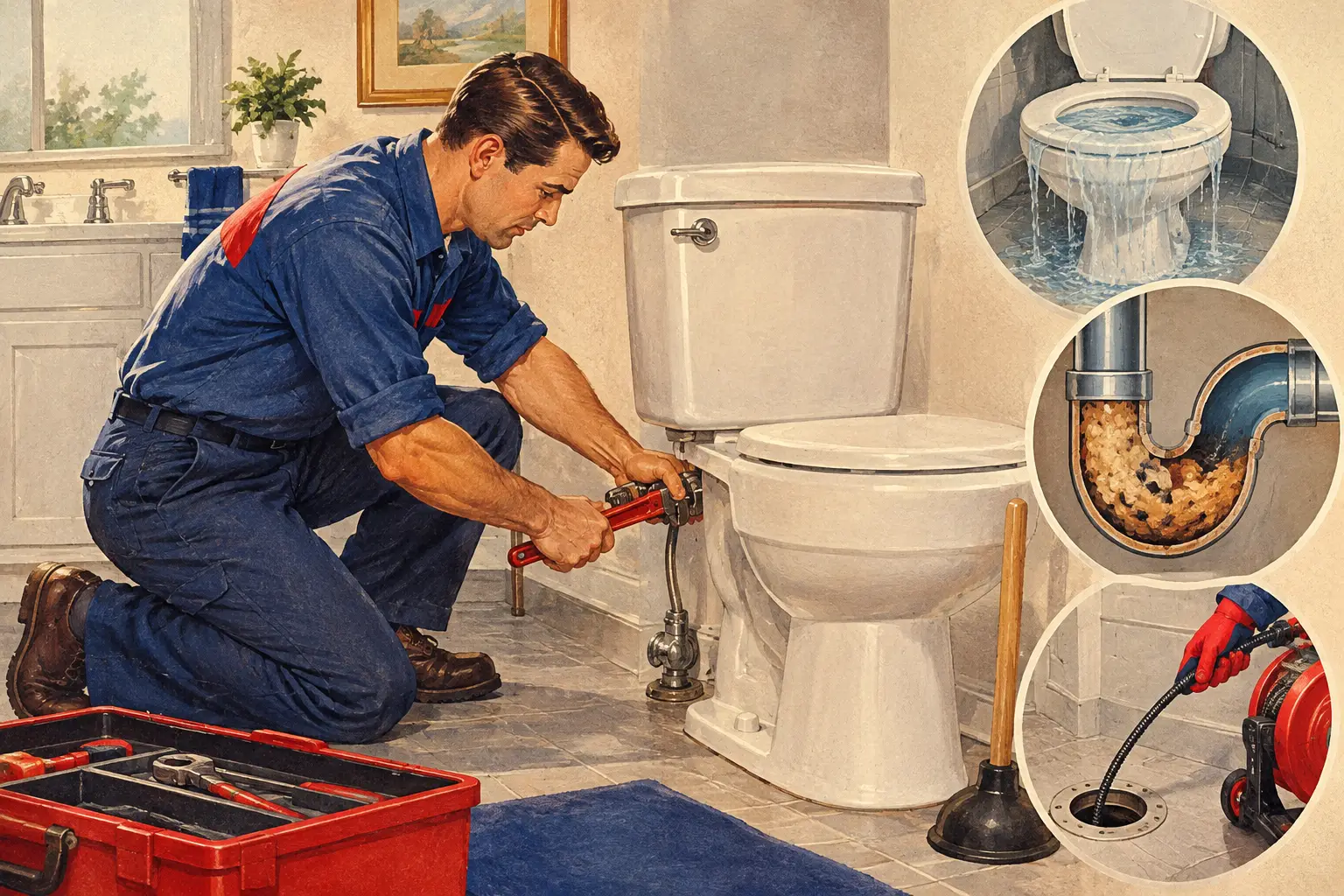
A toilet that rises toward the rim when flushed creates an immediate problem, but the cause is not always at the toilet itself. These toilet backup repair examples show how the pattern of symptoms can point to a simple fixture clog, a branch-line blockage, or a larger drain line issue that needs prompt professional attention.
Toilet Backup Repair Examples: What the Pattern Tells You
The most useful detail is not just that the toilet backed up. It is what happened immediately before and after it did. Did the bowl rise only after solid waste and paper? Did water bubble in a nearby shower drain? Did another bathroom start draining slowly at the same time?
A single affected toilet often has a local obstruction. When multiple fixtures are involved, the problem may be farther down the drain system. Knowing the difference helps homeowners and property managers respond appropriately and avoid turning a contained backup into a larger cleanup.
Example 1: The toilet backs up, but every other drain works normally
This is one of the more common toilet backup repair examples. The toilet fills or drains slowly when flushed, while nearby sinks, tubs, and showers continue to work as usual. In many cases, the obstruction is in the toilet trap or the short drain section directly below it.
Excess paper, wipes, small objects, or items that should not be flushed can lodge in the trapway. A plunger may move a soft obstruction, but repeated plunging without improvement is a sign to stop. Forcing the issue can cause the bowl to overflow or push material farther into the line.
A plumber can determine whether the clog is in the fixture or beyond it and use the appropriate equipment to clear it without damaging the toilet. If the problem returns soon after clearing, the drain line should be evaluated rather than treated as a one-time clog.
Example 2: The toilet backs up when the shower or washing machine drains
When a toilet reacts while another fixture is draining, the blockage is usually not inside the toilet. For example, running a shower may cause the toilet water to bubble, rise, or move noticeably. A washing machine discharge can create the same effect because it sends a large volume of water into the plumbing system quickly.
This pattern often points to a partial blockage in a shared branch drain. Water cannot move through the pipe at its normal rate, so it looks for the lowest available opening. In a bathroom group, that opening is frequently the toilet.
The repair depends on the location and nature of the restriction. Professional drain cleaning may restore normal flow when buildup or debris is the issue. If symptoms continue, a camera inspection can identify whether the line has damage, root intrusion, or an offset connection that catches waste over time.
Example 3: Flushing one toilet affects a second toilet
Two toilets serving the same area of a home may share a drain path before connecting to the main sewer line. If flushing one toilet causes water movement, bubbling, or backup at the other, treat the situation as a shared-line problem.
Do not keep testing the toilets with repeated flushes. Each flush adds several gallons of water to a drain that is already restricted. If the blockage is complete, the next flush may send wastewater onto the floor through the lowest toilet.
A plumber will typically assess which fixtures connect to the affected section and clear the line from the most effective access point. The best method depends on the home’s layout and the condition of the pipe. Older plumbing, recurring clogs, and a history of drain work may justify a camera inspection after the line is opened.
Example 4: The lowest bathroom backs up first
In a two-story home, a ground-floor bathroom is often the first place a larger drain-line blockage appears. Upstairs fixtures may seem to work until enough water enters the system to reach the obstruction. Then the lower toilet, tub, or shower can back up because it sits at a lower elevation.
This is a situation to handle quickly. Stop using toilets, showers, sinks, dishwashers, and laundry appliances until the cause is identified. Water sent down any of those drains may appear in the lower bathroom instead of leaving the property through the drain line.
The repair may involve clearing a main drain line obstruction. In North Texas, root intrusion can be a factor where underground pipe joints allow roots to enter. Pipe deterioration, a shifted section, or heavy buildup can create similar symptoms, so the right repair should follow a clear diagnosis rather than a guess.
Example 5: The toilet overflows after a recent clog seemed to clear
A toilet can appear normal after plunging, then back up again days or weeks later. That does not always mean a new clog formed. A partial blockage may have moved enough to allow limited drainage while still collecting paper and waste with each use.
Recurring backups are especially common when the issue is farther down the branch line. The toilet may flush once or twice without trouble, then slow down as water and solids meet the remaining restriction. This cycle can be frustrating because it creates the impression that the problem has been fixed.
Instead of continuing temporary measures, schedule an inspection. A professional can determine whether the line needs thorough cleaning, whether the toilet itself has an obstruction, or whether the pipe condition is contributing to repeated clogs.
Example 6: The toilet is slow, gurgles, and has an unexplained low water level
A gurgling toilet or fluctuating bowl water level can indicate a drainage or venting concern. When air cannot move properly through the plumbing system, draining water may pull air through the toilet trap. That can create bubbling sounds or leave the bowl water lower than usual.
This symptom does not automatically mean the main line is blocked. It may be related to a partial drain obstruction or a vent issue. The key is whether other fixtures are slow, noisy, or affected at the same time. A plumber can test the drainage pattern and inspect the system without relying on trial-and-error repairs.
What to Do During a Toilet Backup
Your first priority is preventing more water from entering the affected drain. Do not flush again to see whether the toilet will clear. If the bowl is rising, remove the tank lid and close the flapper if it is still allowing water into the bowl. You can also turn off the toilet’s water supply valve behind or near the fixture if it is accessible and turns easily.
Avoid using nearby fixtures until you know whether they share the affected line. This includes showers, tubs, bathroom sinks, and, in some layouts, laundry equipment. Keep children and pets away from the area, and move towels, rugs, or stored items away from standing water if it is safe to do so.
Do not use chemical drain cleaners for a toilet backup. They may not reach the blockage effectively, can remain in standing water, and may complicate professional service. A backup involving multiple fixtures, repeated overflows, or water coming up through a tub or shower calls for professional drain diagnosis.
How a Professional Identifies the Right Repair
A proper repair starts with the location of the obstruction, not an assumption. A technician may ask which fixtures are affected, when the backup occurs, whether the issue has happened before, and whether the home has older plumbing or mature trees near the drain route.
From there, the line can be cleared using equipment suited to the drain and the blockage. When recurring symptoms or suspected pipe damage are involved, a camera inspection provides a direct view inside the line. It can reveal buildup, root intrusion, breaks, misaligned pipe sections, or other conditions that ordinary plunging cannot address.
For homeowners and property managers in Plano, McKinney, Allen, Garland, Rockwall, Royse City, and nearby North Texas communities, MasterTex Plumbing and Drain can help identify the source of a toilet backup and recommend the repair that fits the actual condition of the line.
Preventing the Next Backup
Use toilets only for human waste and toilet paper. Items labeled flushable can still catch in bends, pipe joints, and partially restricted drains. Watch for early signs such as slow flushing, frequent plunging, gurgling, or a shower drain that slows when the toilet is used.
A toilet backup is rarely something to ignore until it becomes urgent. When the pattern changes from one slow toilet to several affected fixtures, stop using the drains and arrange professional service before the next flush creates a much bigger problem.