
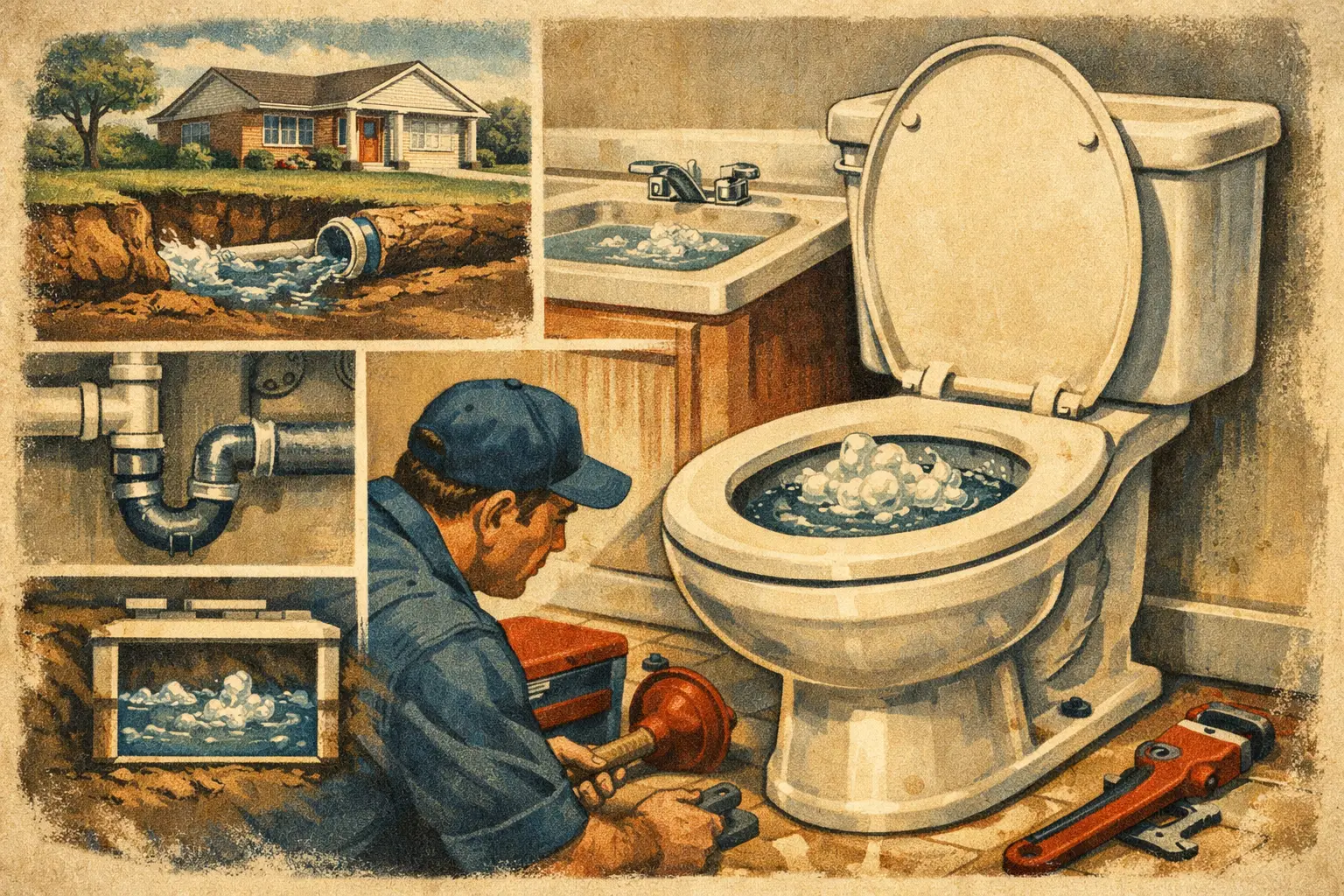
A toilet that gurgles or releases bubbles when it is flushed is not just making an odd noise. It is often reacting to a drainage or venting problem somewhere in the plumbing system. Understanding common toilet bubbling causes can help you decide whether to stop using fixtures, try a limited first step, or arrange professional drain service before a backup develops.
A working drain system needs water, waste, and air to move in balance. When water cannot travel freely through a pipe, or air cannot enter through the vent system, pressure changes can push air back through the toilet bowl. That is the bubbling sound and movement you see.
Why a Toilet Bubbles Instead of Draining Quietly
Every plumbing fixture has a trap that holds water to block sewer gases from entering the home. The toilet has its own built-in trap. Behind it, the drain line carries waste away while plumbing vents allow air into the system so water can flow without creating suction or pressure.
When a blockage slows the flow or a vent cannot supply enough air, that balance is disrupted. Air looks for an available path and may rise through the toilet water as bubbles. The issue may be close to the toilet, farther down a branch line, in the main sewer line, or above the roof in a vent pipe.
The timing of the bubbling provides useful clues. Bubbles that appear only when the toilet is flushed can point to a nearby restriction. Bubbling when the shower runs, the washing machine drains, or another toilet flushes more often indicates a shared drain or main-line concern.
Common Toilet Bubbling Causes
A partial clog in the toilet or nearby drain
A partial obstruction is one of the most frequent reasons for bubbling. Toilet paper buildup, an item lodged in the trapway, or waste collecting farther down the toilet branch line can reduce the pipe opening. Water may still go down, but it moves slowly enough to compress air ahead of it and force that air back into the bowl.
A toilet plunger may help if the problem is limited to the toilet itself and there is no backup in nearby fixtures. Use steady, controlled plunges with enough water in the bowl to cover the plunger cup. If the toilet continues to bubble, drains slowly, or has repeated trouble, do not keep flushing it. A deeper blockage may need professional clearing.
A clogged bathroom branch drain
In many homes, the toilet, tub, shower, and bathroom sink connect to a shared branch drain before joining the larger sewer line. A blockage in that shared section can make fixtures affect one another.
For example, a shower may drain slowly and the toilet may bubble when the tub empties. Or flushing the toilet may cause water to rise in a shower drain. These are signs that the restriction is likely beyond the individual fixture, where a plunger alone is unlikely to solve the problem.
A main sewer line blockage
A main sewer line carries wastewater from the home to the public sewer connection. When this larger line is restricted, several drains may behave abnormally at once. Toilets can bubble, lower-level showers or tubs may fill with dirty water, and flushing can cause water to appear at another fixture.
Main-line blockages can develop from accumulated debris, heavy paper products, grease entering kitchen drains, or invasive tree roots. Older North Texas properties can also have aging, shifted, cracked, or offset sewer piping that catches material over time. The exact cause matters because clearing the line may restore flow, but a camera inspection can reveal whether a pipe condition is making repeat clogs more likely.
If multiple fixtures are slow or backing up, stop sending water down drains as much as possible. Running the dishwasher, washing machine, or another shower can add a large volume of water behind the blockage and worsen the backup.
A blocked plumbing vent
A vent pipe usually extends through the roof and brings air into the drain system. It does not carry normal household wastewater, but it plays a major role in keeping drains flowing properly. Leaves, nesting material, debris, or other obstructions can block a vent opening and cause gurgling, bubbling, and slow drainage.
Vent issues can resemble drain clogs, so diagnosis matters. A vent blockage may create noticeable gurgling across several fixtures even if water is still draining. Because roof access and vent clearing can involve safety risks, this is generally a job for a qualified plumbing professional rather than a homeowner.
A problem with the sewer line outside the home
Not every bubbling toilet begins inside the bathroom. The underground line between the house and the sewer connection can develop root intrusion, a sagging section that holds waste, or damage from soil movement. These problems may start as occasional bubbling or slow drains and become more frequent as the opening narrows.
A drain camera inspection is useful in this situation. It allows a plumber to see the inside of the line, locate the restriction, and distinguish between a removable blockage and a pipe issue that needs repair. That prevents guesswork and helps match the solution to the condition of the line.
Excessive paper or non-flushable items
Toilets are designed for human waste and toilet paper. Paper towels, wipes labeled flushable, feminine hygiene products, cotton swabs, dental floss, and small objects can snag in bends or collect in the drain. Even products that pass through the toilet bowl can create problems farther down the line.
If bubbling began immediately after a child used the bathroom or after an item may have fallen into the toilet, mention that detail when scheduling service. It can help the plumber narrow down the likely location and choose the right equipment.
When Bubbling Is an Urgent Plumbing Issue
A single brief gurgle does not always mean an emergency, but a toilet should not repeatedly bubble under normal use. The situation needs prompt attention when the bowl water rises toward the rim, wastewater appears in a tub or shower, several drains are slow, or flushing one fixture affects another.
Pay particular attention to the lowest fixtures in the home. In a single-story house, that may be a shower or tub. In a two-story property, a first-floor shower, tub, or floor drain may show a main-line backup before upstairs fixtures do. Water takes the lowest available route when it cannot continue through a blocked sewer line.
Do not repeatedly flush to see whether the problem has cleared. Avoid using chemical drain cleaners as well. They may not reach the actual blockage, can leave corrosive material in standing water, and can make professional service more hazardous. If water is rising or wastewater is entering the home, stop using water-based appliances and call for plumbing help right away.
What a Plumber Will Check for Toilet Bubbling Causes
A proper diagnosis starts with the pattern of symptoms. A plumber may ask which fixtures gurgle, whether there are slow drains, when the issue began, and whether it happens after laundry or shower use. Those details help determine whether the problem is isolated to a toilet, a bathroom branch, or the main sewer line.
The service approach depends on what is found. A localized toilet obstruction may require professional augering. A branch or main-line clog may call for drain cleaning equipment sized for that pipe. When recurring clogs, roots, or pipe damage are suspected, a camera inspection can identify the condition inside the line instead of treating only the immediate symptom.
This is one area where the fastest-looking fix is not always the lasting one. If a line repeatedly clogs because of roots or a damaged section, clearing it may restore flow today, but identifying the underlying cause is what helps prevent another disruption.
Preventing Future Gurgling and Backups
Good habits reduce many drain problems. Flush only toilet paper and waste, use reasonable amounts of paper per flush, and keep small objects away from the bowl. In kitchens, keep grease and food scraps out of drains, since material from other parts of the home can contribute to a main-line restriction.
If your home has a history of roots, older drain piping, or recurring slow drains, periodic professional drain evaluation can be worthwhile. The right schedule depends on the age and condition of the plumbing, not a one-size-fits-all timetable.
For homeowners and property managers in Plano, McKinney, Allen, Richardson, Royse City, and nearby North Texas communities, MasterTex Plumbing and Drain can inspect bubbling toilets, clear drain restrictions, and help pinpoint the source of recurring problems. A bubbling toilet is your plumbing system asking for attention - addressing it early is usually far easier than dealing with a full backup later.