
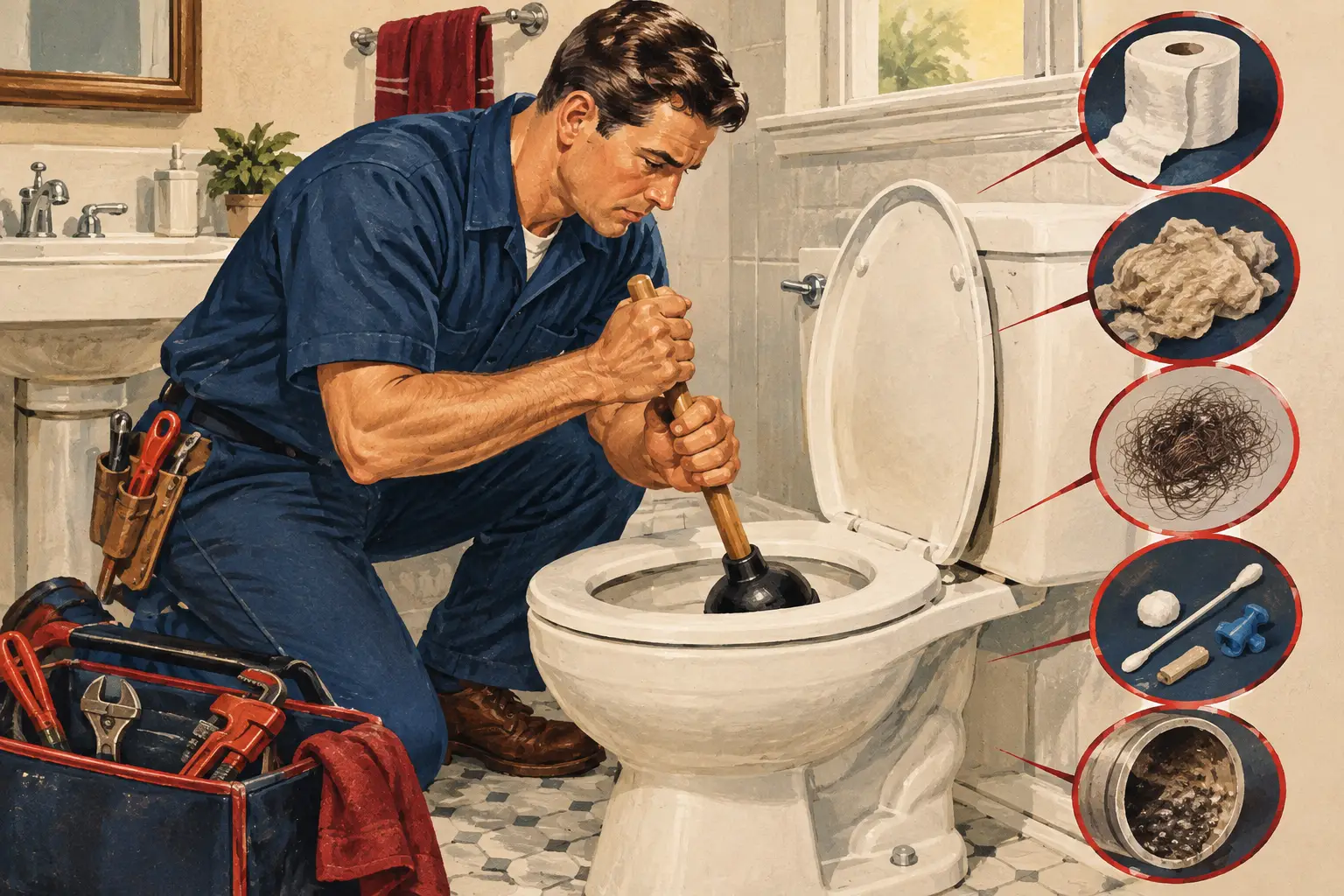
A toilet that rises toward the rim instead of flushing is more than an inconvenience. Understanding common toilet clog causes can help you respond safely, prevent repeat problems, and recognize when the issue may be deeper than the fixture itself. For homeowners and property managers, the key is knowing the difference between a one-time blockage and a plumbing problem that needs professional attention.
The Most Common Toilet Clog Causes
Many toilet clogs start with too much material entering the bowl at once. Modern toilets vary in flushing performance, and even a toilet that normally works well can struggle when it has to move an unusually large amount of toilet paper and waste through the trapway in one flush.
Using excessive toilet paper is especially common in homes with older fixtures, low-flow toilets with weakened flushing power, or partially restricted drain lines. A single heavy use may create a temporary clog. If it happens often under ordinary use, the toilet or drain line may already have a developing restriction.
Another common cause is flushing items that do not break down quickly in water. Toilets are designed for human waste and toilet paper only. Wipes labeled as flushable, paper towels, facial tissues, cotton products, dental floss, hygiene products, and similar items can catch inside the toilet trap or farther down the drain. Once an item snags, toilet paper and waste can collect behind it until the line is blocked.
Small household objects also cause surprise clogs. Children may drop toys into a toilet, while adults may accidentally flush items from a back pocket or bathroom counter. These objects often lodge in the curved internal passage of the toilet. A plunger may not remove them and can sometimes push them farther into the trapway.
A Weak Flush Can Point to a Different Problem
Not every clog begins in the drain. A toilet that has a weak, incomplete, or slow flush may leave material behind because it is not releasing enough water with enough force.
Inside the tank, a worn flapper, improperly adjusted fill level, or other component issue can limit the amount of water delivered during a flush. Mineral buildup can also affect small water passages around the toilet bowl over time, reducing the force of the rinse. These issues do not always create an immediate backup, but they can make clogs more likely.
If the bowl drains slowly after flushing but the tank appears to operate normally, the restriction may be in the toilet trap or drain pipe rather than the tank. The pattern matters. A toilet that works poorly every day needs a closer look than one that clogs after a single unusual flush.
The Toilet Trap May Be Blocked
Every toilet has a built-in curved channel called a trapway. It holds water in the bowl and prevents sewer gases from entering the room. Its shape also makes it a common place for a clog to form.
A blockage in the trapway usually affects one toilet only. The bowl may fill high after flushing, then slowly drain down. A proper toilet plunger can often clear a soft paper blockage. However, repeated plunging is not a long-term answer if an object is lodged in the trap or if the same toilet keeps backing up.
Avoid repeatedly flushing a toilet that is already slow or full. Each additional flush adds water and raises the risk of an overflow onto the bathroom floor.
Toilet Clog Causes Deeper in the Drain Line
When the clog is farther beyond the toilet, the problem can involve the branch drain serving that bathroom or the main sewer line leaving the building. These issues are more likely to return and may affect more than one plumbing fixture.
A buildup of paper, waste, grease from other fixtures, or debris can gradually narrow a drain line. The toilet may be the first fixture to show the problem because it sends a large volume of water and solid waste into the pipe at once. A partial obstruction can allow small flushes to pass while causing backups during heavier use.
In some North Texas properties, aging pipes, shifted connections, or tree root intrusion can also restrict an underground sewer line. Roots naturally seek moisture and can enter through small openings in older pipe joints. Once inside, they collect paper and waste, turning a minor opening into a recurring blockage.
Professional drain cleaning and camera inspection can identify where the blockage is located and whether the pipe itself has an underlying condition. This avoids guessing and helps prevent repeated service calls for the same issue.
Signs of a Main Drain Problem
A clogged toilet does not automatically mean the main drain is blocked. Still, several warning signs suggest the issue may extend beyond one fixture:
- More than one toilet, tub, shower, or sink drains slowly or backs up.
- Flushing a toilet causes gurgling sounds in a nearby tub, shower, or sink.
- Water appears in a shower or tub when a toilet is flushed.
- The toilet backs up repeatedly even after the visible clog seems cleared.
- A lower-level bathroom or floor drain is the first area to show wastewater backing up.
These symptoms call for prompt professional service. Continuing to run water, flush toilets, or use appliances that drain into the plumbing system can worsen the backup.
What to Do When a Toilet Starts Backing Up
A calm response can prevent a manageable clog from becoming a cleanup problem. If the water in the bowl is rising, remove the tank lid and close the flapper if necessary to stop more water from entering the bowl. Then turn the shutoff valve near the base of the toilet clockwise to stop the water supply.
Give the bowl time to drain before attempting to clear a simple clog with a flange-style toilet plunger. Use steady, controlled plunges rather than forceful splashing. If the toilet clears and flushes normally afterward, monitor it over the next several uses.
Do not keep flushing to test a toilet that is still slow. Do not use chemical drain cleaners in a toilet or drain line. They may not clear the actual obstruction, can create a safety concern if the bowl overflows, and may complicate professional service later.
If you suspect a solid object was flushed, the toilet repeatedly backs up, or other drains are involved, it is time to stop troubleshooting and call a plumber. The right equipment can clear the line without unnecessary damage to the fixture or pipe.
Preventing Future Toilet Clogs
The most effective prevention is simple: flush only toilet paper and human waste. Keep a covered trash container in every bathroom so wipes, tissues, cotton products, and personal-care items have a convenient place to go.
It also helps to pay attention to small changes. A toilet that begins to gurgle, flush weakly, or require more than one flush is giving an early warning. Addressing that change before a full backup can protect floors, walls, and the rest of the plumbing system.
For rental properties and local businesses, clear restroom reminders and routine maintenance are particularly useful. A recurring clog in a high-use restroom may be caused by user habits, but it can also reveal a drain capacity issue that should be inspected before it disrupts tenants, employees, or customers.
When Professional Help Is the Safer Choice
A plunger is appropriate for an occasional soft clog. Beyond that, repeated backups deserve a professional diagnosis. A plumber can determine whether the issue is inside the toilet, in the bathroom branch line, or in the main sewer line, then use the appropriate cleaning or inspection method.
MasterTex Plumbing and Drain helps homeowners, property managers, and businesses throughout the North Texas service area address toilet backups and drain problems with clear communication and professional service. If a toilet is overflowing, multiple drains are acting up, or the same clog keeps returning, stop using the affected fixtures and arrange help before the problem spreads.