
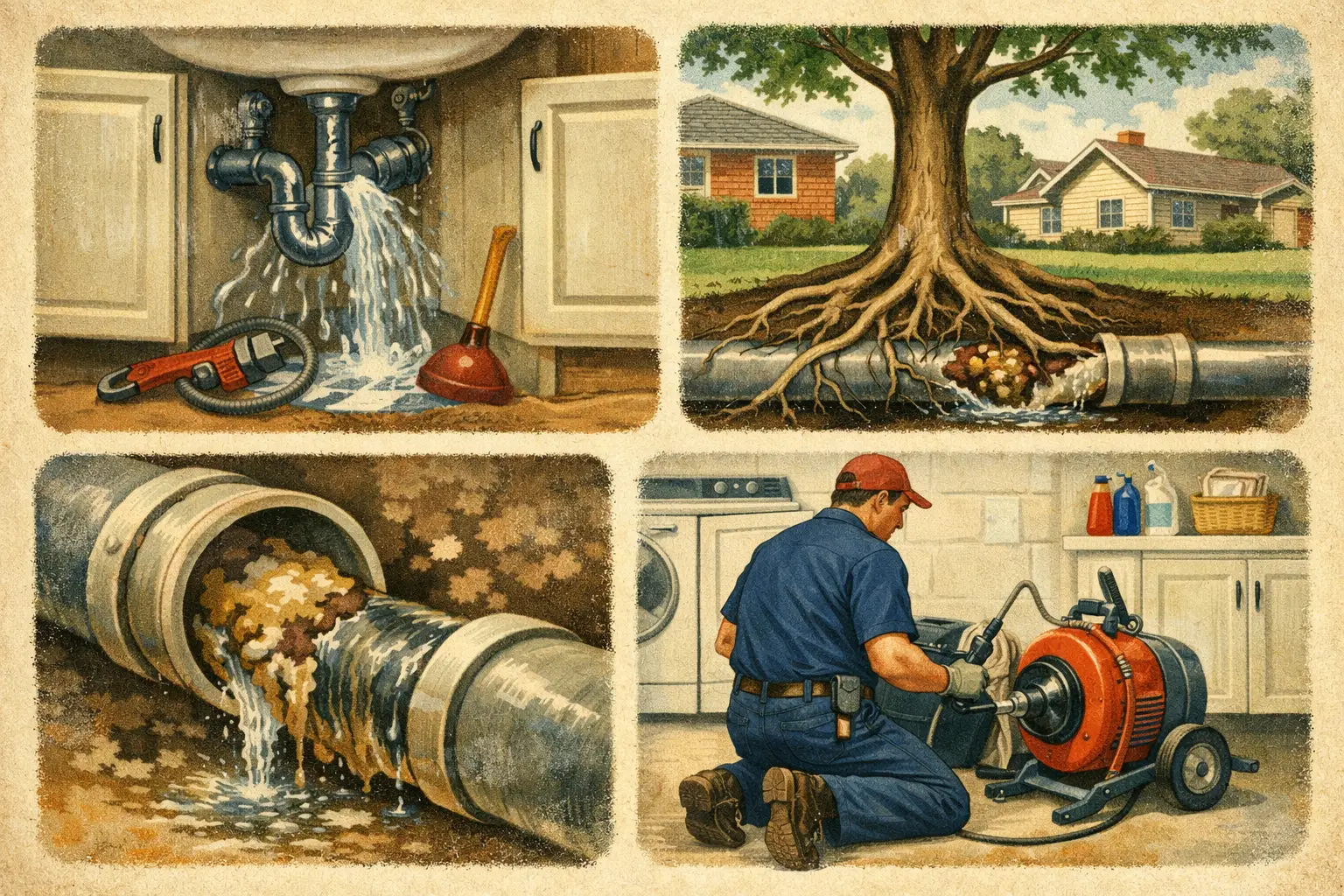
A sewer backup is not the same as a single slow sink or a clogged shower drain. When wastewater starts coming up through a floor drain, toilet, tub, or shower, the blockage may be in the main sewer line that serves the property. Understanding the top causes of sewer line backups can help homeowners and property managers act early, limit disruption, and know when professional drain cleaning is the right next step.
In North Texas homes, sewer line problems often develop gradually. A drain may gurgle for weeks, toilets may flush more slowly than usual, or water may appear in a lower-level shower after the washing machine drains. Those are warnings worth taking seriously, especially when more than one fixture is affected at the same time.
What Makes a Sewer Line Backup Different?
Every drain in a home or small business connects to a network of pipes. Smaller branch drains carry water from individual fixtures, while the main sewer line carries wastewater away from the building. A clog in one bathroom sink is usually limited to that fixture. A blockage in the main line can affect several fixtures, often starting with the lowest drain in the building.
Common signs include repeated toilet clogs, gurgling sounds from drains, slow drainage throughout the property, unpleasant sewer odors, and water backing up in a tub or shower while another appliance is running. If you see wastewater coming up through a drain, stop using water throughout the building until the issue can be assessed. Running a dishwasher, washing machine, shower, or toilet can add more water behind the blockage.
Top Causes of Sewer Line Backups
The source of a backup is not always visible from inside the building. Professional inspection and drain cleaning equipment help identify whether the issue is a buildup, an obstruction, root intrusion, or a damaged pipe. These are the most common causes.
Tree Root Intrusion
Tree roots naturally seek moisture, and small openings in an underground sewer pipe can provide exactly that. Roots can enter through pipe joints, cracks, or deteriorated sections. Once inside, they grow and collect paper, waste, and other debris moving through the line.
Root intrusion is especially common in established neighborhoods with mature landscaping and older sewer piping. The problem may begin as an occasional slow drain, then become more frequent as the roots thicken inside the pipe. Clearing roots can restore flow, but the longer-term solution depends on the condition of the line. If roots keep returning through a broken or separated section, repair may be needed to address the opening itself.
Grease and Food Buildup
Cooking grease may look liquid when it goes down the kitchen drain, but it can cool and cling to the inside of pipes. Over time, grease traps food particles, soap residue, and other debris until the drain passage becomes much smaller. This is a common concern in both homes and small commercial kitchens.
Garbage disposals can contribute when they are used for more than small food scraps. Fibrous foods, coffee grounds, starchy leftovers, and large amounts of food waste can collect in a kitchen branch line or move farther into the main line. A professional cleaning can remove existing buildup, but prevention comes from keeping grease, oils, and heavy food waste out of the drain.
Flushing Items That Do Not Break Down
Toilets are designed for human waste and toilet paper. Items marketed as disposable or flushable may not break down quickly enough to move safely through older pipes, long sewer runs, or partially restricted lines. Paper towels, wipes, feminine hygiene products, cotton swabs, dental floss, and similar materials can snag on roots, buildup, or rough pipe interiors.
One item may pass through without trouble. The issue often appears when repeated flushing creates a collection point inside the line. For households with children, guests, tenants, or frequent visitors, a simple reminder near the bathroom can prevent a costly and inconvenient backup.
Aging, Cracked, or Misaligned Pipes
Sewer pipes do not last forever. Older materials can crack, corrode, shift, or separate at their joints. Ground movement, settling, construction activity, and normal aging can leave sections of pipe misaligned. Even a small offset can catch debris and slow the flow of wastewater.
A damaged pipe can also allow soil or roots to enter the line, making the blockage more likely to return after cleaning. This is why a recurring sewer backup should not be treated as a routine clog. Drain cleaning may be necessary to restore service, but a camera inspection can show whether there is a structural issue below ground.
Heavy Use and Main-Line Buildup
A sewer line may have enough open space to handle everyday use but not enough capacity when several fixtures drain at once. Laundry loads, long showers, dishwasher cycles, and repeated toilet flushing can expose a line that is already partially blocked.
This pattern is common when a backup seems to happen only during busy parts of the day. The line may drain slowly after water use stops, which can make the issue appear to have resolved. In reality, the restriction is still present and can lead to another backup when the system is used again.
Debris From Construction or Improper Connections
Properties that have undergone remodeling, plumbing changes, or exterior work can occasionally develop drain issues from debris entering the system or from improper connections. Material left in a pipe, a poorly aligned connection, or a damaged section caused during excavation can interfere with drainage.
This cause is less common than roots or buildup, but it is worth considering when sewer problems begin soon after work has been completed. A professional evaluation can help determine whether the backup is related to a new issue or an older condition that was only recently noticed.
A Blockage Beyond the Property Line
Not every backup begins in the private sewer line. In some situations, the issue may be in the public sewer main serving the street. This is more likely when nearby properties are experiencing similar problems, although a homeowner should not assume that is the cause without an assessment.
The location of the blockage matters. A plumbing professional can evaluate the property-side line and help identify whether the concern appears to be within the building drain, the private sewer connection, or farther downstream. Prompt assessment helps avoid wasted time while water is backing up inside the property.
Warning Signs to Address Before a Backup
Sewer line backups rarely happen without some indication that drainage is changing. A single slow fixture may be a localized clog, but multiple symptoms point more strongly toward a main-line issue. Pay attention when toilets bubble as a sink drains, when a tub fills with water after flushing, or when drains are slow in more than one room.
Outdoor clues can matter as well. Persistent wet areas near the sewer line route, unusual odors around the yard, or a sudden patch of especially green grass may indicate a drainage concern underground. These signs do not confirm the exact problem, but they are good reasons to schedule an inspection before a full backup occurs.
Property managers should also treat repeated tenant reports as a pattern rather than isolated events. A drain that needs frequent clearing may be signaling a deeper restriction in the main line. Addressing the cause early is generally less disruptive than responding after wastewater reaches floors, fixtures, or occupied spaces.
What to Do When Wastewater Backs Up
If sewage or wastewater is coming back through a drain, stop using water fixtures immediately. Do not keep flushing toilets or run appliances in an attempt to push the clog through. Avoid contact with the wastewater, keep children and pets away from the area, and call a qualified plumbing and drain professional for service.
For a minor slow drain without wastewater backup, it is still wise to avoid chemical drain cleaners. These products may not reach a main-line obstruction, and they can create additional hazards for anyone working on the drain afterward. Professional equipment is designed to clear the line and, when appropriate, inspect its condition.
MasterTex Plumbing and Drain helps homeowners, property managers, and local businesses across the Plano, McKinney, Allen, Richardson, Rockwall, Royse City, and surrounding North Texas areas address main sewer line concerns with clear communication and professional service. If several drains are acting up at once, scheduling help before the next heavy water-use period can make a real difference.