
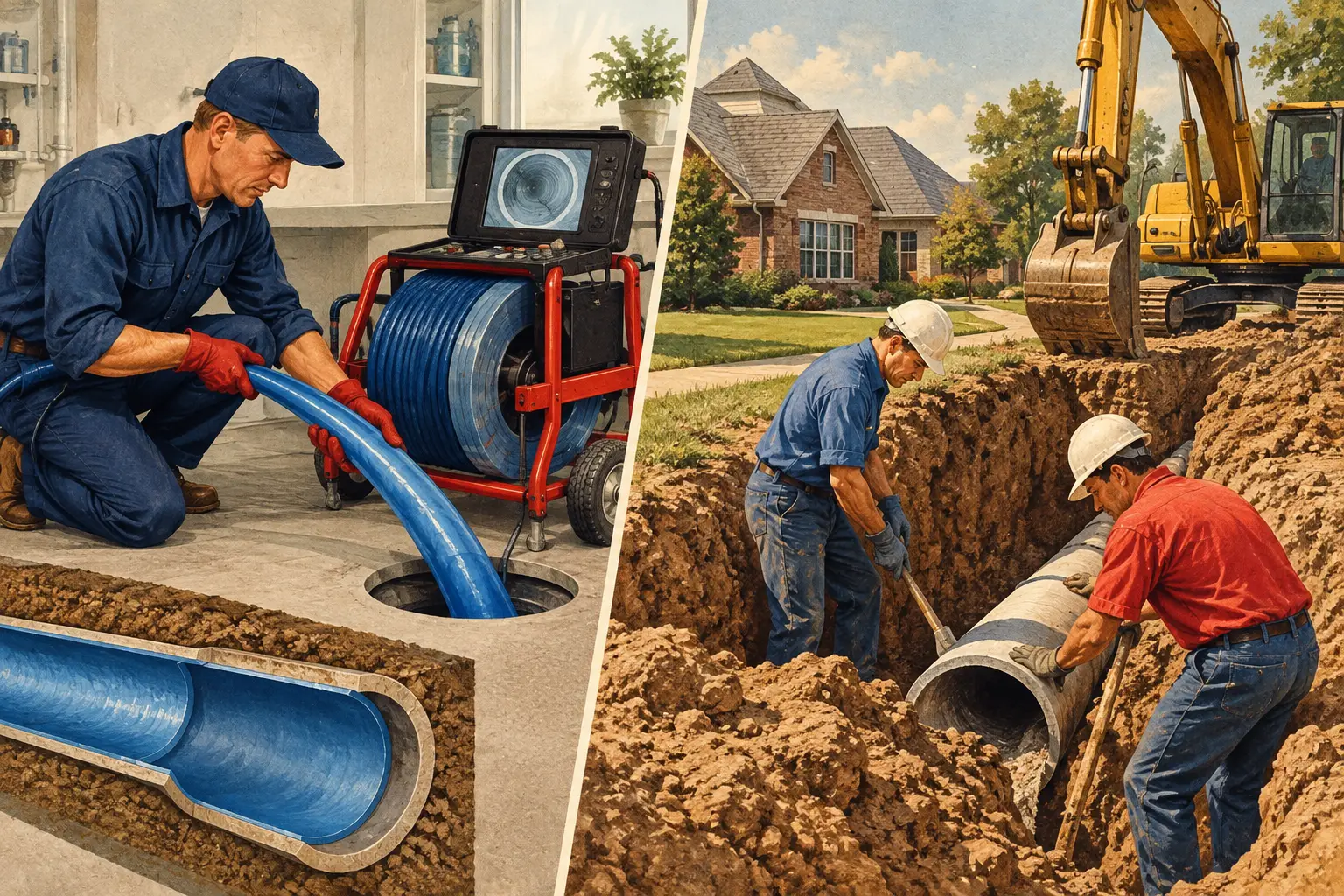
A sewer line problem can quickly turn a normal day into a disruption. Slow drains, repeated backups, sewage odors, or wet areas in the yard may point to damage below ground. When comparing trenchless versus traditional sewer repair, the right choice is not simply the method with the smallest hole in the yard. It is the method that safely addresses the condition, location, and extent of the problem in your sewer line.
For homeowners, property managers, and small businesses across North Texas, a professional camera inspection is the starting point. It shows what is happening inside the pipe before anyone recommends repair or replacement.
What Traditional Sewer Repair Involves
Traditional sewer repair uses excavation to reach the damaged section of pipe. A plumbing team exposes the line, removes the failed material, installs new pipe or fittings as needed, tests the repair, and then restores the excavated area as closely as practical.
This approach is sometimes called open-cut repair. While digging is understandably a concern for many property owners, traditional excavation remains a necessary and dependable solution in certain situations. It gives the technician direct access to the pipe and surrounding soil, which can be especially valuable when a sewer line has collapsed, shifted significantly, or has an issue that cannot be corrected from inside the pipe.
Traditional repair may also be the practical choice when the damaged line is shallow, easy to access, or already exposed because of another planned project. If the issue is limited to one section of accessible pipe, targeted excavation can solve the problem without replacing the entire line.
The main trade-off is disruption. Excavation may affect landscaping, sidewalks, driveways, patios, or other surfaces above the sewer line. The amount of restoration needed depends on where the line runs and how deep it is.
How Trenchless Sewer Repair Works
Trenchless sewer repair is a broad term for methods that repair or replace an underground sewer pipe with limited excavation. Rather than opening a long trench along the entire line, technicians typically use one or more access points to reach the pipe.
Two common trenchless approaches are pipe lining and pipe bursting. Pipe lining creates a new pipe surface inside an existing pipe when the original line is structurally suitable for the process. Pipe bursting replaces an old pipe by pulling a new line through the same path while breaking apart the damaged pipe.
The best method depends on the pipe material, the type of failure, the line's layout, and access to the work area. A camera inspection and proper assessment help determine whether trenchless work is appropriate. It is not a one-size-fits-all answer, and a responsible plumber should explain why a particular method is or is not recommended.
For properties with mature landscaping, hardscaping, or a sewer line that runs beneath a driveway or building area, trenchless repair can significantly reduce surface disturbance. That can make a major difference in scheduling, cleanup, and how much of the property is affected during the work.
Trenchless Versus Traditional Sewer Repair: Key Differences
The most noticeable difference between trenchless and traditional sewer repair is how the crew accesses the damaged pipe. Trenchless methods are designed to minimize digging. Traditional repair exposes the pipe directly through excavation.
That difference affects more than appearance. It can influence the work timeline, site preparation, restoration needs, and the way a repair is performed around structures or landscaping. However, less digging does not automatically mean trenchless repair is the better technical solution.
Traditional excavation offers complete visual access to a damaged line. If a pipe has severe separation, a major belly, extensive collapse, or improper slope, direct excavation may be needed to correct the underlying condition. A liner can restore the inside of a pipe in many cases, but it cannot always correct a line that has shifted out of position or no longer drains properly because of a significant grade issue.
Trenchless methods can be highly effective when the existing pipe path is workable and the damage is suitable for lining or replacement from access points. They can preserve more of the yard or paved surfaces, but they require careful preparation and evaluation. The line must be thoroughly cleaned and inspected so the repair method matches the actual condition of the pipe.
When Trenchless Repair May Be a Good Fit
Trenchless repair is often worth considering when the sewer line runs below areas that would be difficult or expensive to disturb, such as a driveway, patio, landscaped yard, or established trees. It can also be useful where a longer section of aging pipe needs attention but the pipe route is otherwise sound.
Root intrusion is a common issue in older sewer lines. Roots can enter through joints, cracks, or compromised connections and catch debris until the line begins to back up. After the line is properly cleared and inspected, trenchless repair may be an option if the pipe is a suitable candidate and the goal is to restore its interior condition with limited excavation.
Trenchless work may also make sense for commercial properties where keeping parking areas, walkways, or operations available matters. Every site has different access limitations, so the inspection findings and property layout should guide the decision.
When Traditional Excavation Is the Better Choice
Excavation is often the better path when the pipe is crushed, collapsed, severely offset, or improperly sloped. These conditions may require the line to be uncovered, realigned, and replaced so wastewater can flow correctly.
A localized break near the surface can also be a straightforward excavation repair. In that case, using a trenchless method may not add meaningful value compared with accessing the specific failed section directly.
Traditional repair is also useful when the sewer line's location or configuration prevents trenchless equipment from completing the work safely and effectively. Tight turns, inaccessible cleanouts, connections that need to be rebuilt, and certain pipe conditions can change what is possible. The goal should be a lasting correction, not forcing a method that does not fit the line.
What Affects the Scope of Sewer Repair
The condition of the pipe is only one part of the decision. A complete recommendation should account for the line's depth, length, material, route, access points, and the location of any damage. Cast iron, clay, PVC, and older materials can fail in different ways, and the appropriate repair should reflect those differences.
Property conditions matter, too. A sewer line beneath a landscaped backyard presents a different planning challenge than one beneath a concrete driveway. The number of fixtures served by the line and whether the property can limit water use during the repair also affect scheduling.
For North Texas properties, shifting soils and changing ground conditions can contribute to pipe movement over time. This is one reason a clear camera inspection is so valuable. It helps identify whether the issue is a small crack or blockage, a recurring root problem, a separated joint, or a more serious structural failure.
Start With a Camera Inspection, Not a Guess
Repeated drain clearing can restore flow temporarily, but it does not always explain why the same line keeps backing up. A sewer camera inspection allows a trained technician to locate the problem, evaluate the pipe interior, and identify the repair approach that makes sense for the property.
Ask for a clear explanation of the findings. You should understand where the damaged area is, what type of issue is present, whether the concern is isolated or widespread, and why trenchless or traditional repair is being recommended. A good assessment makes it easier to plan around access, water use, and property disruption.
MasterTex Plumbing and Drain helps homeowners and local businesses evaluate sewer line concerns with practical, professional guidance. Whether your property is in Plano, McKinney, Garland, or another nearby North Texas community, the right repair begins with understanding the line beneath your property.
If you are dealing with recurring backups or signs of a damaged sewer line, do not wait for a minor drainage problem to become a larger disruption. Schedule an inspection, review the options based on the actual condition of the pipe, and choose the repair method that protects both your plumbing system and your property.