
A shower that turns ankle-deep halfway through your morning routine is usually telling you something simple: hair, soap residue, and body-care buildup have narrowed the drain. The good news is that many light clogs can be addressed at home. To unclog shower drain safely, start with gentle methods that remove the blockage instead of forcing it farther down the line or exposing your plumbing to harsh chemicals.
A slow shower drain is inconvenient, but rushing into the wrong fix can create a bigger problem. Aggressive plunging, sharp tools, and chemical drain cleaners may damage a drain cover, scratch a tub, affect older piping, or leave a difficult blockage behind. A careful approach gives you the best chance of restoring drainage while knowing when professional drain cleaning is the smarter next step.
Start by identifying the type of shower drain problem
Most shower clogs develop gradually. Water may begin draining more slowly over several days or weeks, then eventually pool around your feet. In a typical home, the cause is a combination of shed hair, soap scum, conditioner, shaving products, and mineral residue collecting close to the drain opening.
A gradual slowdown that affects only one shower often points to a localized clog. If water is backing up quickly, the toilet bubbles when the shower runs, or more than one drain in the home is slow, the problem may be farther down the plumbing system. In that situation, skip the DIY steps and arrange professional service. A main-line or branch-line issue needs the right equipment and diagnosis.
Before you begin, do not run more water than necessary. If the drain is already full or water is threatening to spill out of the shower, stop using that fixture until the clog is cleared.
What you need to unclog a shower drain safely
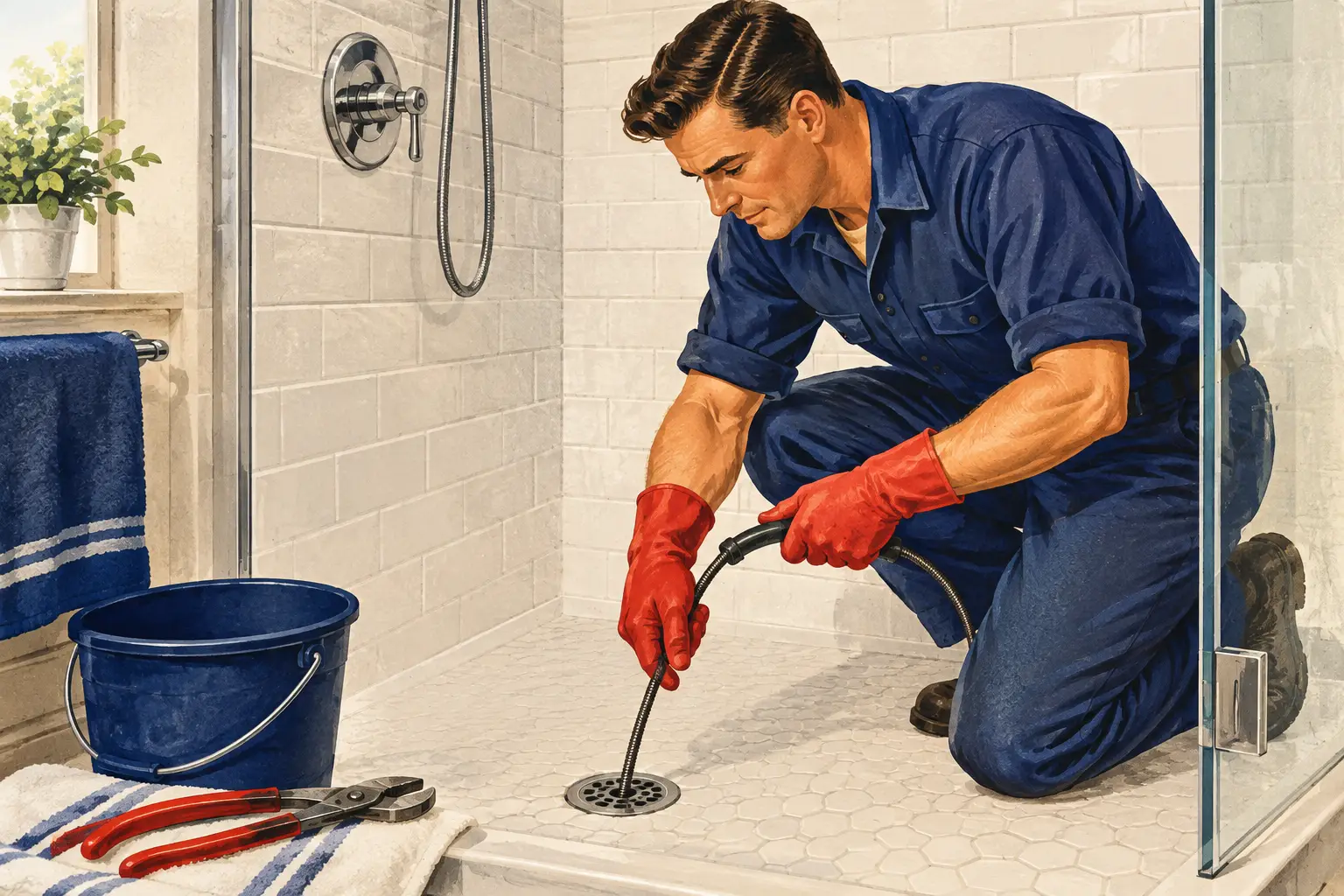
For a basic shower drain clog, simple tools are usually enough: gloves, a flashlight, an old towel, a screwdriver if your drain cover uses screws, a small container for hardware, and a flexible plastic drain-cleaning tool designed to pull out hair. A cup or small bucket can also help remove standing water before you work.
Avoid using wire coat hangers, knives, or rigid metal tools. They can catch on components below the drain, scratch the finish around the opening, or push debris deeper into the pipe. A powered drain machine should also be left to a trained plumber, particularly in showers with older plumbing or delicate drain assemblies.
If you previously poured any chemical cleaner into the drain, do not attempt to pull debris out yourself or plunge the drain. Chemical residue can splash onto skin and eyes. Keep the area ventilated, avoid adding other products, and tell the plumbing professional exactly what was used.
Remove the visible hair and buildup first
Put on gloves and remove any standing water you can easily scoop into a bucket. Place an old towel nearby to protect the shower floor and catch drips.
Next, inspect the drain cover. Some covers lift out, while others are secured with one or more screws. Remove it carefully and set the screws aside where they will not fall into the drain. Use a flashlight to look just below the opening. You may see a clump of hair and residue gathered near the top of the drain.
Use a flexible plastic drain tool slowly. Feed it in a short distance, turn or move it gently, then pull it out. The goal is to hook and remove material, not to force the tool downward. Wipe off what you remove and repeat as needed until the tool comes back mostly clean.
This part is often unpleasant, but it is also one of the most effective ways to clear a minor shower clog. Hair is frequently the main issue, and removing it physically is more dependable than trying to dissolve it.
Rinse with hot tap water, not boiling water
After removing debris, run hot tap water for a minute or two and watch how the drain responds. Hot tap water can help loosen remaining soap residue near the opening. Do not pour boiling water into the shower drain. Very hot water can be hard on certain pipe materials, joints, seals, and some shower surfaces.
If the water drains freely, replace the cover and run the shower briefly to confirm normal flow. If drainage improves but remains slow, there may still be buildup farther into the line.
Use a plunger carefully when the clog is deeper
A plunger can help with some shower clogs, but only after you have removed visible hair and confirmed no chemical cleaner has been used. Use a clean, flat-bottom cup plunger rather than one used for a toilet.
Add enough water to cover the plunger cup. Cover the drain completely, create a seal, and use several controlled up-and-down strokes. Do not use excessive force. With a shower drain, the objective is to move water and pressure through the blockage, not to hammer the plumbing.
Lift the plunger and check whether the water begins to drain. Repeat once or twice if there is progress. If the drain remains blocked after a reasonable attempt, stop. Repeated force can be counterproductive, especially when the clog is dense hair, hardened residue, or an obstruction farther down the pipe.
When home methods are not enough
A shower drain that clogs again soon after you remove hair may have buildup beyond the reach of a small plastic tool. This is common in busy households, rental properties, and homes where several people use the same bathroom. The visible hair was only part of the blockage.
Professional drain cleaning is a better choice when the shower will not drain, water backs up into the tub or another fixture, foul odors persist, or the drain repeatedly slows down. Those signs can indicate a more substantial blockage in the drain line rather than a simple clog at the opening.
Property managers and small-business owners should take recurring drainage issues seriously. Repeated backups can interrupt tenants, customers, or employees, and temporary fixes may turn into an emergency at the least convenient time. A professional can clear the line with appropriate equipment and help identify whether the problem is isolated or affecting multiple fixtures.
For homeowners in Plano, McKinney, Allen, Richardson, Rockwall, Royse City, and nearby North Texas communities, MasterTex Plumbing and Drain can provide professional drain cleaning when a shower clog needs more than a careful at-home attempt.
Avoid these common shower drain mistakes
Do not combine cleaners, household ingredients, or unknown products in the drain. Mixing substances can create dangerous fumes or reactions, and it makes the area less safe for anyone servicing the line afterward. Chemical drain cleaners are also a poor choice for hair-heavy clogs because they may not remove the physical mass causing the backup.
Do not keep feeding a tool into the drain if it catches firmly. Pulling hard can damage a component or leave the tool stuck. Likewise, avoid removing plumbing parts beneath or behind a shower unless you know exactly how the drain assembly is configured. Many shower drain connections are not readily accessible, and an improper repair can lead to leaks.
It is also wise not to ignore a slowly draining shower just because water eventually goes down. Early attention is usually easier and cleaner than waiting for a complete blockage during a busy morning.
Keep the shower drain clear after it is flowing again
Once the drain is working, install or use a hair catcher that fits your shower drain properly. Empty it regularly before hair has a chance to wash into the pipe. This small habit makes the biggest difference for most households.
Wipe away loose hair after bathing, especially if someone in the home has long hair or sheds heavily. Periodically lifting the drain cover and cleaning the area around it can also prevent residue from building into a dense clog. If the shower starts slowing again despite these habits, schedule service before the problem becomes a full backup.
A clear shower drain should handle a normal shower without pooling water around your feet. If yours does not, treat it as an early warning and address it carefully. The right first steps protect your plumbing, while timely professional help keeps a minor inconvenience from disrupting the rest of your day.