
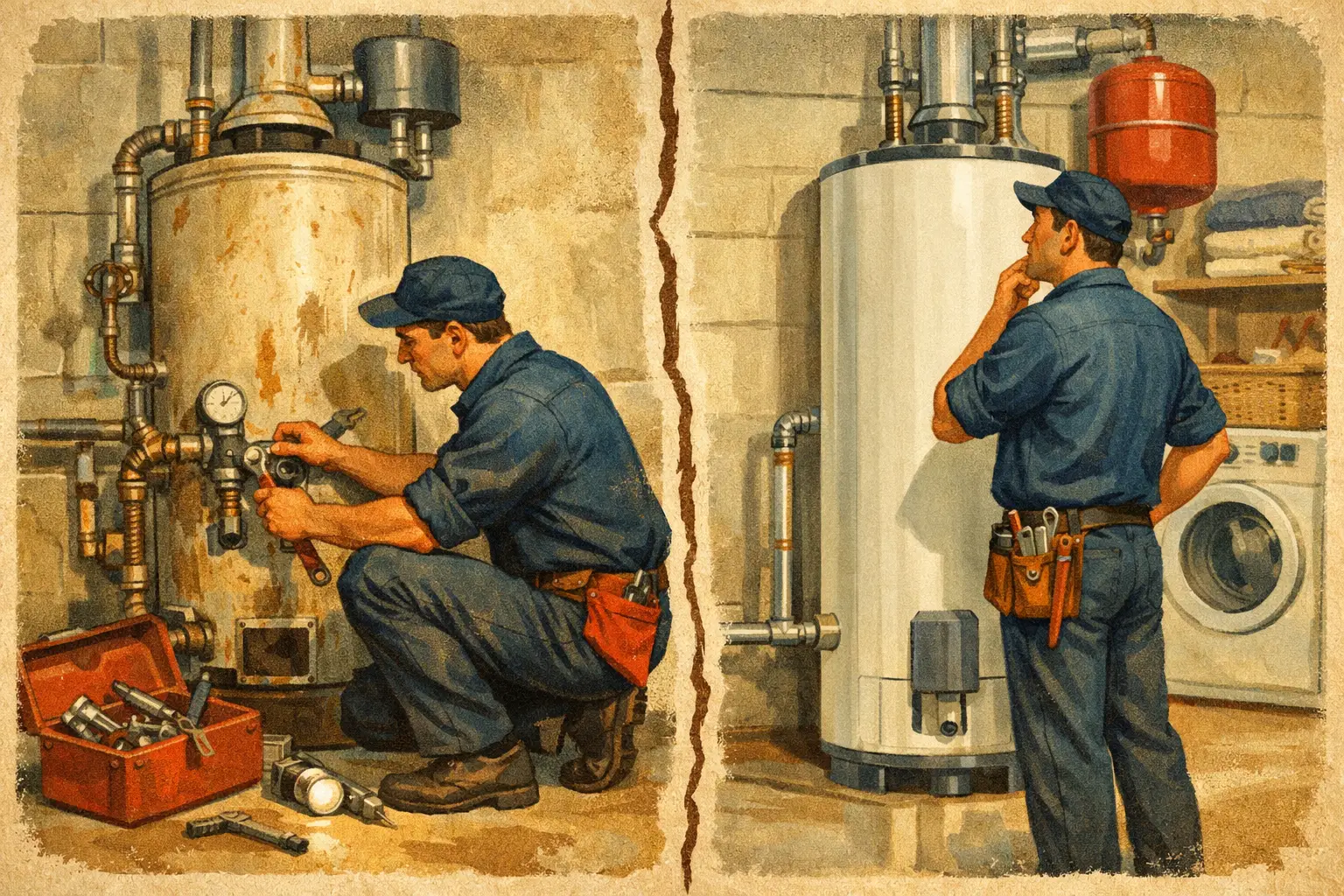
A cold shower is disruptive. A water heater that leaks, makes noise, or struggles to keep up can be even more concerning because the right decision is not always obvious. Water heater repair versus replacement comes down to the condition of the unit, the type of problem, its age, and whether a repair is likely to provide dependable service or only delay a larger failure.
For homeowners, property managers, and small-business owners in North Texas, the goal is usually straightforward: restore reliable hot water without putting more money into equipment that is near the end of its useful life. A qualified plumbing inspection provides the clearest answer, but knowing the factors involved can make the decision less stressful.
When Water Heater Repair Makes Sense
Many water heater problems are repairable, especially when the tank itself is sound and the unit is not near the end of its expected service life. Gas and electric water heaters have replaceable components, and a targeted repair can often restore normal operation without the disruption of installing a new unit.
A repair may be the practical choice when the issue involves a heating element, thermostat, pressure relief valve, pilot assembly, igniter, burner component, or electrical connection. These parts can fail without meaning the entire water heater has failed. For example, an electric unit that produces only lukewarm water may have a bad heating element. A gas unit that will not stay lit may have an ignition or control-related issue. Both situations require professional diagnosis, but neither automatically means replacement.
Age matters. Conventional tank water heaters often provide dependable service for many years when properly installed and maintained. If your unit is relatively young, has no tank leak, and has not needed repeated repairs, fixing a single failed component is often reasonable.
Repair is also worth considering when the water heater has been reliable until now. One isolated issue is different from a pattern of declining performance. A professional can identify whether the problem is limited to one part or whether corrosion, heavy sediment, or multiple worn components are affecting the system.
Signs the Problem May Be Limited
You may be dealing with a repairable issue if the water heater is still heating but has inconsistent temperature, produces insufficient hot water, cycles oddly, or has a pilot or ignition problem. Small leaks around fittings, valves, or supply connections may also be repairable if the tank itself is intact.
Do not ignore any leak, however. Water can travel along pipes or collect beneath the unit, making its source difficult to identify. A plumber can determine whether the leak is coming from a replaceable connection or from the tank body, which makes a major difference in the decision.
When Water Heater Replacement Is the Better Choice
Replacement becomes the stronger option when a tank is leaking, the system is old and unreliable, or repair costs are beginning to add up. The key question is not simply whether a unit can be repaired. It is whether the repair provides a sensible path to dependable hot water.
A leak from the tank itself is one of the clearest reasons to replace a conventional tank water heater. Internal tank corrosion cannot be repaired in a way that restores the tank's integrity. Once the tank wall has failed, the leak typically worsens, and waiting can lead to water damage or a complete loss of hot water.
Frequent repairs are another warning sign. If a water heater has needed multiple service calls in a short period, individual repairs may address symptoms without changing the larger reality that the equipment is wearing out. Replacing an aging unit can reduce the chance of another inconvenient breakdown shortly after the latest repair.
Reduced capacity can also support replacement. If your household has grown, a business has added demand, or the current unit never supplies enough hot water during busy times, a properly sized replacement may solve a problem that repairs cannot. Installing the same capacity without evaluating actual demand can leave you with the same frustration.
Common Replacement Indicators
Consider replacement when you notice rust-colored water associated with the heater, visible corrosion around the tank, a tank leak, recurring loss of hot water, or loud popping and rumbling that persists after professional evaluation. These signs can point to internal deterioration or substantial sediment buildup.
Water heaters can also become less efficient as they age. Sediment at the bottom of a tank can make the system work harder to heat water and may contribute to noise, slower recovery, and inconsistent performance. In some cases, service can improve operation. In others, the unit's overall condition makes replacement the more reliable investment.
Repair Versus Replacement: The Factors That Matter Most
The decision is rarely based on one symptom alone. A plumbing professional will look at the full condition of the water heater and the installation around it.
Age and service history are central. A newer unit with its first component failure is very different from an older unit with recurring issues. Keep track of past repairs if possible. That history helps show whether the problem is isolated or part of a continuing pattern.
The source of a leak is equally important. A leaking valve or fitting may be repaired. A leaking tank usually requires replacement. Because water can come from several areas around the heater, an on-site evaluation prevents assumptions.
The cost and scope of the repair should be considered alongside remaining service life. A modest repair on a unit with years of expected use can be sensible. A major repair on equipment that is already deteriorating may not be the best long-term choice.
Your hot-water needs should not be overlooked. A replacement is an opportunity to correct an undersized system, select the right fuel type for the property, and consider a tankless model when it fits the household or building's demand. Tankless systems are not automatically the right answer for every property. Proper sizing, installation requirements, and expected usage all matter.
Installation conditions can influence the final recommendation as well. A safe, code-conscious installation includes evaluating water connections, venting for applicable gas units, drainage needs, shutoff access, and the surrounding space. This is why water heater work should be handled by a qualified plumbing professional rather than treated as a simple equipment swap.
What to Do When Your Water Heater Acts Up
If you notice water around the unit, reduced hot water, unusual sounds, or a complete loss of heat, schedule a professional evaluation promptly. Do not attempt gas-related repairs yourself. For an active leak, use caution around the area and avoid touching electrical components or standing water near an electric water heater.
Before the appointment, make note of what changed and when. Is the water only lukewarm? Does the issue happen after one shower or throughout the day? Is there visible water at the base of the tank? These details help speed up diagnosis.
A plumber should explain the issue in plain language, identify whether the tank is sound, and outline the practical options. You should understand why a repair is recommended or why replacement is likely to be the better value before authorizing work.
Choosing a Replacement That Fits Your Property
When replacement is necessary, the best choice is not always the biggest unit available. The right water heater depends on the number of occupants, fixtures, peak-demand periods, available space, energy source, and the way the property uses hot water.
A family home may need capacity for consecutive showers, laundry, and dishwashing during morning or evening demand. A small business may have different needs based on restrooms, breakroom use, or operating hours. Selecting the correct size helps avoid running out of hot water while also preventing unnecessary energy use.
Professional installation also gives you a chance to address aging connections or site conditions that could affect the new unit. This work supports safer, more dependable performance from day one.
For property owners in Plano, McKinney, Allen, Royse City, and surrounding North Texas communities, MasterTex Plumbing and Drain can inspect the water heater, explain the condition of the equipment, and help you make a clear repair-or-replace decision. The right next step is the one that restores dependable hot water and makes sense for the life of your system.