
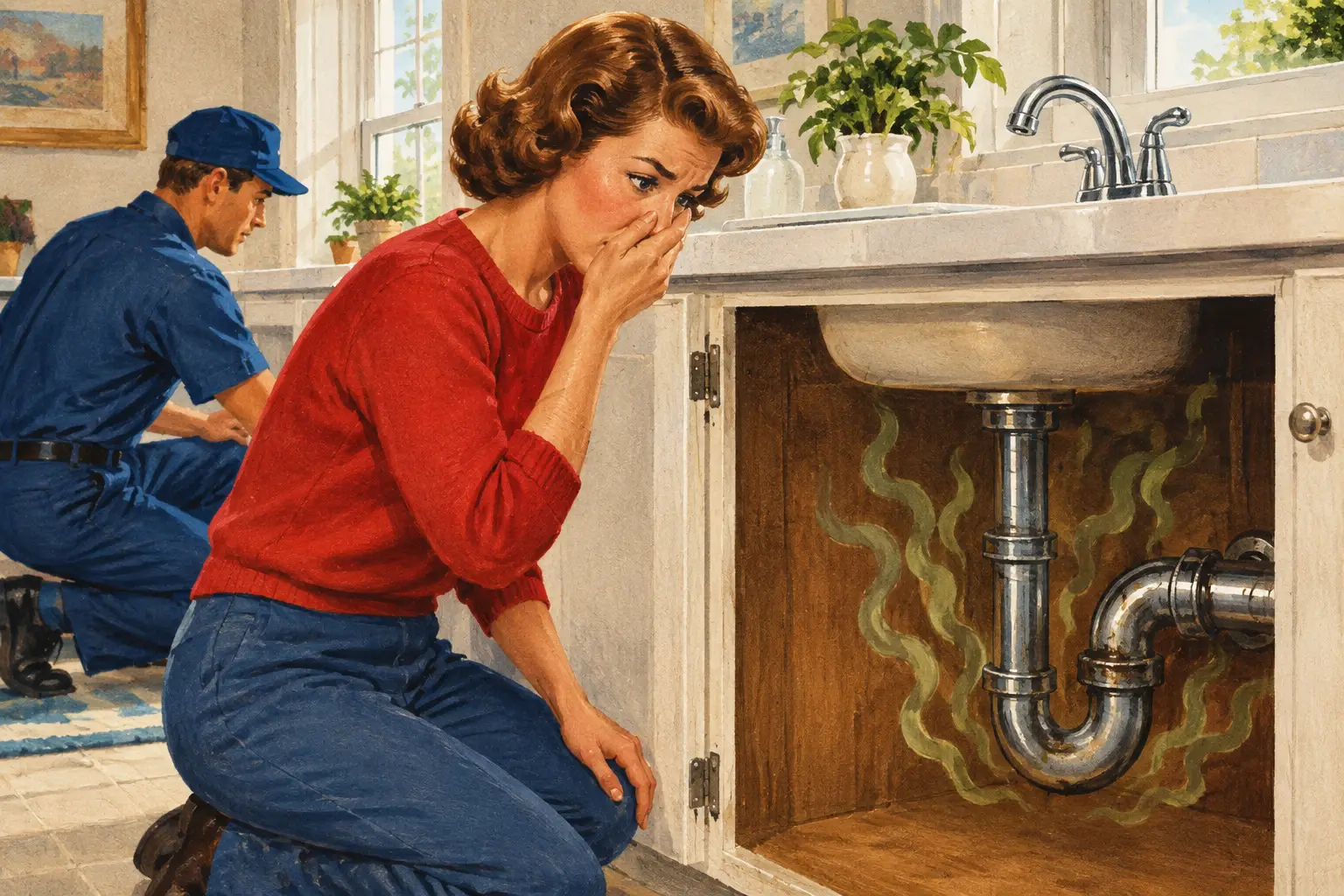
A sewer smell that appears inside the house is more than an unpleasant surprise when you walk into the laundry room or bathroom. Understanding what causes sewer odors indoors helps you separate a simple dry drain trap from a drain or vent problem that needs professional attention. The location, timing, and strength of the odor often provide useful clues.
A brief odor after a bathroom has been unused for weeks may have a simple cause. A smell that returns every day, gets stronger after flushing, or spreads through several rooms deserves a closer look. The goal is not to mask the odor. It is to find the path that is allowing sewer gas into the building.
What Causes Sewer Odors Indoors? The Most Common Sources
Your plumbing system is designed to carry wastewater out while keeping sewer gases out of occupied spaces. Water-filled traps, properly connected pipes, and plumbing vents all work together to create that barrier. When one part is dry, blocked, loose, cracked, or improperly sealed, odor can travel back into the home or business.
A Dry P-Trap
The most common and often simplest cause is a dry P-trap. This U-shaped section of pipe sits beneath sinks, showers, tubs, floor drains, and many appliance drains. It holds a small amount of water that blocks odors from the drain line.
When a fixture is not used for a while, the water in the trap can evaporate. This frequently happens in a guest bathroom, a vacant property, a rarely used shower, or a garage floor drain. Pouring water slowly into the drain may restore the seal if the trap is otherwise sound. If the odor returns soon after water is added, the trap may be leaking, improperly installed, or affected by a venting issue.
Floor drains can be easy to overlook, especially in utility rooms, garages, and commercial spaces. A customer may suspect a sink or toilet when the actual source is a dry floor drain across the room.
Buildup Inside a Drain
Not every unpleasant drain odor is sewer gas. Sinks, showers, and washing machine drains can develop a sour or musty smell when soap residue, grease, hair, and organic debris collect inside the drain. Bacteria feed on that buildup and create odors that may resemble a sewer problem.
Kitchen sinks are especially prone to grease-related buildup, while bathroom drains often collect hair and personal-care residue. A drain that smells worse when water runs, drains slowly, or gurgles may have buildup or a developing blockage. Cleaning the visible stopper and removing trapped debris can help, but persistent odor or slow drainage may call for professional drain cleaning rather than a temporary surface fix.
A Blocked or Improperly Working Plumbing Vent
Plumbing vents extend through the roof and allow the drainage system to balance air pressure. Without proper venting, wastewater can create suction as it moves through the pipes. That suction may pull water out of a nearby trap, leaving an open route for odors.
Signs of a venting problem can include gurgling toilets or sinks, bubbling water in a toilet bowl, traps that repeatedly lose water, and odors that appear after another fixture drains. Vent issues can be difficult to confirm from inside the house because the source may be above the ceiling or at the roof line. They require diagnosis rather than guesswork.
A Partial Drain Blockage
A partial blockage does not always stop a fixture completely. Instead, it can slow wastewater, trap debris, and disrupt air movement in the line. This may produce odor near one drain or throughout a section of the property.
Pay attention to patterns. If a single sink smells but all other fixtures work normally, the issue may be local to that sink's trap or drain. If several fixtures drain slowly, gurgle, or produce odors at the same time, the problem may be farther along in the drain system. That distinction matters because the right repair depends on where the restriction is located.
Loose Seals Around Toilets or Drain Connections
A toilet should be securely sealed where it meets the floor and connected properly to the drain below. When that seal fails or the toilet shifts, odor can escape around the base even if the toilet still flushes. Moisture at the base, movement when the toilet is gently pressed, or odor that becomes stronger after flushing are reasons to schedule an inspection.
Odor can also escape from loose drain connections beneath a sink, a damaged cleanout cap, or a cracked pipe. These problems are not always visible. Pipes inside walls, ceilings, crawl spaces, or cabinets can leak odor without leaving an obvious water stain right away.
Damaged or Aging Drain Pipes
Older pipes, shifted connections, and physical damage can create small openings in a drain line. North Texas properties can experience soil movement that places stress on buried piping and connections. The result may be intermittent odors, recurring drain problems, or an odor that seems to move from one area to another.
A camera inspection may be useful when the cause is not visible or when symptoms keep returning after routine cleaning. It allows a plumber to assess the inside of the drain line and identify whether the issue is buildup, a damaged section, or another obstruction.
How to Narrow Down the Source of a Sewer Odor
Start by noticing where the odor is strongest. Check seldom-used sinks, showers, tubs, and floor drains first. Run water in each fixture for a minute or two, then see whether the smell changes. If a particular drain improves after water is added but the odor comes back later, that is useful information for a plumber.
Next, observe what triggers the smell. Does it show up after a toilet flushes, when the washing machine drains, after the dishwasher runs, or only during hot weather? Does one bathroom smell, or do several rooms have the same issue? These details can point toward a local trap problem, a blockage, or a venting concern.
Avoid relying on fragrances or chemical drain products to solve a recurring odor. Air fresheners can hide the problem temporarily, while harsh products may not reach the actual source and can complicate some drain issues. A persistent sewer smell needs a plumbing-based diagnosis.
When Sewer Odors Need Professional Service
A quick check of unused drains is reasonable, but certain signs warrant professional help promptly. Schedule service if the odor is strong or recurring, if toilets or drains gurgle, if multiple fixtures drain slowly, or if you notice water around a toilet base or drain connection. These symptoms can indicate a problem beyond a dry trap.
A plumber can inspect traps and connections, test drainage behavior, clear a blockage when appropriate, and determine whether a vent or concealed drain line needs further evaluation. This approach avoids replacing parts based only on a guess.
If the odor resembles natural gas rather than a typical sewer smell, leave the area and contact the gas utility's emergency line or emergency services from a safe location. Do not try to locate or repair a gas-related issue yourself.
Keeping Indoor Drain Odors From Returning
Regular use is one of the simplest ways to keep trap seals in place. Run water periodically in guest-bathroom fixtures, utility sinks, and floor drains that do not see much use. Keep sink and shower stoppers clear of hair and debris, and address slow drains before they become complete clogs.
For property managers and business owners, a simple maintenance routine for vacant suites, restrooms, and utility areas can catch dry traps before tenants or customers notice an odor. Recurring odor at the same fixture should not be treated as normal, even if it fades for a few days.
For homeowners and businesses in Plano, McKinney, Allen, Richardson, Royse City, and surrounding North Texas communities, MasterTex Plumbing and Drain can help identify the source of persistent sewer odors and recommend the appropriate repair. A clear diagnosis is the quickest path back to a home or workspace that smells the way it should.