
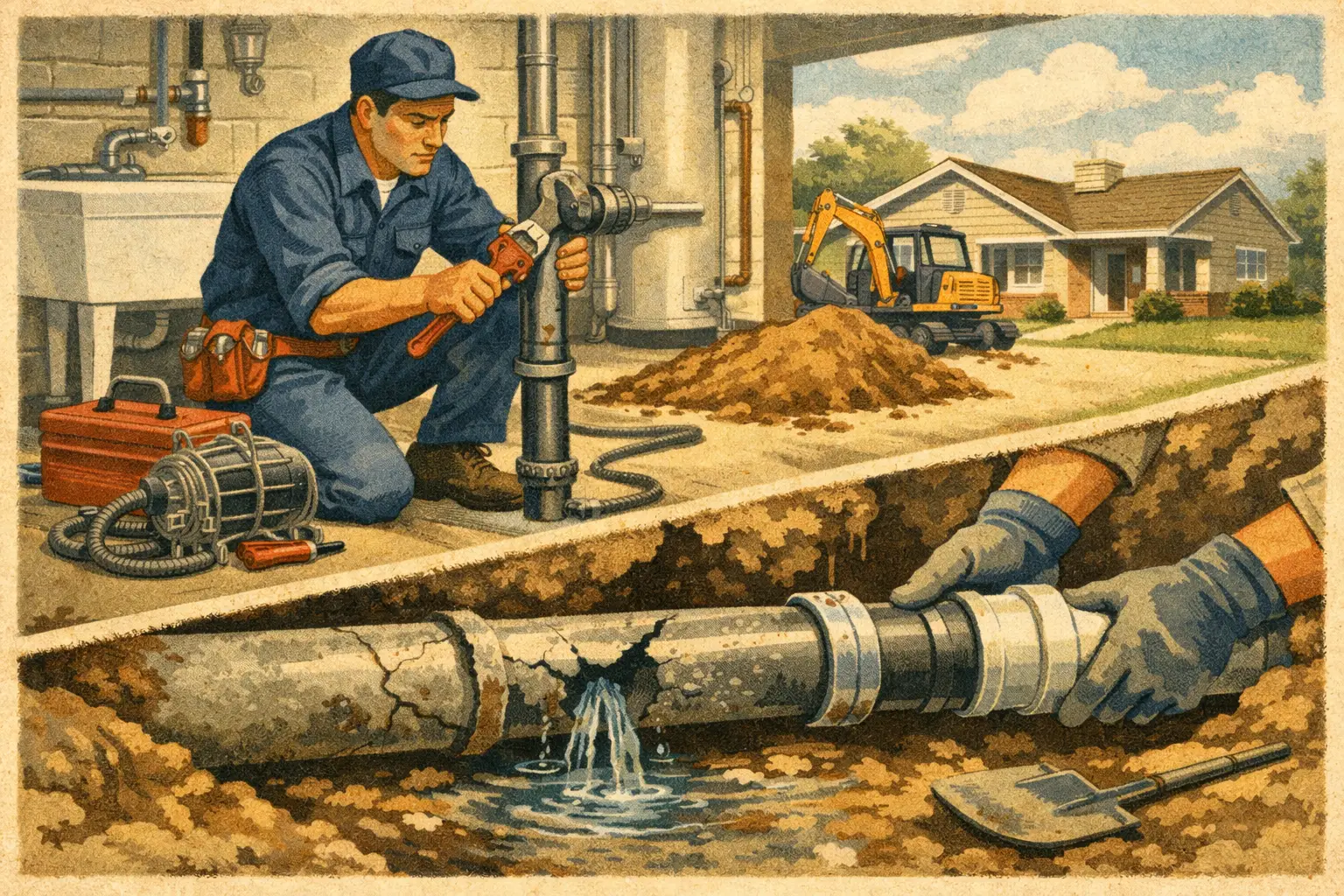
A single slow drain can be a routine plumbing issue. But when several drains slow down at once, toilets gurgle, or wastewater backs up inside, the problem may be farther down the line. The question of when a sewer line should be replaced usually comes up after repeated disruptions, and getting a clear diagnosis early can prevent a much larger mess.
For homeowners, property managers, and small businesses, sewer line decisions should be based on the pipe’s actual condition, not guesswork. A professional sewer camera inspection can show whether the line needs cleaning, a targeted repair, or full replacement.
When Should a Sewer Line Be Replaced?
A sewer line should be considered for replacement when it has widespread damage or deterioration that cannot be reliably corrected with cleaning or a limited repair. Replacement is often the practical choice when the pipe has collapsed, has multiple breaks, is badly offset, has recurring root intrusion through numerous joints, or has reached the end of its serviceable life.
One isolated blockage does not automatically mean you need a new sewer line. Grease buildup, debris, and a small root intrusion may be addressed through professional drain cleaning or repair. The concern grows when the same symptoms return shortly after service, especially if the issue affects more than one fixture in the building.
The goal is not to replace pipe unnecessarily. It is to avoid spending money on temporary fixes when the line itself has become unreliable.
Warning Signs That Point to a Sewer Line Problem
A main sewer line carries wastewater away from the home or commercial space. Because every drain eventually relies on it, trouble in that line tends to show up in several places rather than one sink or shower.
Watch for these signs, particularly when they occur repeatedly:
- Multiple sinks, tubs, showers, or toilets drain slowly at the same time.
- Toilets bubble or gurgle when a nearby sink, washer, or shower drains.
- Water or wastewater backs up through a tub, shower, floor drain, or toilet.
- Drain cleaning solves the issue briefly, but the problem returns.
- There are persistent sewer odors around drains, the yard, or the building exterior.
- A low area, unusually lush strip of grass, or wet ground develops along the path of the buried line.
A backup is an urgent warning sign. Avoid sending more water into the drains, keep people and pets away from the affected area, and arrange for professional plumbing service as soon as possible. Continued use can increase the backup and make cleanup more difficult.
Repeated Backups Are More Serious Than a Single Clog
Every plumbing system can experience an occasional clog. A blocked kitchen drain, for example, may be limited to that one branch line. Repeated backups in the lowest drains of a home, however, can indicate that wastewater is not moving through the main line properly.
If the same toilet, shower, or floor drain backs up after it has been cleared, the line may have a structural issue rather than a simple blockage. This is where a camera inspection becomes especially useful. It allows a plumber to see the source of the restriction instead of treating only the symptom.
Tree Roots Can Keep Coming Back
Tree roots naturally seek moisture and can enter older sewer lines through small gaps at joints or cracks in the pipe. Once inside, roots can catch paper and debris, creating recurring stoppages. Cleaning may restore flow, but it does not repair an open joint, cracked section, or failing pipe material.
A limited repair can make sense when root entry is confined to one accessible area. If a camera inspection reveals roots entering at several locations, replacement may offer a more dependable long-term solution.
Pipe Age and Material Matter
The age of a property can provide useful context, though age alone does not decide whether replacement is needed. Older lines may be made of materials that are more prone to corrosion, cracking, joint separation, or deterioration over time.
Cast iron can corrode from the inside, reducing its usable opening and creating rough surfaces where waste collects. Clay pipe can shift or separate at joints. Older pipe sections may also be more vulnerable to root intrusion. A camera inspection can identify whether the pipe has isolated wear or broad deterioration throughout the line.
Why North Texas Soil Movement Can Affect Sewer Lines
In communities across the Dallas-Fort Worth area, shifting clay soil can place stress on buried plumbing lines. Seasonal moisture changes may contribute to movement around pipes, especially at joints and connections. Over time, this can lead to separated sections, bellies in the line, cracks, or misalignment.
A belly is a low spot where the pipe no longer has the intended slope. Waste and paper can settle there instead of flowing out consistently. Cleaning may remove a current blockage, but it cannot correct a pipe that has shifted out of position. If the low spot is significant or the line has multiple areas of movement, replacement may be the better option.
This does not mean every slow drain in Plano, McKinney, Rockwall, or Royse City is caused by soil movement. It means the underground conditions should be considered alongside the inspection results, the property’s age, and the history of recurring drain problems.
How a Camera Inspection Guides the Decision
The most reliable way to determine whether a sewer line needs replacement is to inspect the inside of the pipe with a sewer camera. The camera travels through the line and provides a clear view of blockages, root intrusion, cracks, offsets, corrosion, and damaged sections.
Just as important, the inspection helps identify the location and extent of the problem. A pipe with one cracked section may be a candidate for a focused repair. A line with repeated offsets, widespread corrosion, or a collapse needs a different conversation.
A professional assessment should explain what was found in plain language. You should understand whether the recommendation is based on a blockage that can be cleared, a localized defect, or a line that is failing in several areas. That distinction matters because it affects both the scope of work and the expected reliability of the solution.
Repair or Replacement: What Is the Better Choice?
The right option depends on the condition of the pipe, not just the immediate inconvenience. Repair is often appropriate when damage is limited and the rest of the line is in good condition. Replacement becomes more reasonable when repairs would only address one of several existing or likely-to-return failures.
For example, a single separated joint may be repairable. But if the inspection finds cracked pipe, root intrusion at multiple joints, and areas that are badly deteriorated, repairing one section may leave the remaining weak areas untouched.
Replacement methods also vary by property. In some cases, access allows for conventional excavation. In others, the pipe route, landscaping, driveway, or building layout may influence the approach. A qualified plumber can evaluate the line and explain the available options based on the site conditions.
It is reasonable to ask how much of the line is damaged, whether the issue has likely caused past backups, and what result each option is intended to provide. Clear answers help property owners make a confident decision without rushing into work that does not fit the condition of the system.
Do Not Wait for a Complete Failure
Sewer line problems tend to become more disruptive as they progress. A recurring gurgle or occasional slow drain may seem manageable until it turns into a wastewater backup during a busy morning or while guests are in the building.
If you have had repeat main-line stoppages, multiple fixtures draining poorly, or an inspection showing damaged pipe, schedule an evaluation before the next backup forces the issue. MasterTex Plumbing and Drain provides professional plumbing and drain service for homeowners and businesses throughout the East and Northeast Dallas area and nearby North Texas communities.
A sewer line replacement is a significant property decision, but it should not be a mystery. Start with a thorough inspection, ask for a straightforward explanation of the findings, and address a failing line before it gets the chance to interrupt your home or business again.