
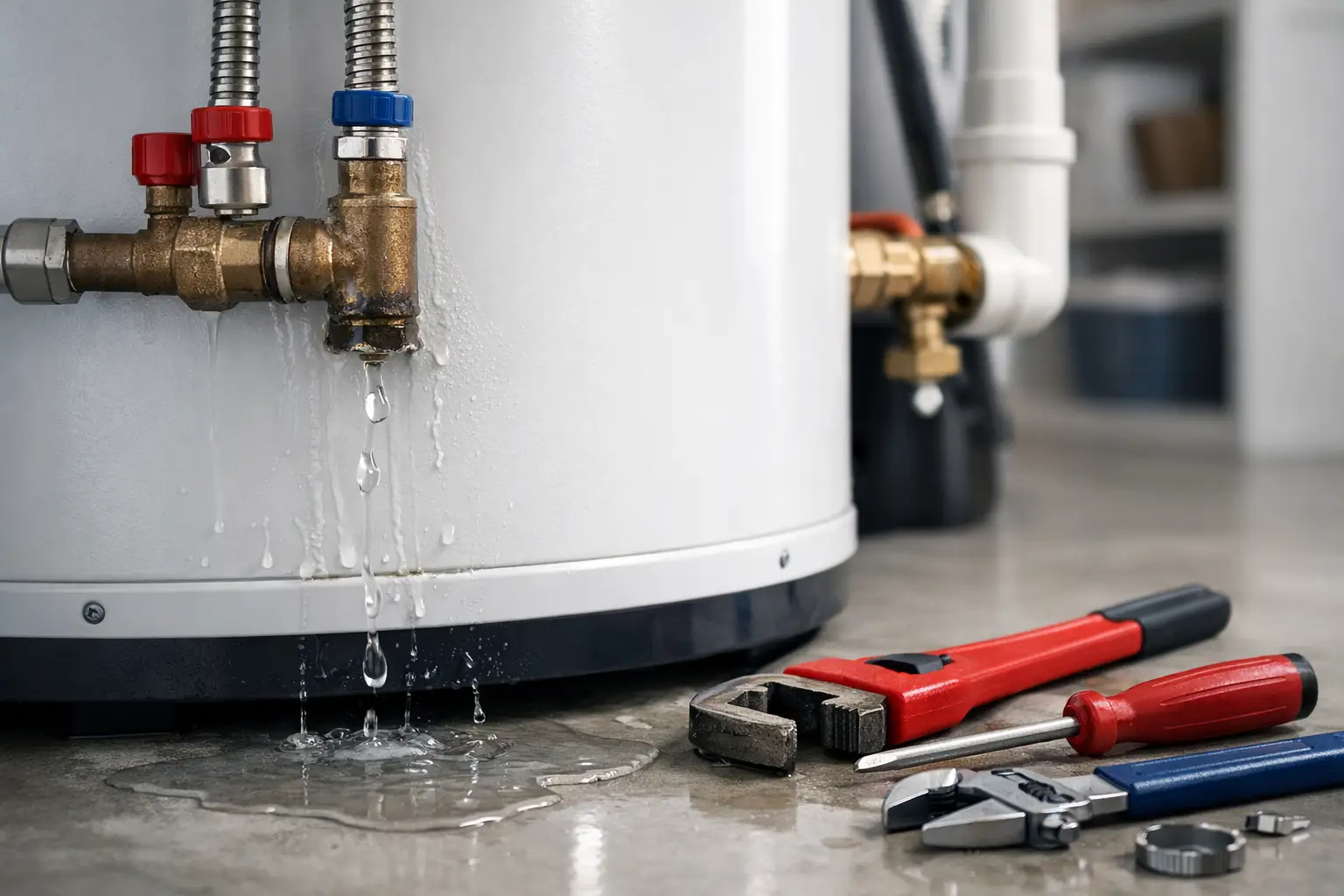
A puddle around a water heater can turn a normal morning into a stressful plumbing problem quickly. If you are asking, why is my water heater leaking, the answer depends on exactly where the water begins. A loose connection may be a manageable repair. Water coming from the tank itself can point to a much more serious issue.
The first priority is limiting water damage and identifying whether the leak is active. Dry the area around the unit with towels, then look for fresh water while keeping clear of electrical connections and hot surfaces. If water is spreading quickly, turn off the cold-water supply valve above the heater if it is safe and accessible, then arrange for professional plumbing service.
What to Do When Your Water Heater Is Leaking
A water heater does not always leak from the place where the puddle appears. Water can run down pipes, collect on the top of the heater, or drip from a fitting before reaching the floor. Start by checking the ceiling, nearby pipes, and the top of the unit for moisture. This helps separate a water-heater issue from a leak elsewhere in the utility area.
If you have an electric water heater and water is near the electrical panel or wiring, do not touch wet components. If you have a gas water heater and smell gas, leave the area and contact the gas utility or emergency services as appropriate. A plumber can address the water-related problem after the area is safe.
For a slow drip, place a shallow container or towels beneath the leak only if you can do so safely. Avoid trying to seal a pressurized fitting, remove panels, or take apart valves. A small leak can worsen when pressure changes as the heater cycles.
Why Is My Water Heater Leaking From the Top?
Leaks at the top of a water heater are often related to the cold-water inlet, hot-water outlet, or nearby plumbing connections. These fittings can loosen over time, and corrosion may develop around threaded connections. In some cases, the water is actually coming from a pipe overhead and simply running down onto the heater.
A top leak is usually more repairable than a leak from the tank body, but it still deserves prompt attention. Even a slow drip can corrode components, stain surrounding materials, and create damage in a garage, closet, attic, or utility room.
Loose or Corroded Pipe Connections
The pipes entering and leaving the water heater are under regular pressure. Mineral buildup, age, movement in the plumbing, and worn fittings can all contribute to seepage around these connections. A plumber can determine whether the fitting needs to be tightened, resealed, or replaced and check for corrosion that may affect the connected pipe.
Condensation That Looks Like a Leak
In humid North Texas weather, a cold tank or cold-water pipe can develop condensation. This is more common when a large amount of hot water has recently been used and cold replacement water enters the system. Condensation should be light and temporary, not a steady drip or recurring puddle.
If the outside of the tank is wet but no fitting is actively leaking, a professional inspection can confirm whether condensation is the cause. It is better not to assume, especially when moisture returns day after day.
Leaks From the Temperature and Pressure Relief Valve
The temperature and pressure relief valve, often called the T&P valve, is a safety device. It is typically located on the upper portion of the tank, with a discharge pipe running downward. A small amount of water from this pipe may indicate that the valve has opened because of excess pressure or high temperature.
The valve itself may be worn, but replacing the valve without finding the cause can leave the underlying problem unresolved. Excessive water pressure, a failing expansion tank, or a temperature-related issue can make the valve discharge water. This is a situation for a qualified plumber because the system needs to be evaluated, not simply stopped from dripping.
Never cap, plug, or block a T&P discharge pipe. That valve has a safety role, and preventing it from releasing pressure can create a dangerous condition.
Water at the Bottom of the Heater
Water near the bottom of a water heater can come from the drain valve, condensation, a nearby connection, or the tank itself. The location matters. A drip from the drain valve may be repairable, while water seeping through the metal tank usually means the unit has reached the end of its useful service life.
A Leaking Drain Valve
The drain valve sits near the bottom of the tank and is used during maintenance. Over time, it can wear out, fail to close completely, or develop mineral deposits that prevent a proper seal. You may see a slow drip directly from the valve or water around the lower front of the unit.
A plumber can verify the source and replace the valve when appropriate. Because the valve connects to a pressurized, hot-water appliance, this is not a repair to improvise when the leak is active.
Internal Tank Corrosion
If water appears to be coming through the tank body, the problem is usually internal corrosion. Water heaters contain a protective anode rod that helps slow corrosion inside the tank, but that protection does not last forever. Once the tank lining or metal shell fails, the tank cannot be reliably patched.
Tank leaks often begin as a small, rusty-looking puddle or intermittent seepage and can become much larger without warning. Replacement is generally the practical solution. A plumber can also inspect the installation area, connections, shutoff valve, and drain pan to help ensure the new unit is set up correctly.
How Age and Water Conditions Affect Leaks
Most traditional tank water heaters last for years, but their lifespan varies based on maintenance, installation quality, usage, and local water conditions. Mineral sediment can settle in the bottom of a tank over time. That buildup can reduce efficiency, contribute to noise, and place additional stress on the appliance.
Age alone does not prove that a heater needs replacement. A newer unit can have a leaking connection, while an older unit may only need a valve repair. The deciding factor is the source of the leak and the condition of the tank. A professional diagnosis prevents spending money on a repair that will not hold or replacing a unit that still has serviceable life.
When to Call a Plumber Right Away
Call for prompt help when the leak is steady, water is spreading, the tank is leaking from its body, or the T&P valve discharge pipe is releasing water repeatedly. You should also schedule service if the water heater makes unusual popping sounds, produces rusty water, fails to provide enough hot water, or has visible corrosion around fittings.
For property managers and small-business owners, a leaking water heater can disrupt tenants, employees, and daily operations. Fast attention can reduce downtime and help prevent water from reaching floors, walls, stored belongings, or electrical equipment.
MasterTex Plumbing and Drain helps homeowners and property managers across the North Texas service area identify water-heater leaks and make informed repair or replacement decisions. The goal is straightforward: locate the real source, explain the condition clearly, and address the problem before a small drip becomes a larger disruption.
A water heater leak is rarely something to ignore until the weekend. Catch the source early, protect the surrounding area, and bring in a professional when the leak involves pressure, electrical components, gas equipment, or the tank itself.